Hooge Crater Museum
Meenseweg 467, Zillebeke, Ieper ( Ypres ), Belgium
Visited October 2025
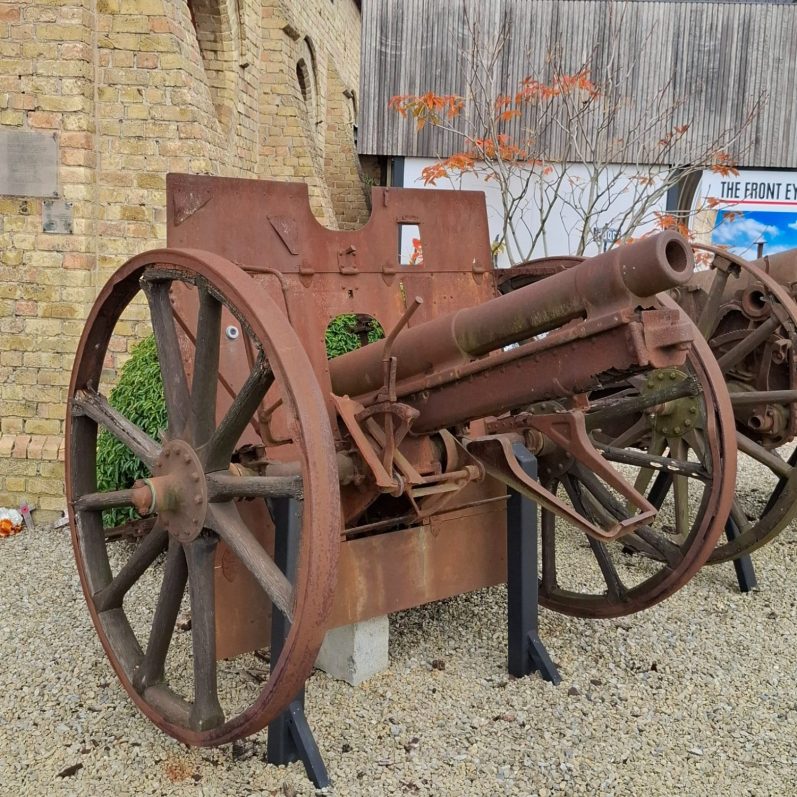
Another museum visit on the journey to SMC in Holland was a stop-off at the Hooge Crater Museum in Ypres.
On the look of things from outside, this isn’t a big museum, as there appears to be a church next door, with a couple of cannon rusting outside and space given over to a café, which at this point in our trip, was a prime objective. It was about midday, and we’d been on the road since 11pm the night before – no sleep ‘til bedtime !
So, the first thing to do was seek refreshment and something to eat.
Like all the Museum restaurants I’ve encountered on the continent, there is not simply pride in the museum and preserving it’s contents, but also a great deal of care is put into providing food and drink of a high quality.
I chose a ham and cheese toastie ( OK, not very adventurous, I admit ) and was very pleased with what arrived. I think they’d sliced the loaf lengthwise, rather than cross-wise giving a very large sandwich indeed, which was matched by the slice of ham inside and a generous portion of cheese too.
All right, this isn’t a site that dwells on food and the varying qualities on offer at places I visit, so I’ll get on with a look around the museum itself.
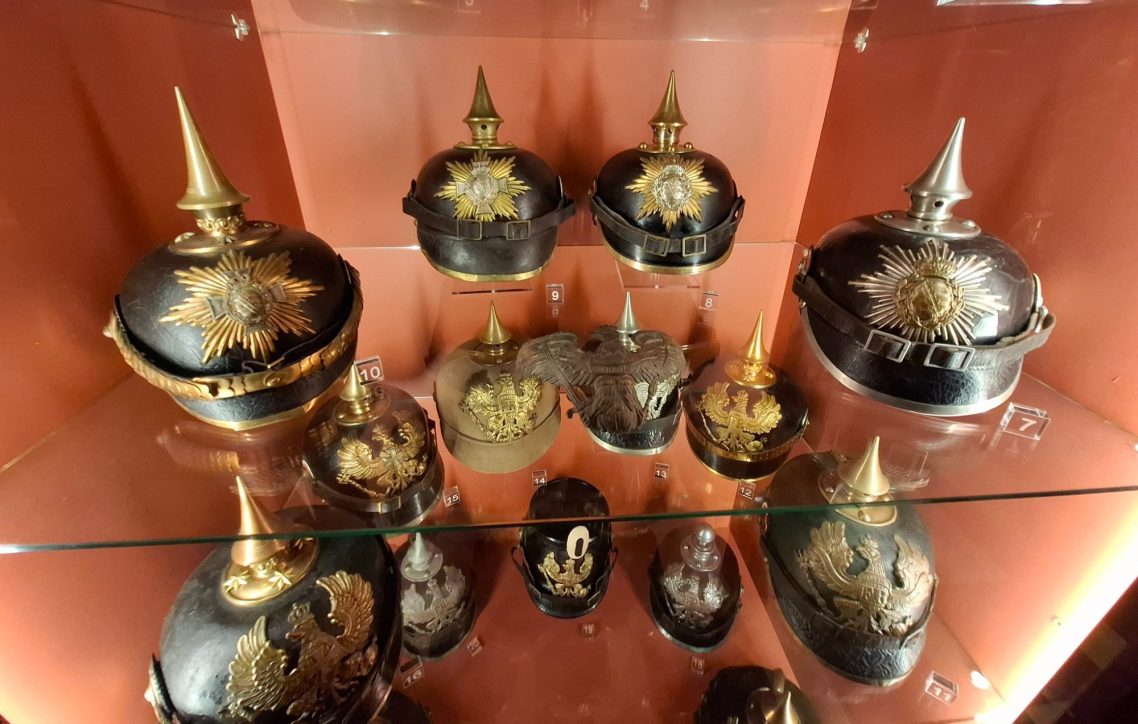
Focused entirely on World War One, the items displayed show a vast array of armaments, munitions and uniforms from that period.
The museum is a little bit like The Tardis in that there seems a lot more space on the inside than there seems to be when the building is viewed from the side of the road.
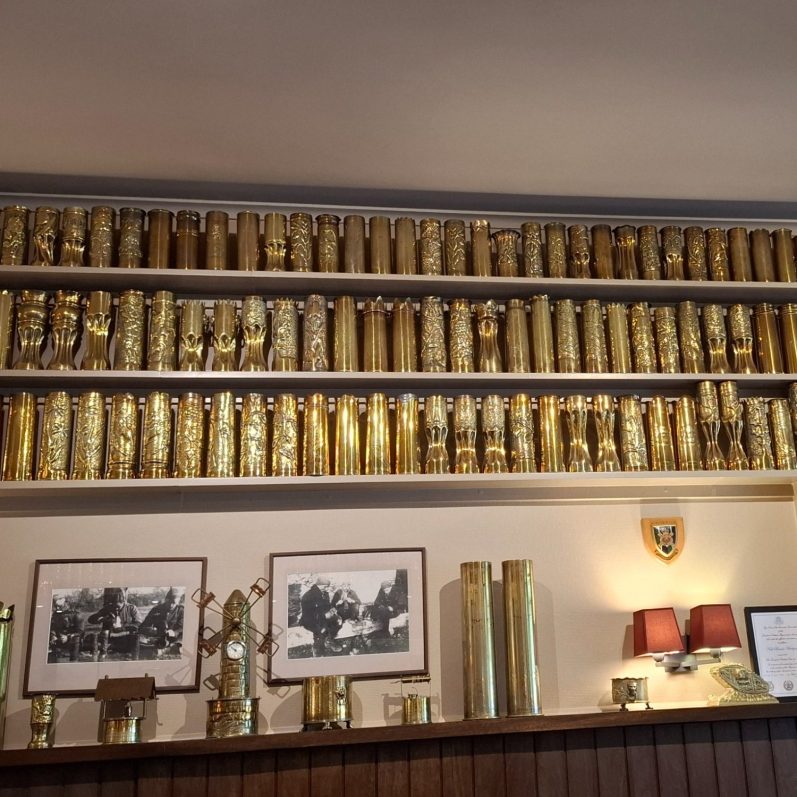
Let’s just take a small step back though and start off with the café displays.
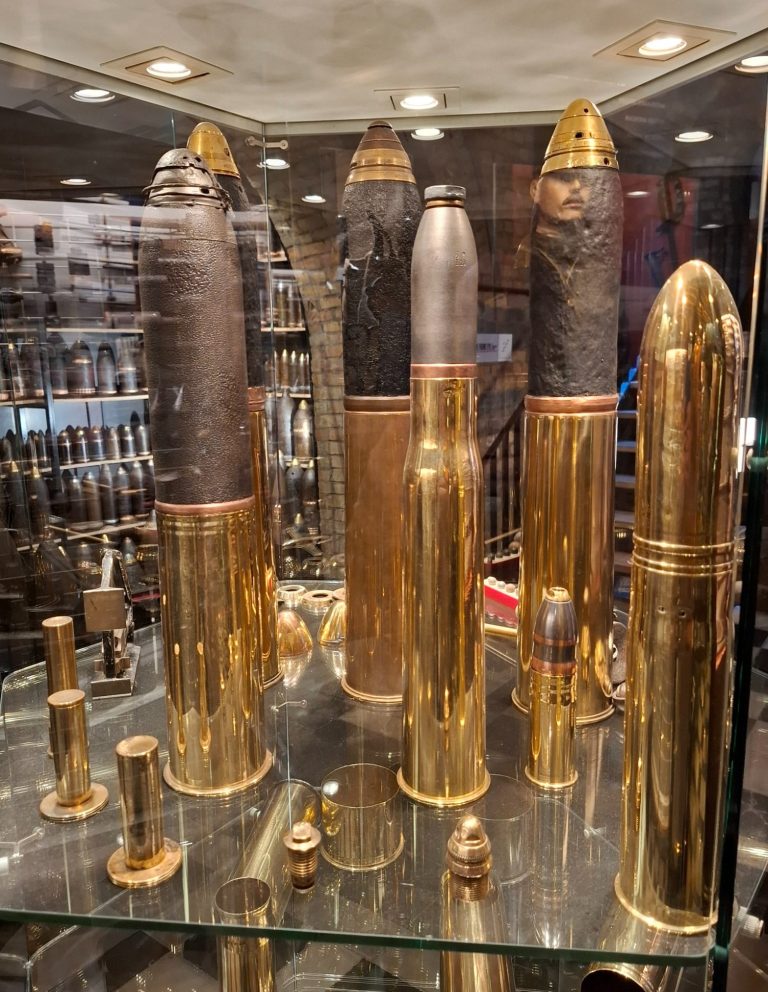
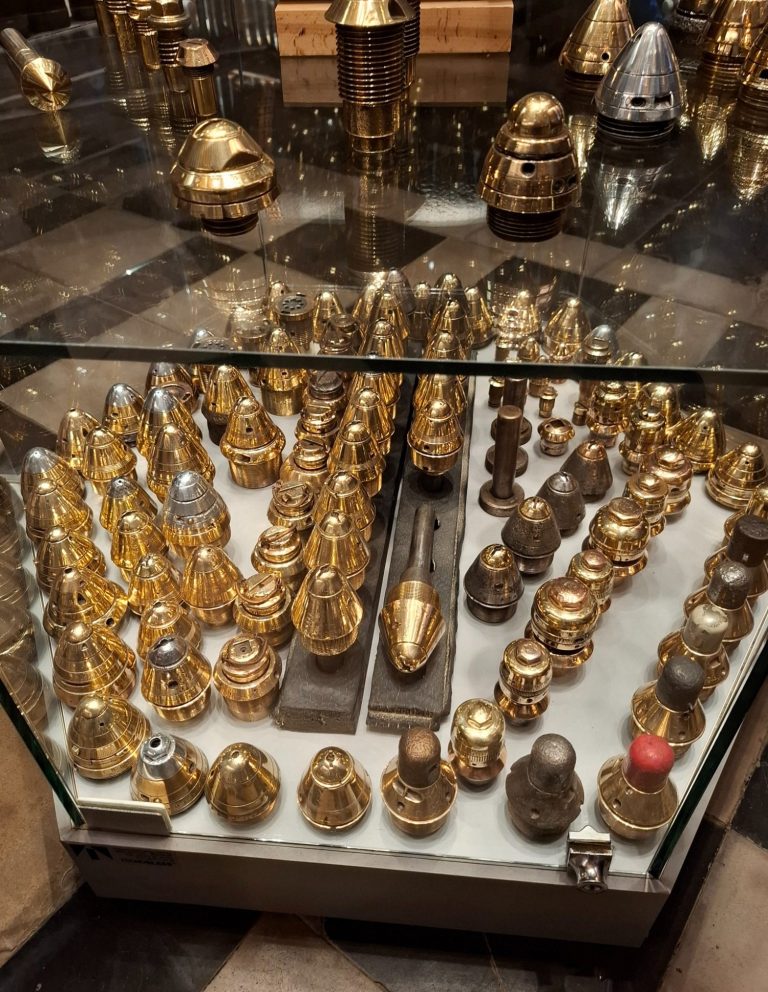
I don’t think I’ve ever seen as large a collection of brass shell cases. They line shelves around the café walls, with straight up shells that are unadorned, to many that have been decorated and made into items of “Ammunition Art” almost.
Alongside these are old photos from the years of the war, some maybe shortly prior to it and one or two showing the devastation to the land afterwards.
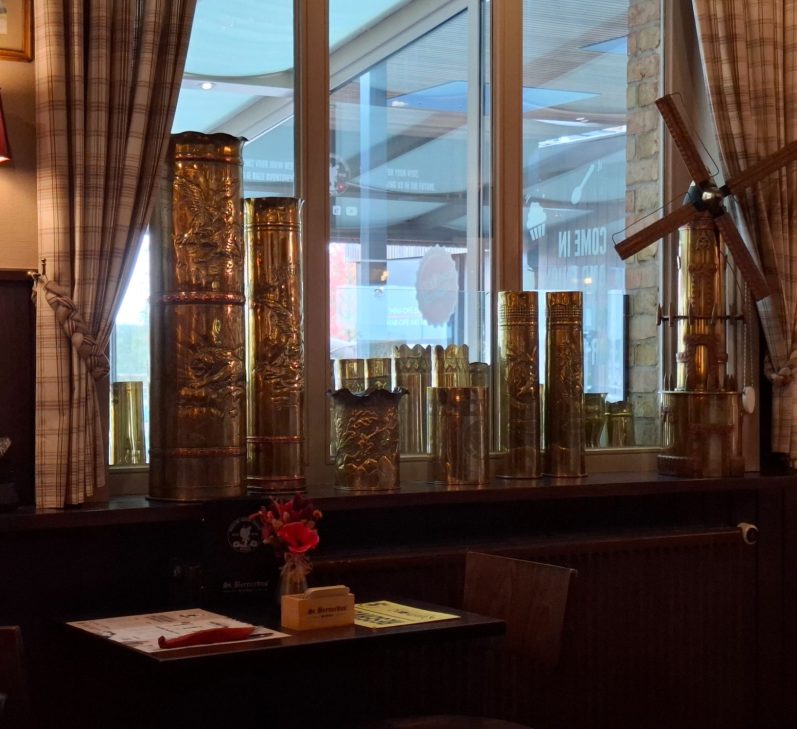
There are several picture viewer machines – think of a rolodex for old photos – that store around thirty pictures each and can be looked at through binocular-style view ports.
These show the true face of war and pack a punch, perhaps not for the faint-hearted, but it does give an impression of the terrible conditions and bleak outlook of the conflict.
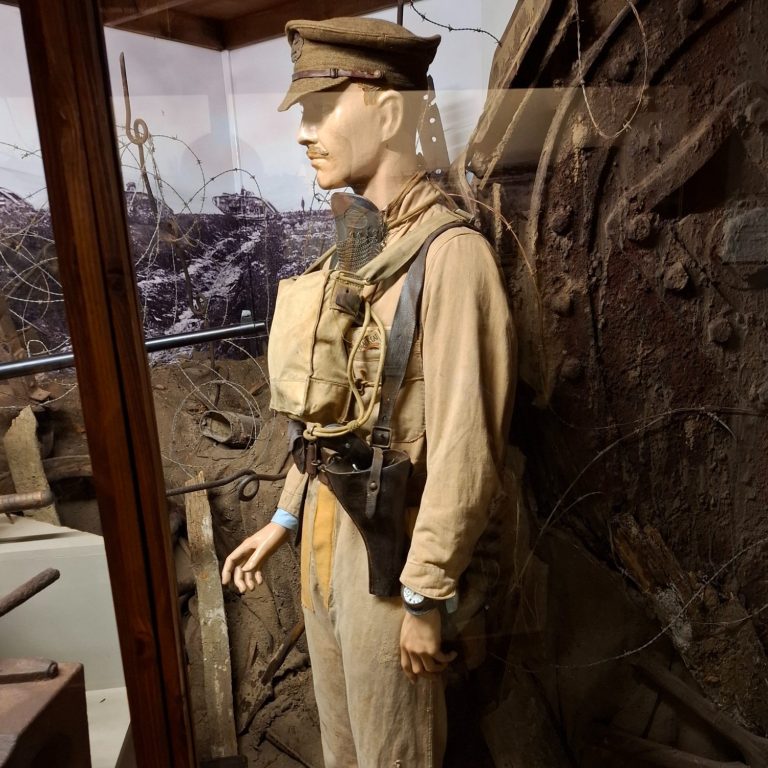
Entry into the museum is through a small doorway accessed from the left of the café itself, and which leads into the displays of relics from the War.
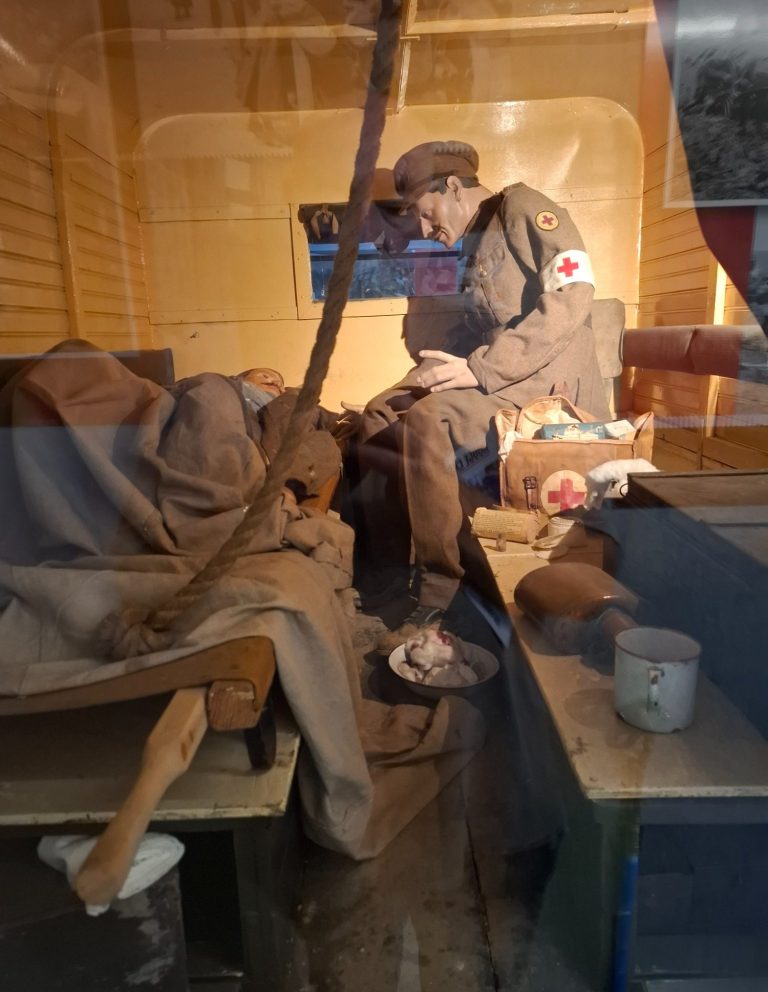
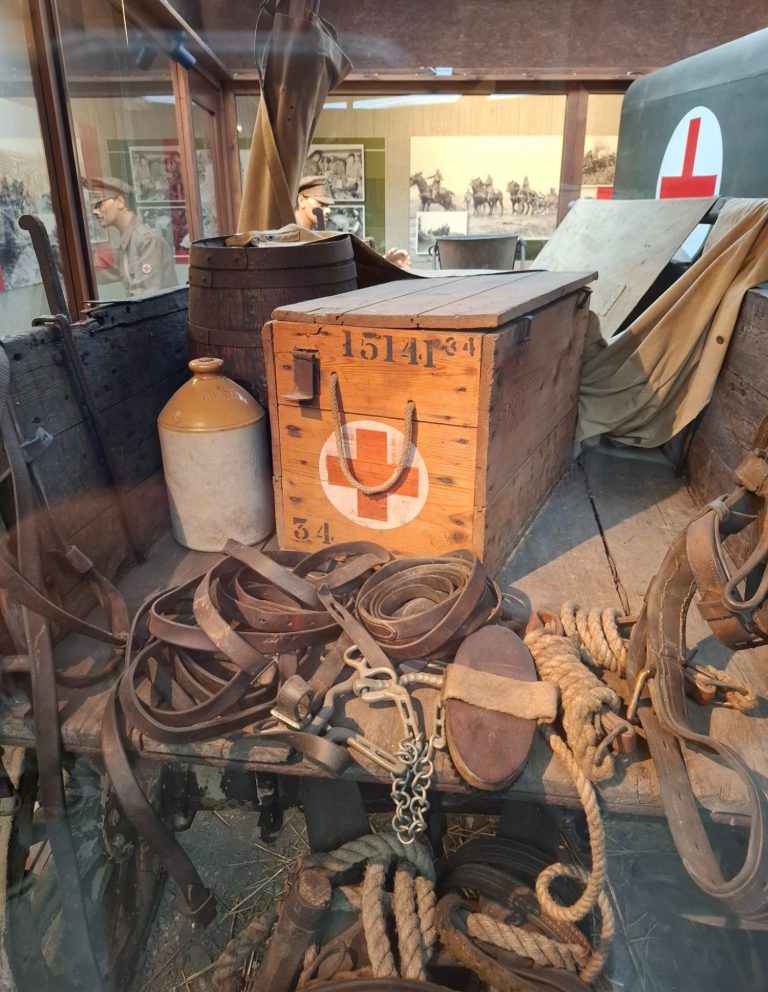
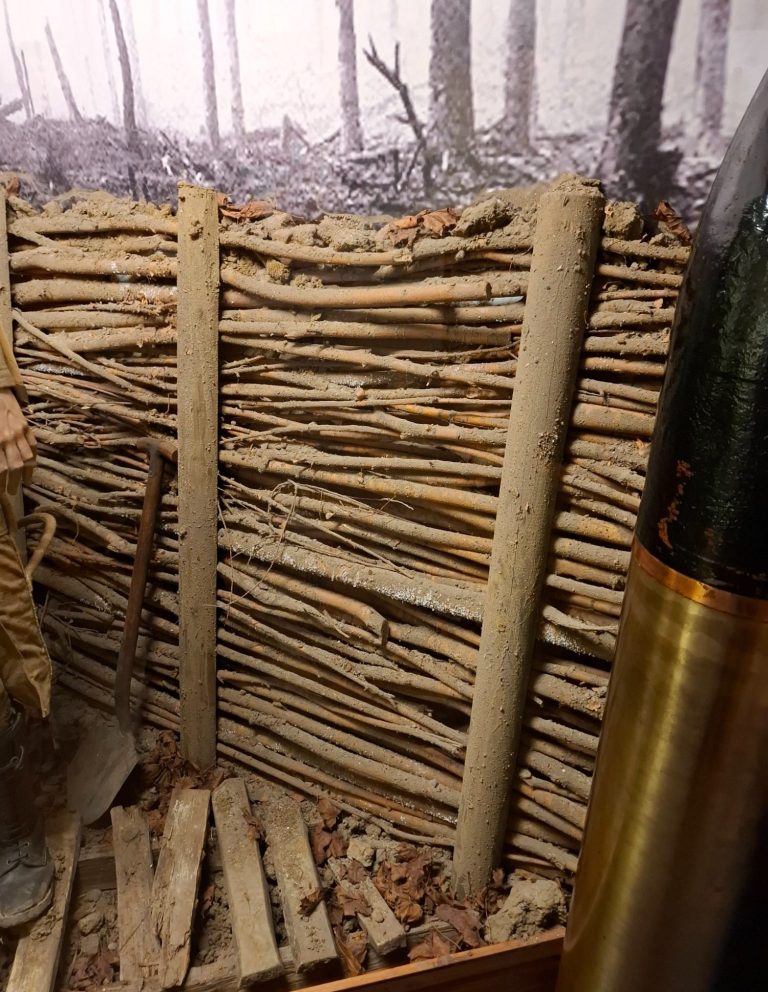
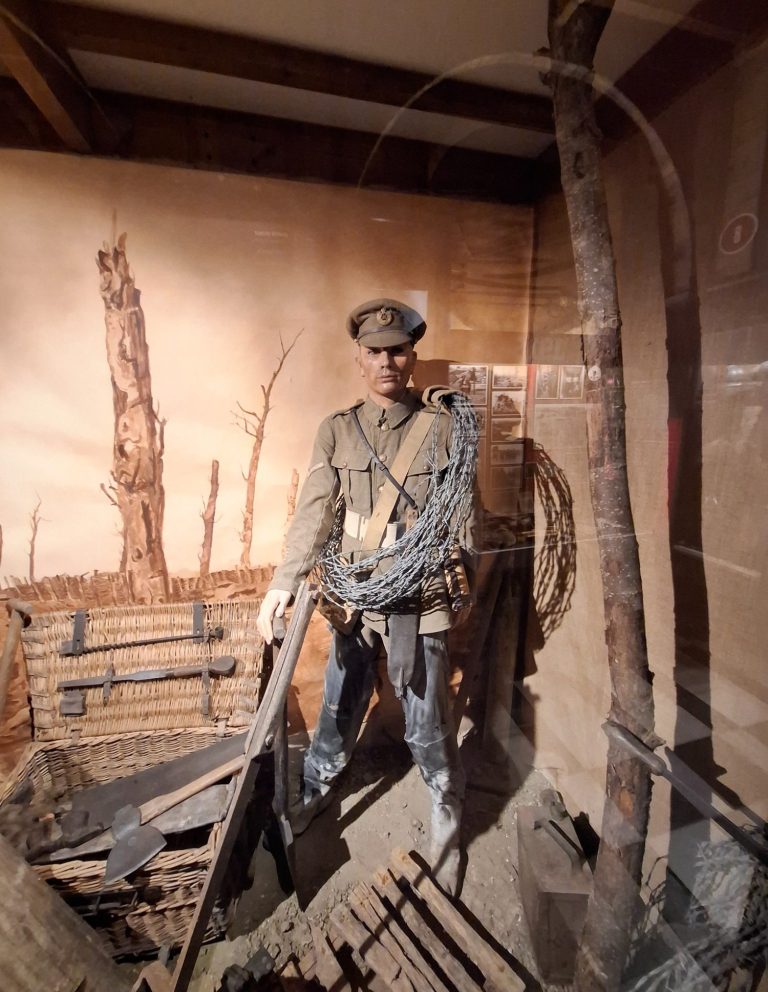
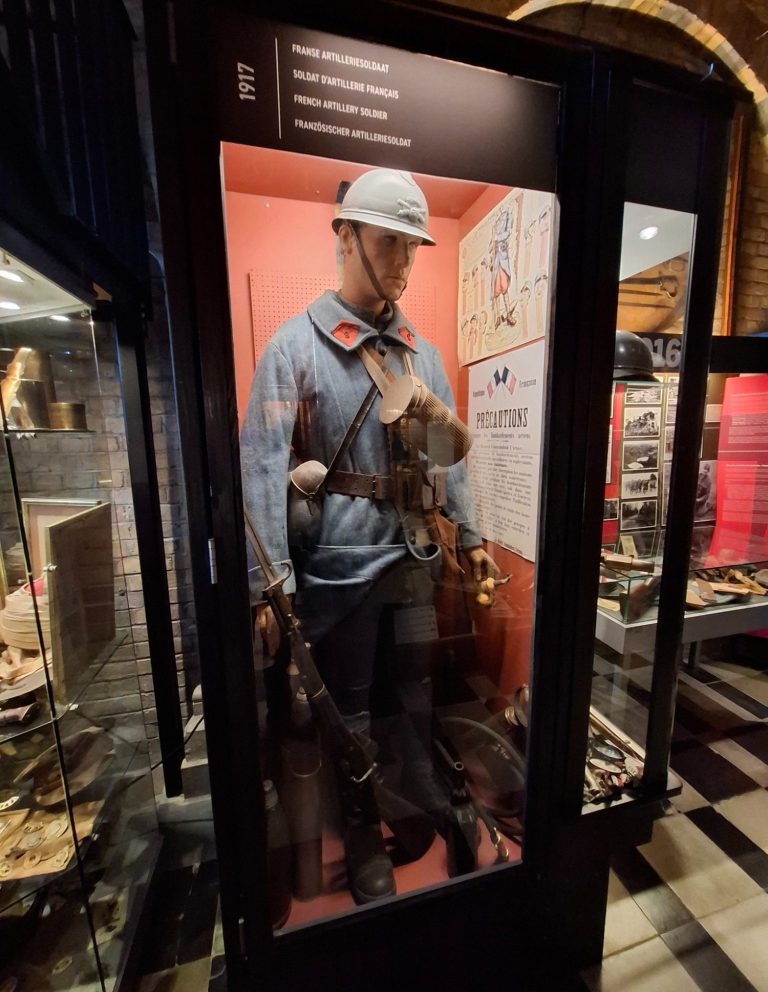
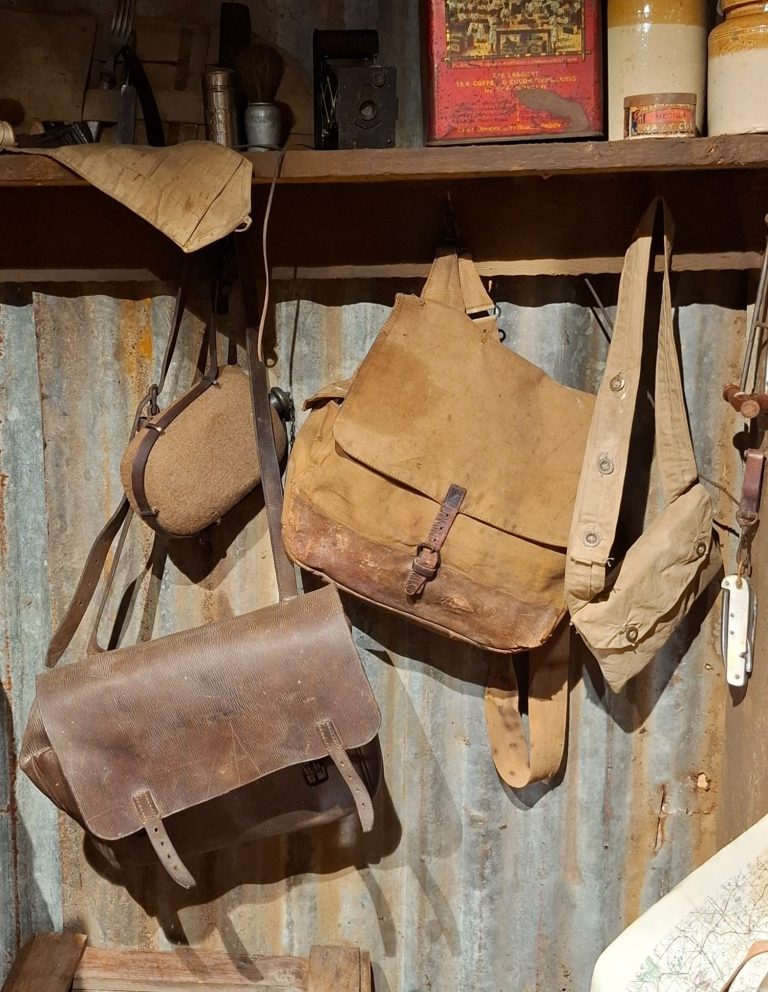
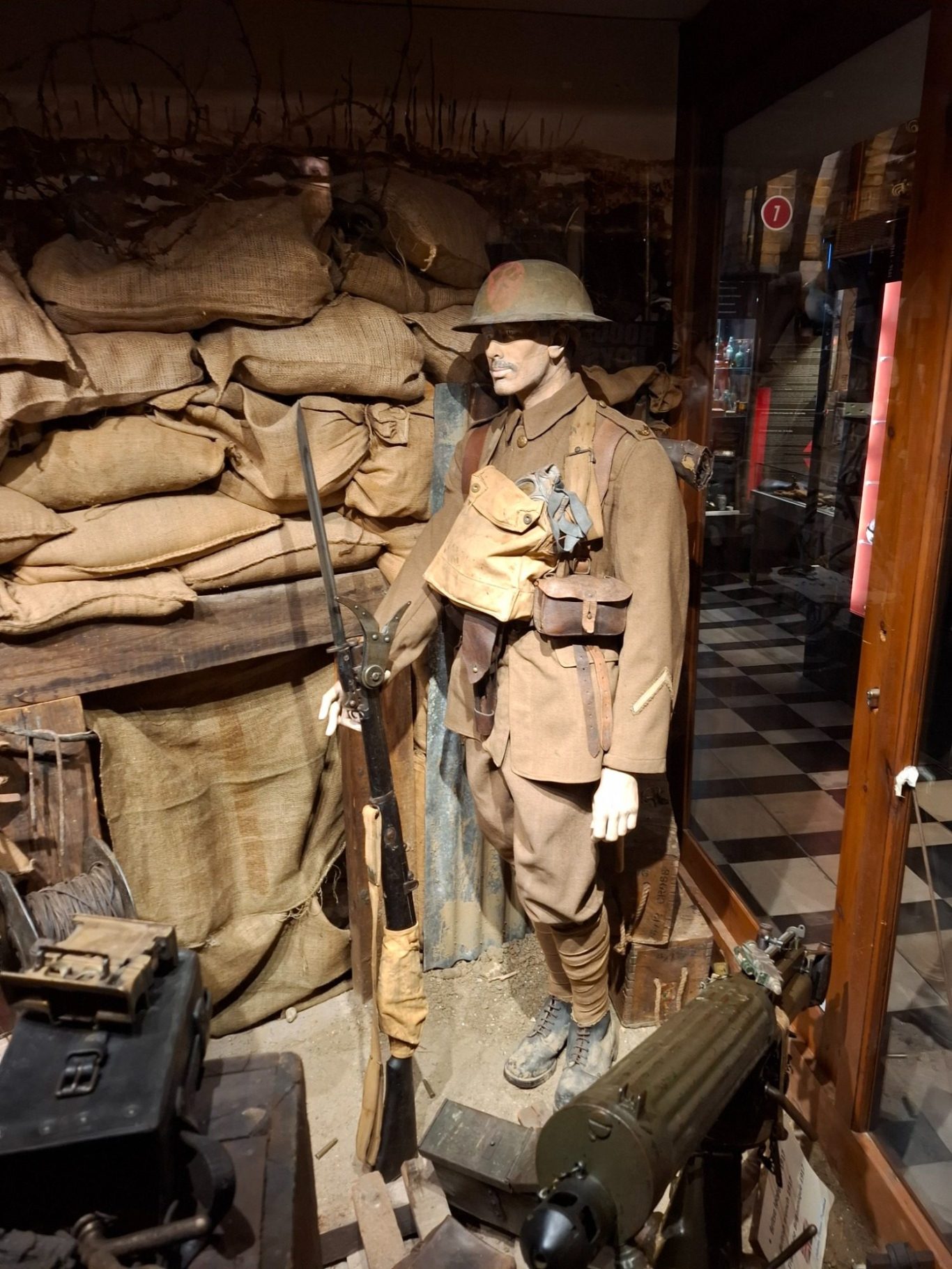
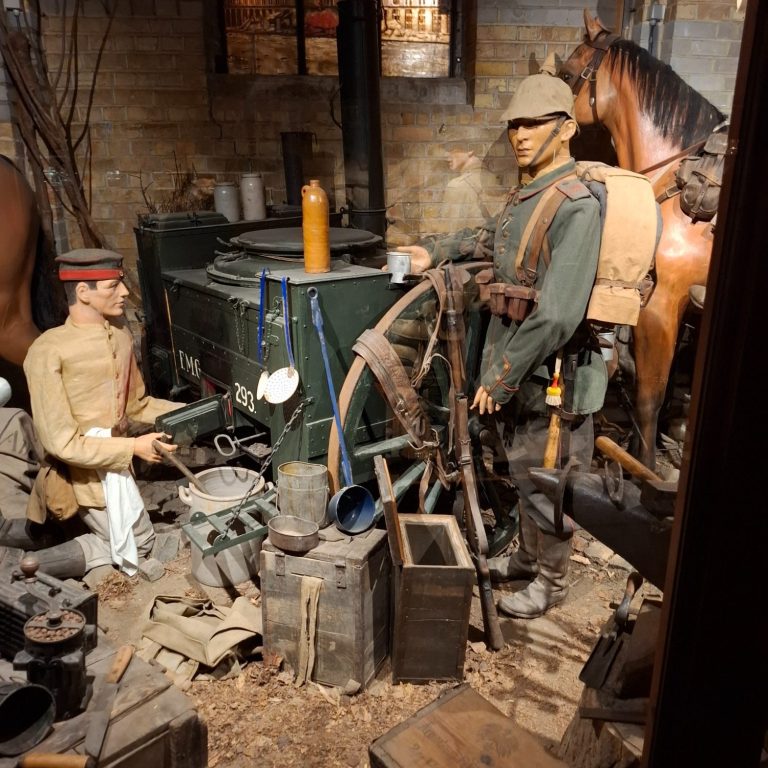
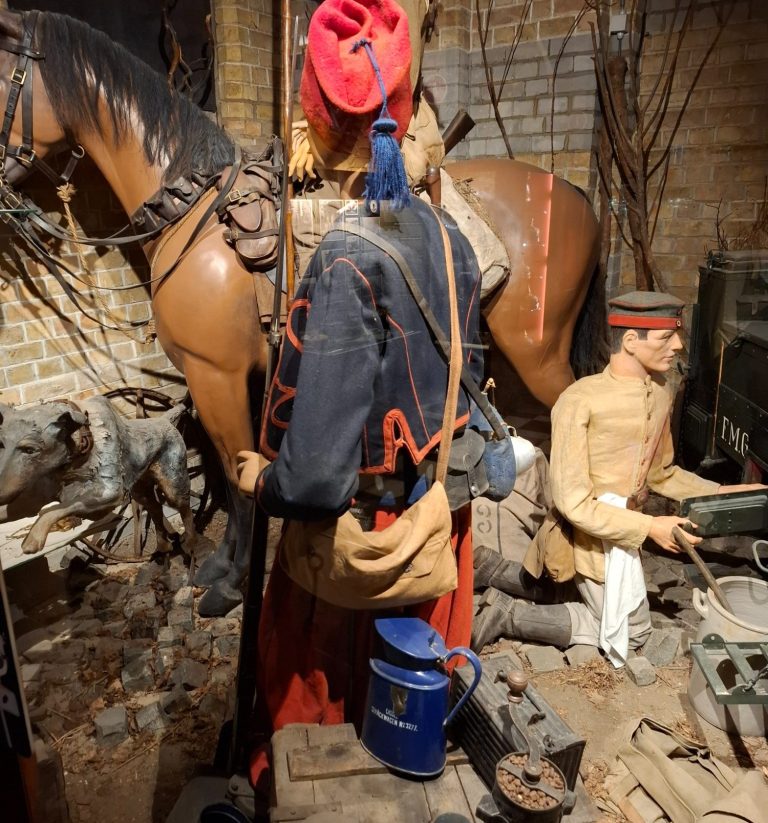
Life-sized figures are dressed in uniforms of the times and sometimes posed in display cases on their own with full equipment, but in other larger settings there are vignettes with the soldiers caught in a snap-shot of their existence, with trench settings, bunker and dug-outs, all with equipment that would have been used, and even the discarded items of old bottles and broken boots.
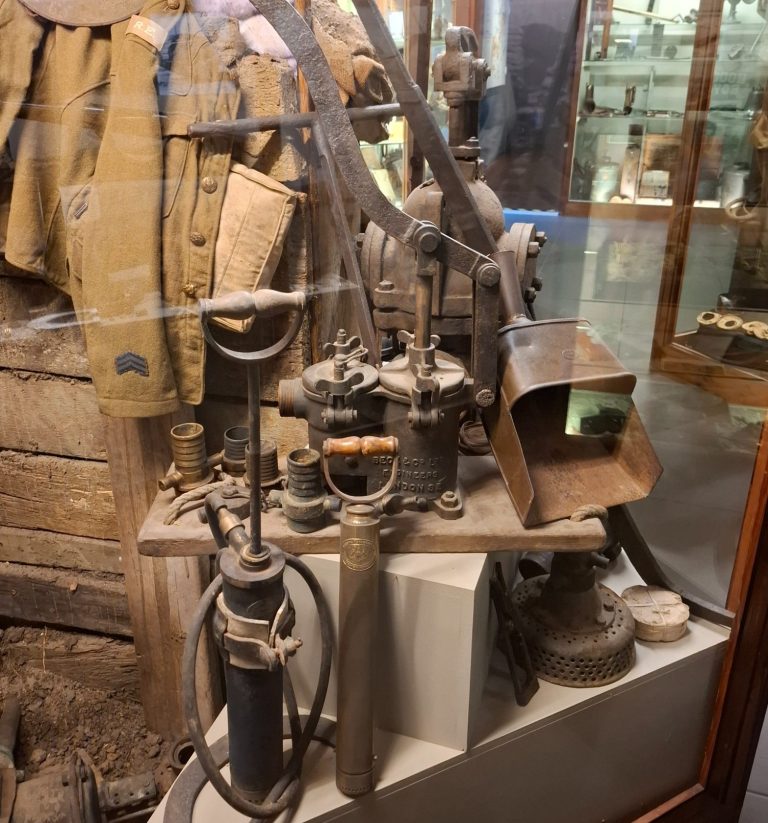
The attention to detail is beyond good, there’s real thought for showing a realistic impression of what life was like for soldiers – of both sides – living and trying to survive in such conditions.
Whilst I have to admit that every museum I’ve ever been to seem to make use of “shop store dummies” to display uniforms and equipment, and they’re never going to be anything other than what they are, in this museum the figures used really don’t intrude or look out of place.
They are there to give the clothing form and shape, and in this they perform admirably.
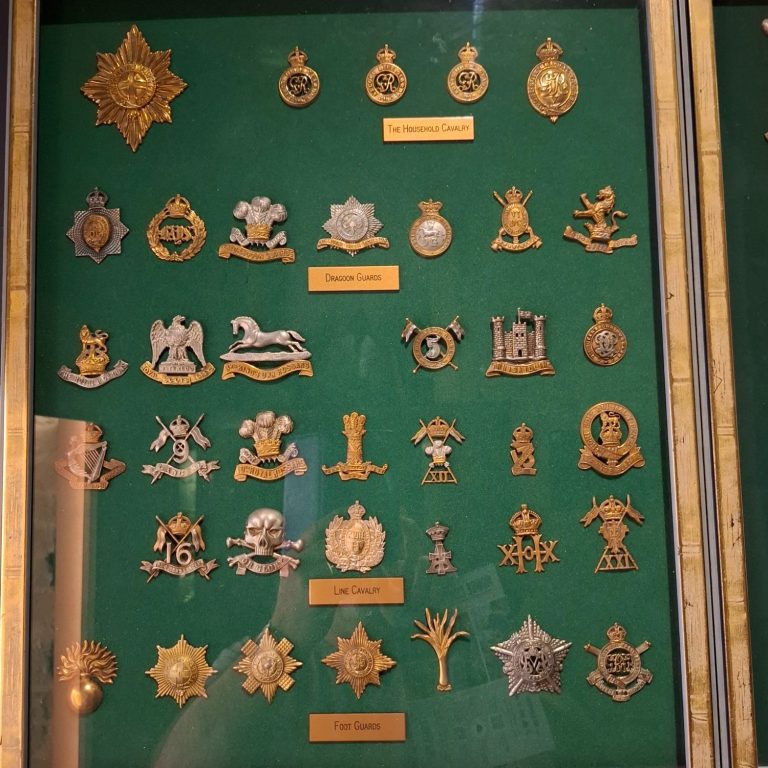
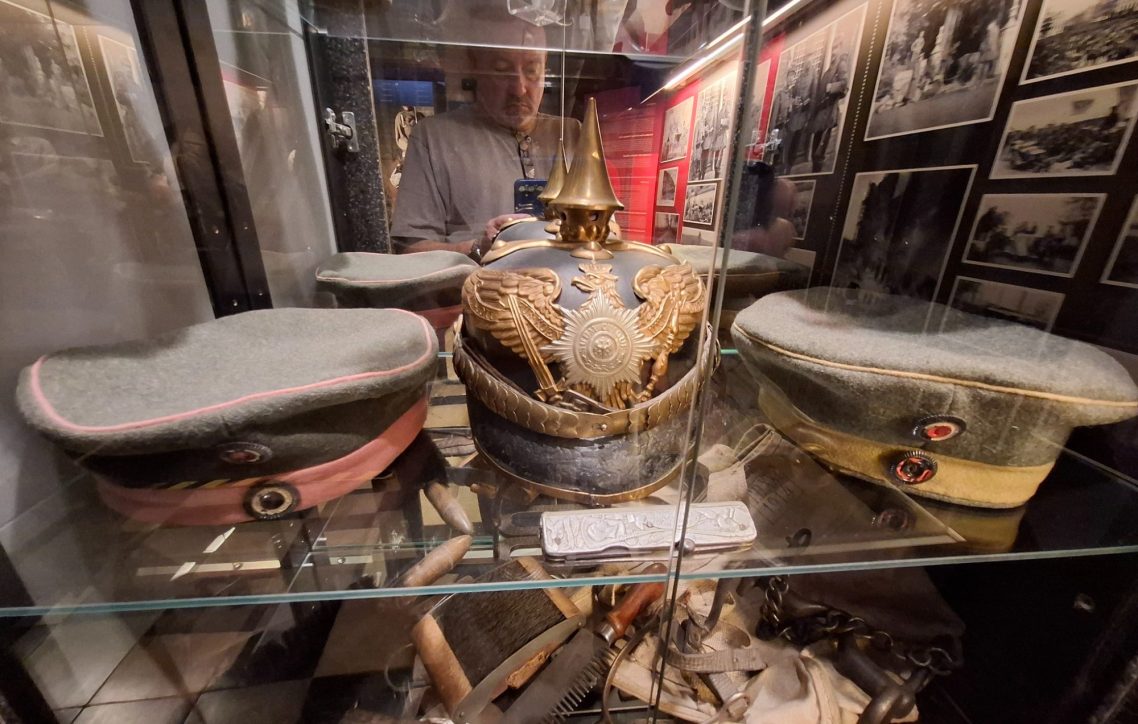
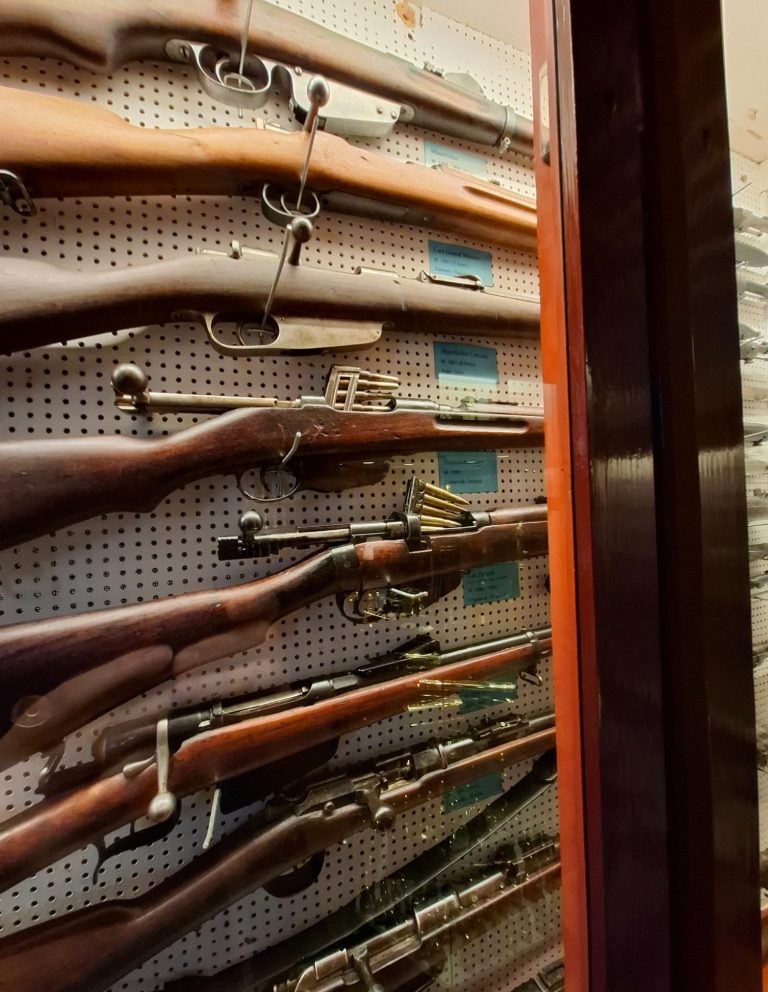
In complete opposition to the worn and weathered look given to the vignette displays, the display cases showing uniforms, equipment and other items of the second decade of the 1900’s are clean and in the case of anything metallic, highly polished.
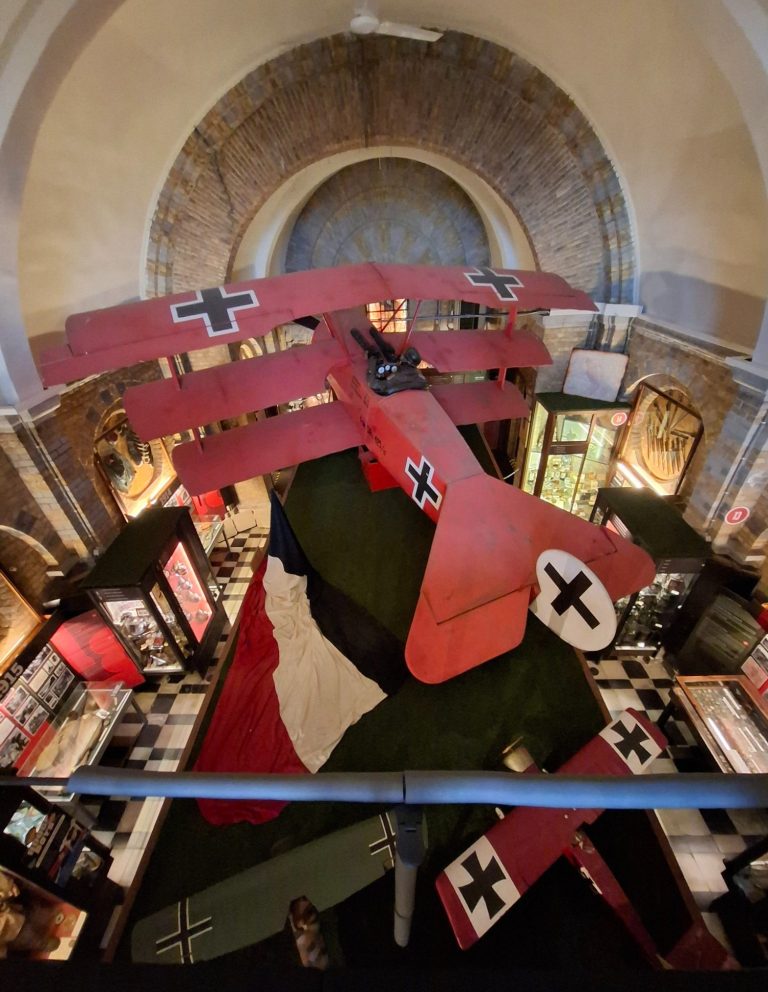
The cabinets are packed with a vast assortment of items, from cap badges to bayonets, from pistols to machine guns, there’s even a life-sized Fokker Tri-plane up on top of some display cabinets, along with several 1/6th ( ? ) scale models of other aircraft of the time.
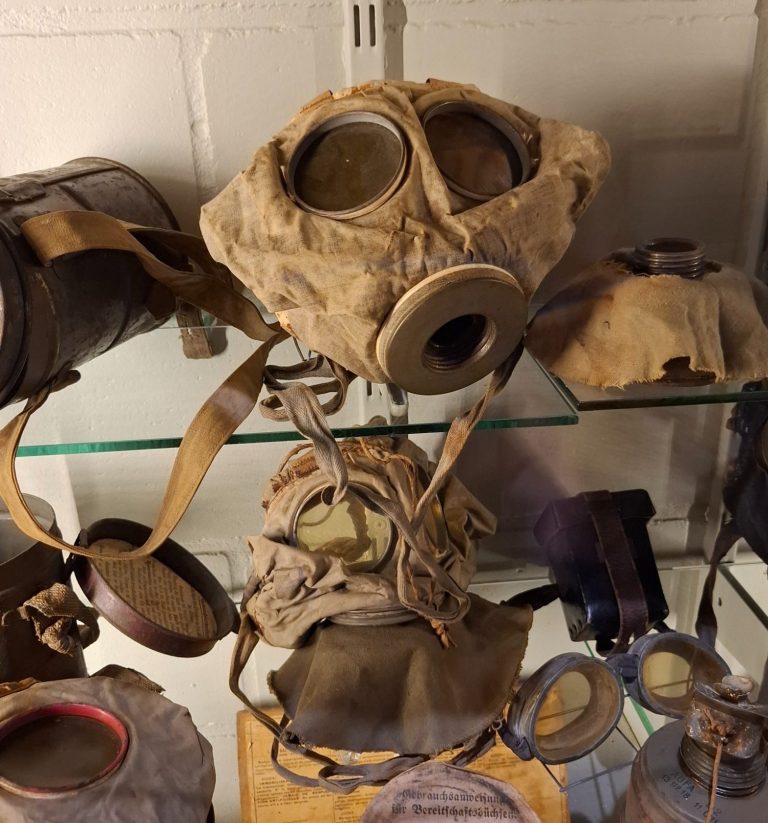
Time to note a few things I learnt on my look around the museum.
These include the cork-screw-like ends of barbed-wire supports. I always assumed that they were straight pieces of thick steel wire driven into the ground.
Also that the duck-boards lining the bottom of trenches were in some cases supported by frames that raised them above the trench floor by as much as three feet ( one metre ) which counteracted some of the flooding and I suppose helped prevent “trench foot”.
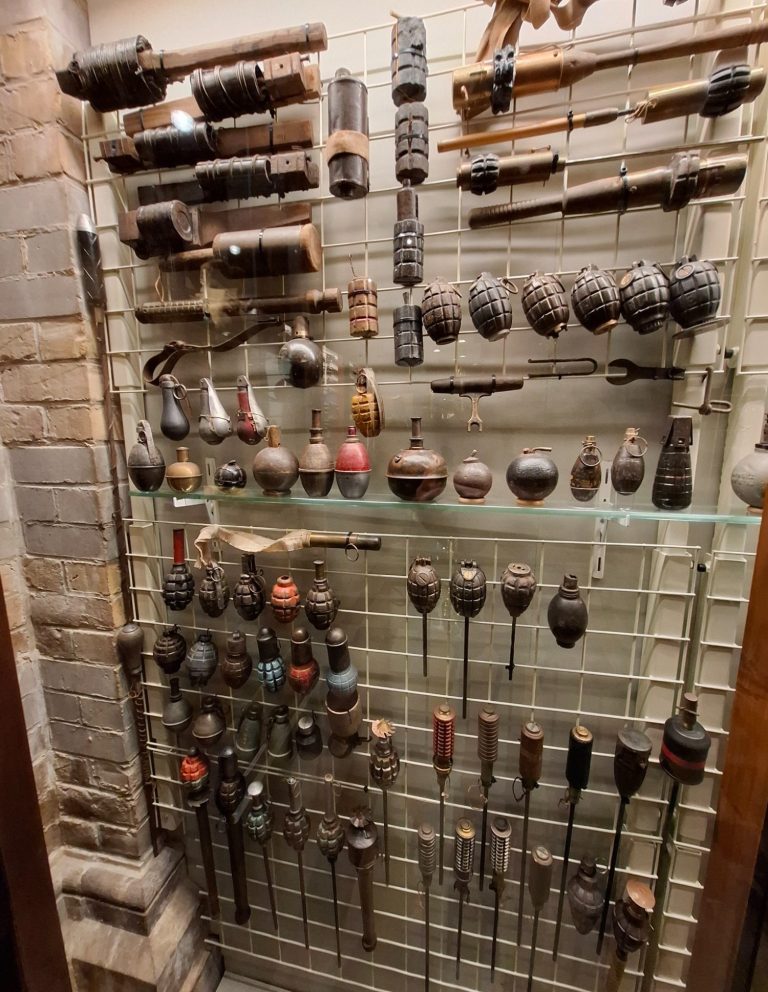
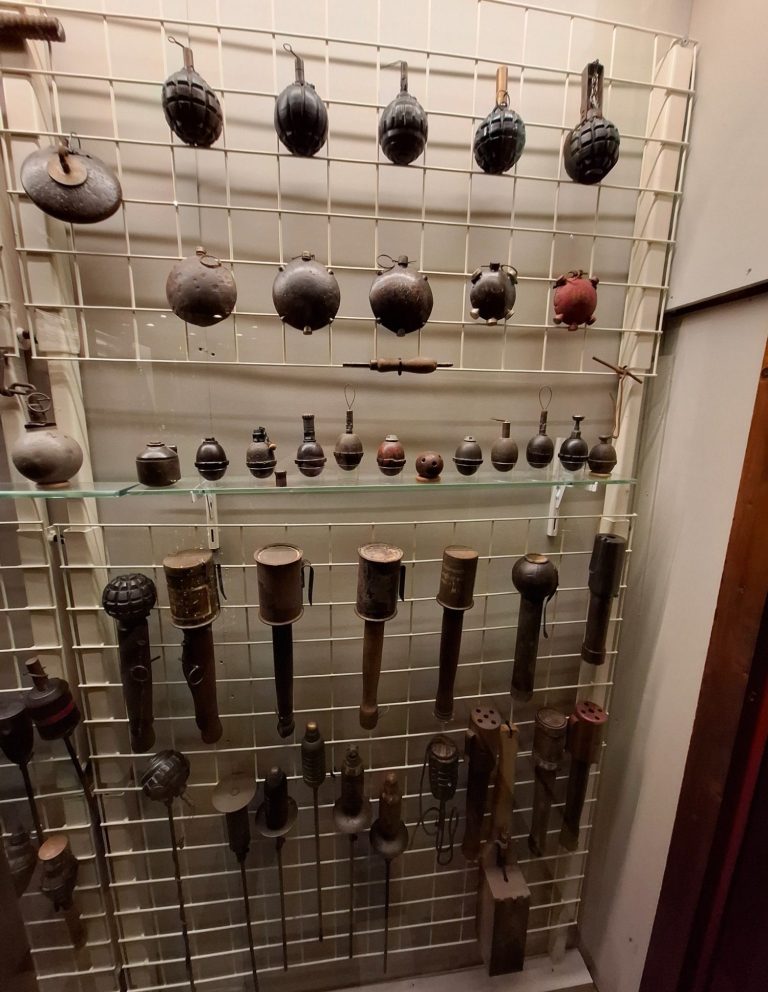
And just how many different types shapes and sizes of hand-grenade there were.
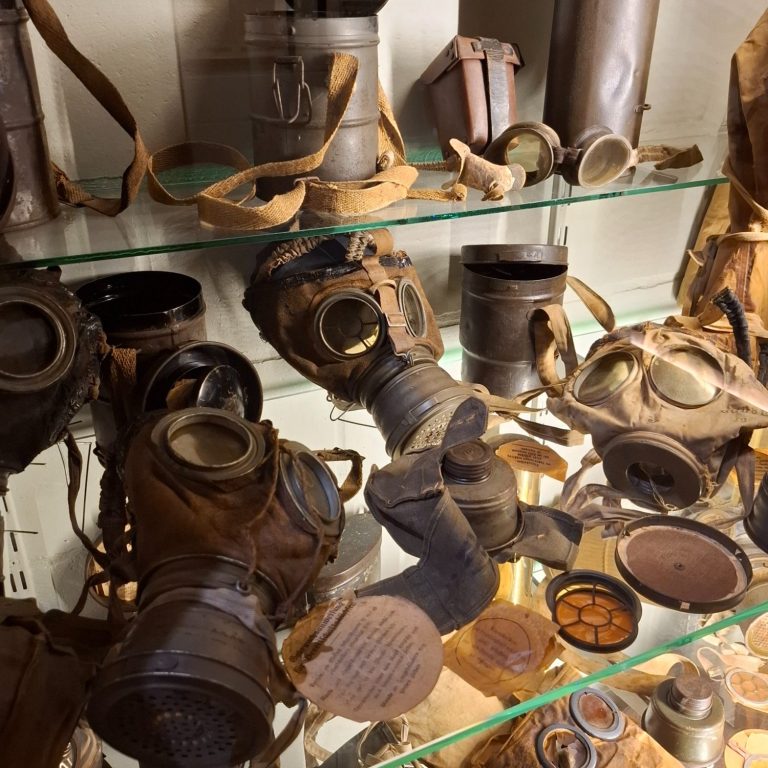
Final thoughts.
This isn’t a huge museum on the scale of say the Brussels Museum of Military History, and its purpose is to display items from World War One.
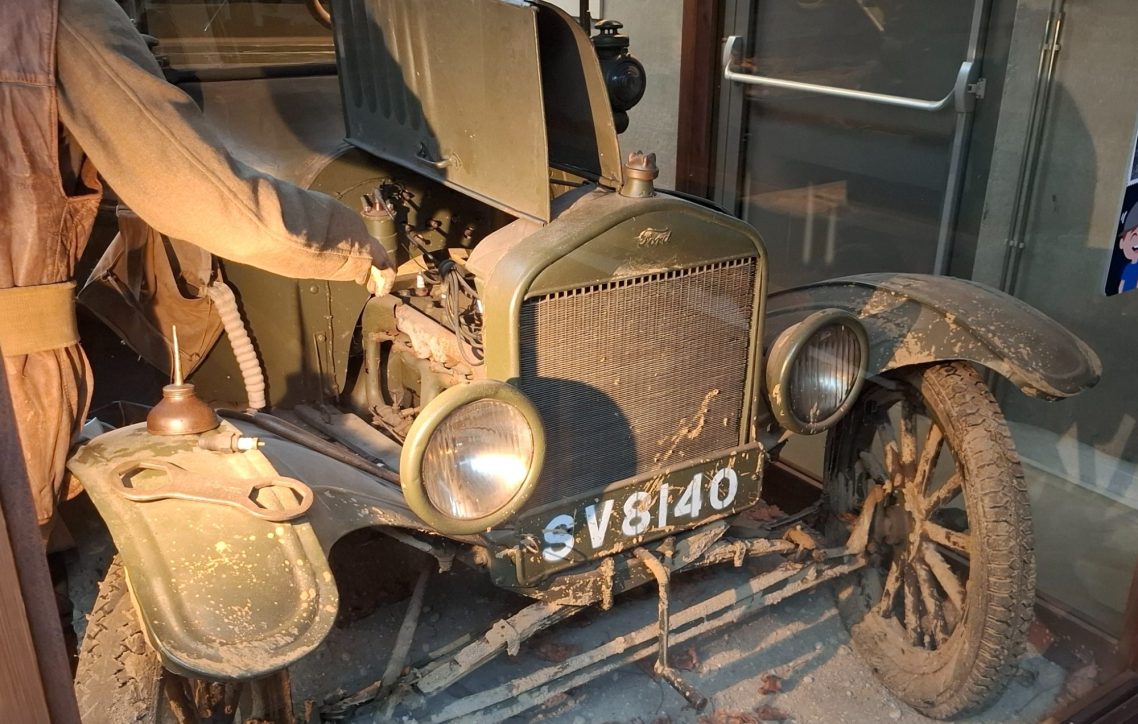
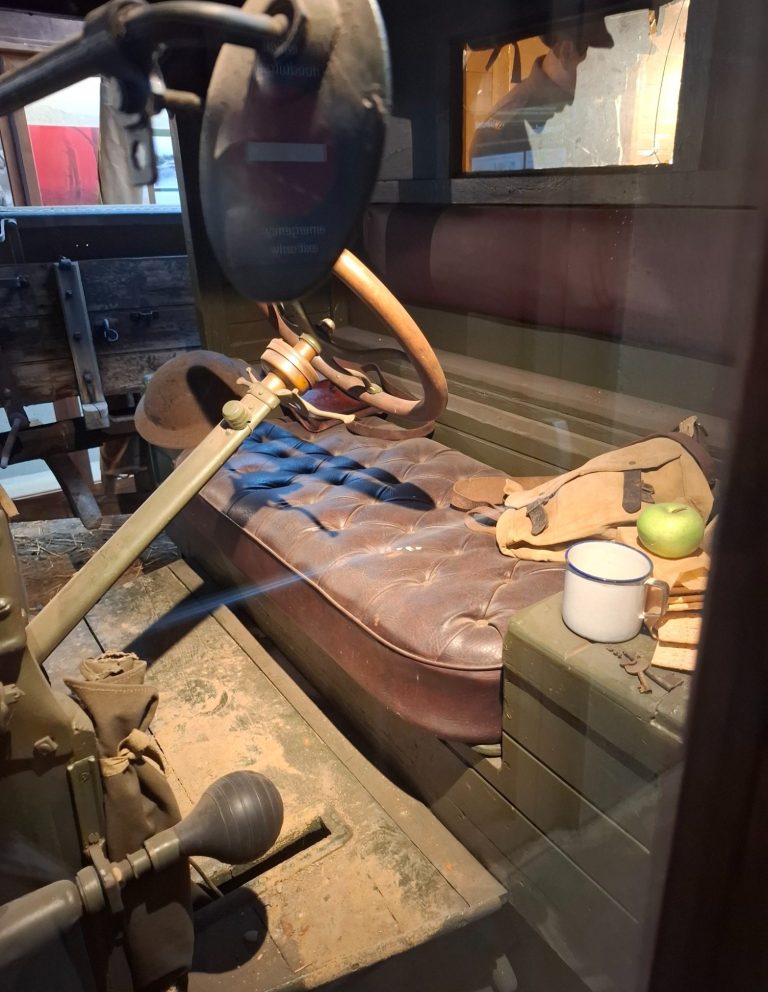
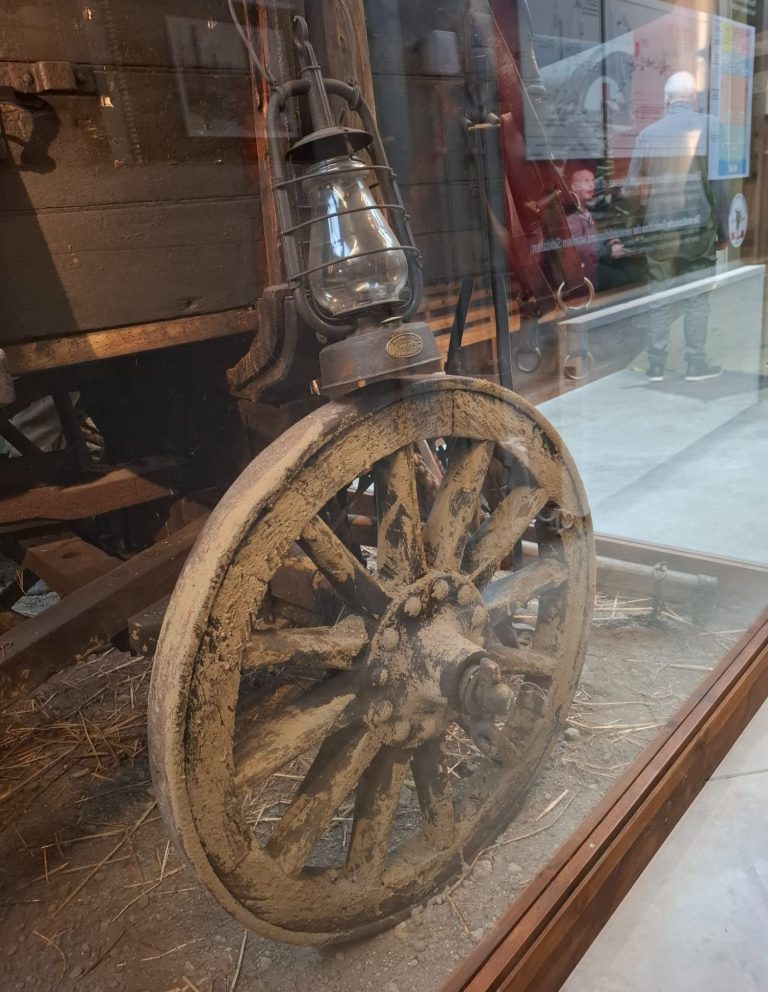
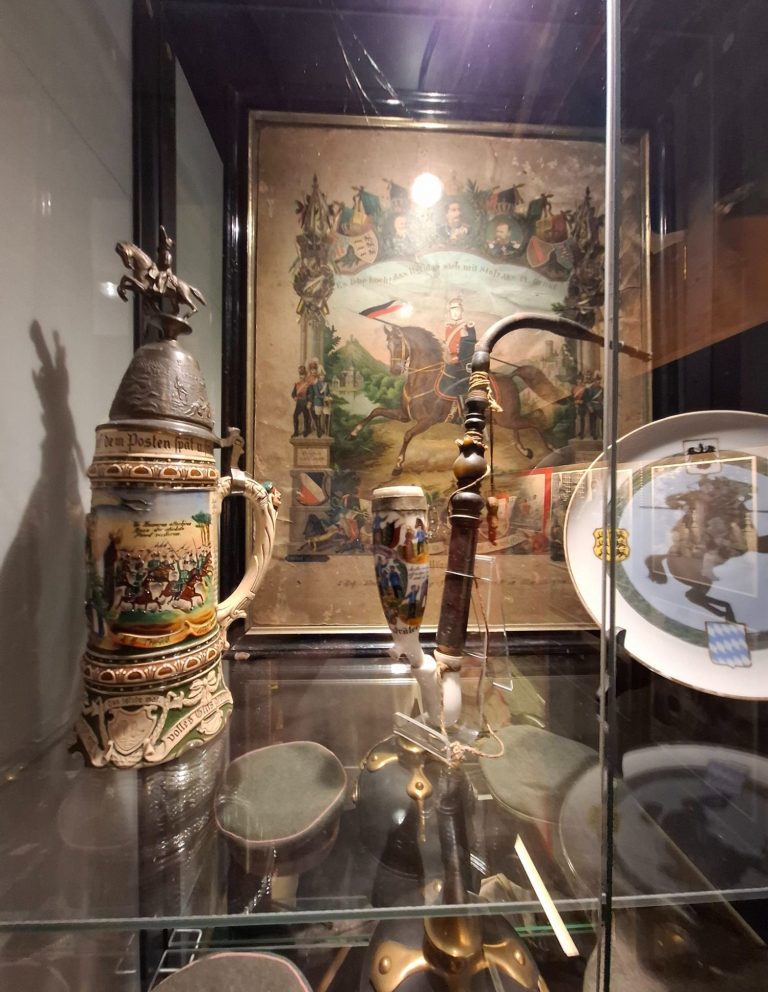
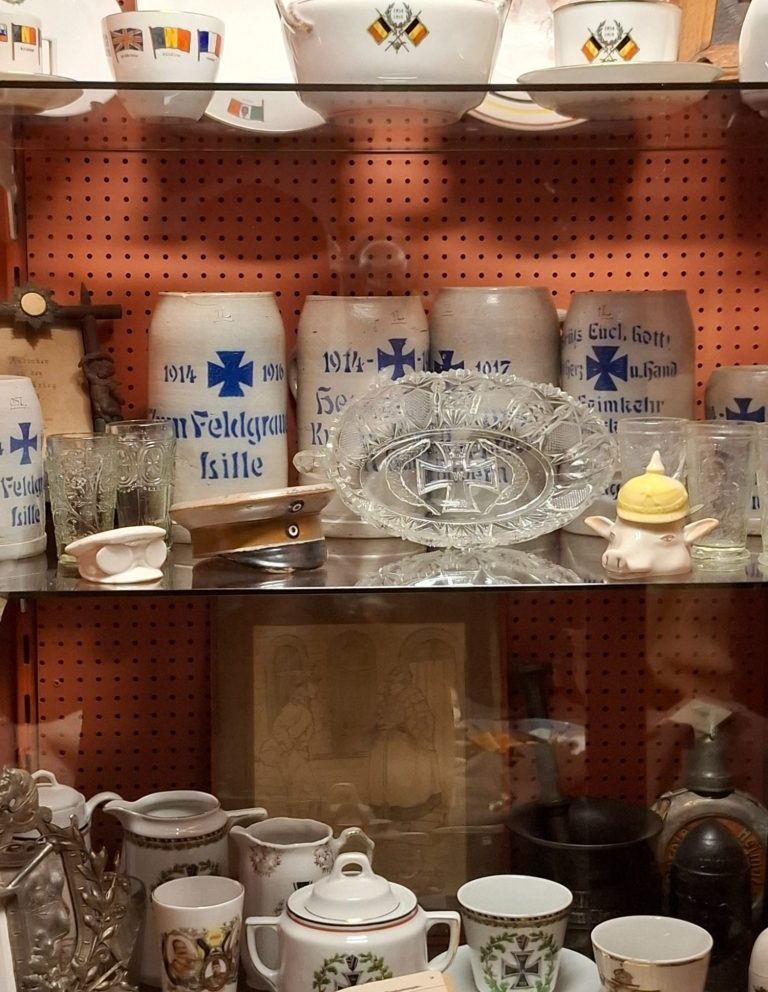
However, it packs it in. The displays are absolutely jammed full of things from that period, from a Model T Ford Ambulance to fine china tableware and a very decorative smokers pipe.
For anyone who makes models of this period, it stocks a wealth of reference material, and the accompanying photos show a fraction of what can be seen.
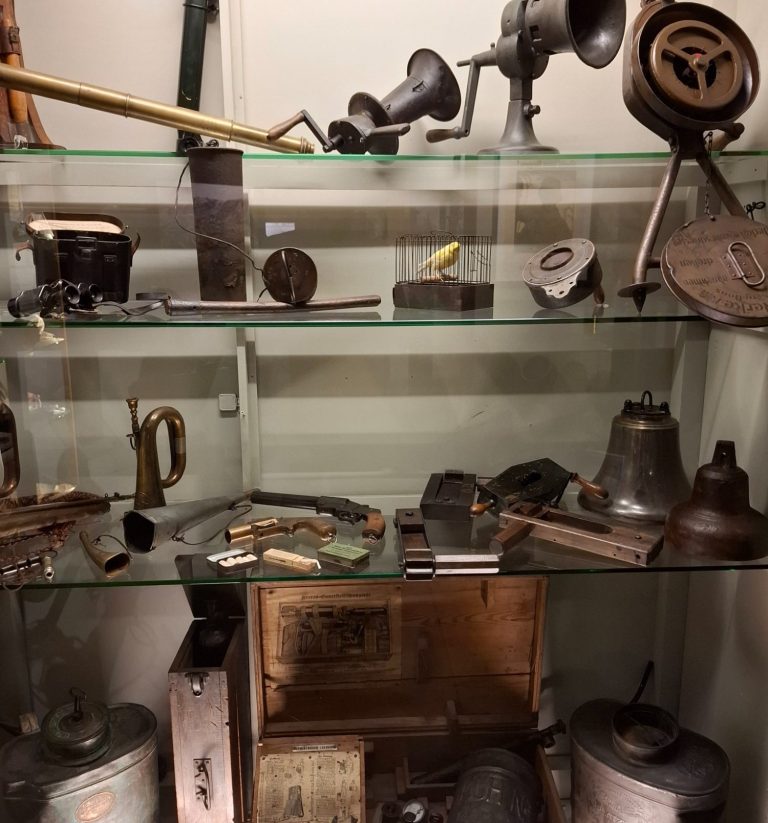
The museum is across the road from another cemetery, remembering those who fell during the war, but the most pleasing thing for me was to see that children are encouraged and welcomed from schools to see for themselves what their great-grandparents fought for.
This museum is definitely worth a visit, we only allocated three hours to our visit and missed looking around the crater and external installations, but the weather wasn’t being kind, and it was raining quite heavily. So a return visit is on the cards in the future I suspect.