Waterloo - A Short tour
Article from Military Modelling magazine in 2009
I wrote this article a few years ago for the bicentenary of the battle of Waterloo, and the history behind that last battle that smashed Napoleon’s French forces is well documented and covered in many historical tomes. So too are the uniforms, the leading characters and so I’m not going to waste space with that.
Instead this is simply a short tour with the help of some photos showing what there was at the site of the battle around sixteen years ago when I visited.
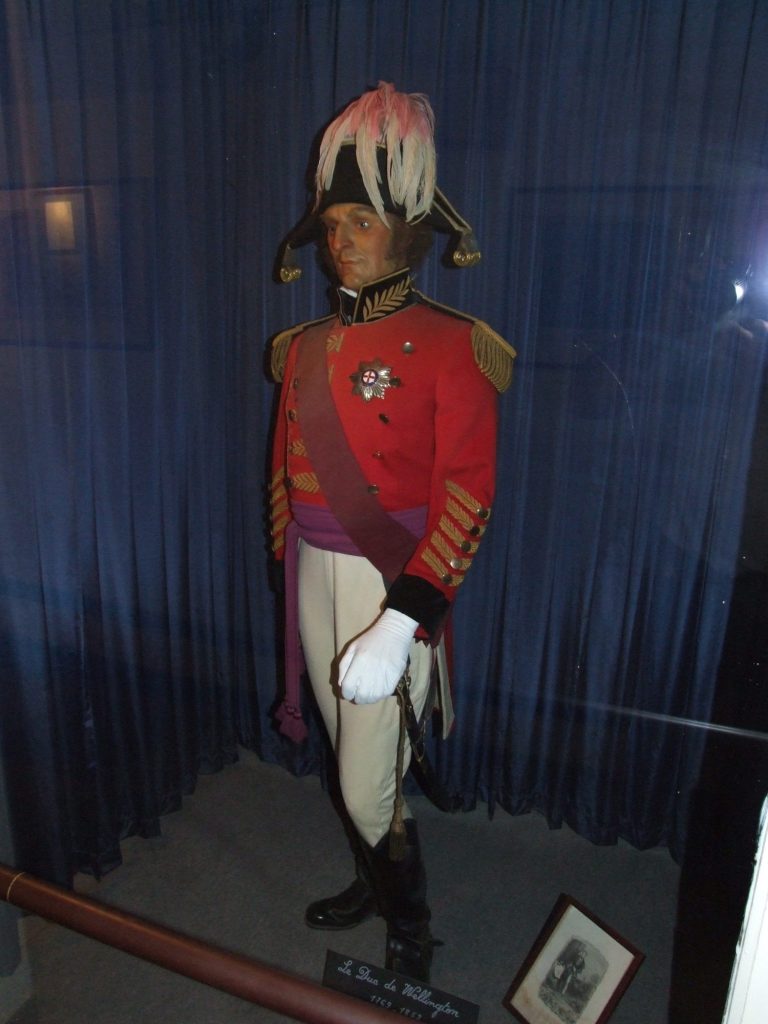
Arthur Wellesley, 1st Duke of Wellington
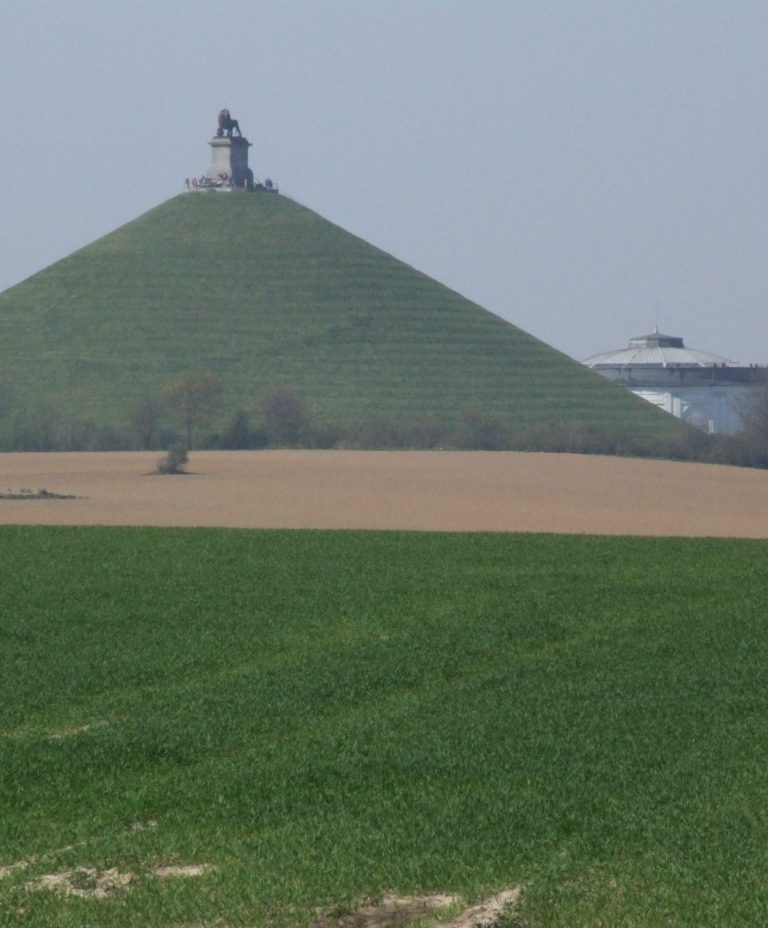
The battlefield is pretty unremarkable really, several ploughed fields that are used for crops, a visitors centre, a small museum and a converted cinema deal with the history of the battle, a pub across the road deals with liquid refreshment.
In summer, it’s busy too, if you go slightly out of season, you’ll get a better feel for the open topography and be able to view what’s on offer in a more relaxed manner. I went in late March – early enough to avoid the crowds, but just at the start of the tourist season so that everything was open.
The focal point of the battlefield is now the mound, built after the battle to mark the passing of so many soldiers topped off by an absolutely huge statue of a Lion. The steps up to the top of the mound are steep, fairly narrow and tiring to anyone who’s not fit……..hell I’m pretty fit and I was, well, what I felt on reaching the top definitely ended in “ Kn***ered!”.
The Mound, seen from quite a distance,
and which dominates the area
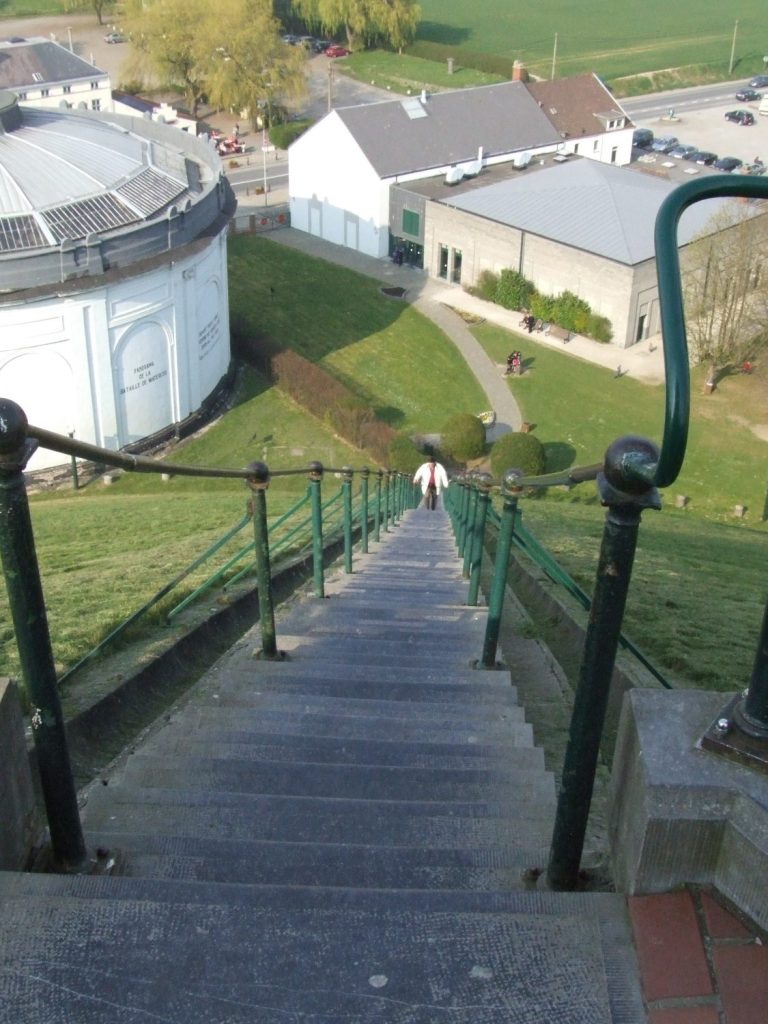
Here’s a photo looking down the steps, and once you’ve dragged yourself away from them, and looked around, the view is fantastic – well worth the climb.
Whether viewed from the ground, or from the top of the mound, you realise just how open and relatively flat the area is. Dotted around the whole area are maps showing the deployment of troops and from the top of the mound you get a distinct feel of how the battle began.
The visitor centre at the base of the mound, and to the upper right of this shot, was extended in 2009 by the time of my third visit, and inside there is of course the usual memorabilia directed at the casual tourist, however there are also lots of more involved goodies for sale, historical books, films and documentaries, not to mention replica weapons etc. certainly within that lot there’s something – several things – to attract the amateur historian in all of us.
A lot of steps, it's a long pull, and not for the faint hearted. However, the view is well worth it once you get your breath back
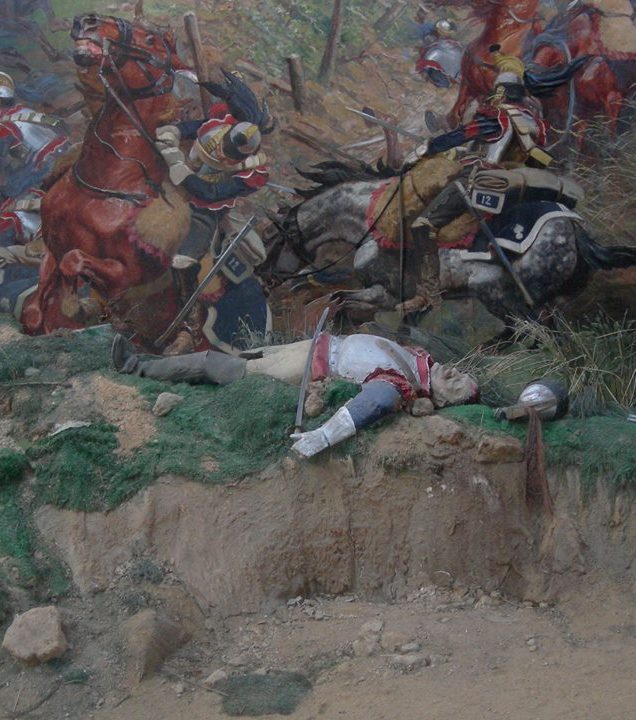
Back outside and a visit to the converted cinema is a must. I have some pictures somewhere, but couldn’t for the life of me find them. To my rescue came Johan Kees – my good friend from Antwerp who accompanied me on my second visit to Waterloo.
Johan has supplied the shots of the mural inside the Cinema, and whilst it is getting a little dated – I first visited it in about 1985 and it hasn’t changed - the clever effect given to the first time visitor of walking up a set of stairs to a central viewing platform within the vast domed interior of the cinema, only to find that laid out below you and painted all around the walls is a panoramic view of the battle in mid flow. Napoleon’s Guard defending desperately, Blucher’s Cavalry charging forward in the near distance and Wellington’s troop squares advancing amid clouds of musket smoke.
One section of the Mural painted around the
walls of the cinema.
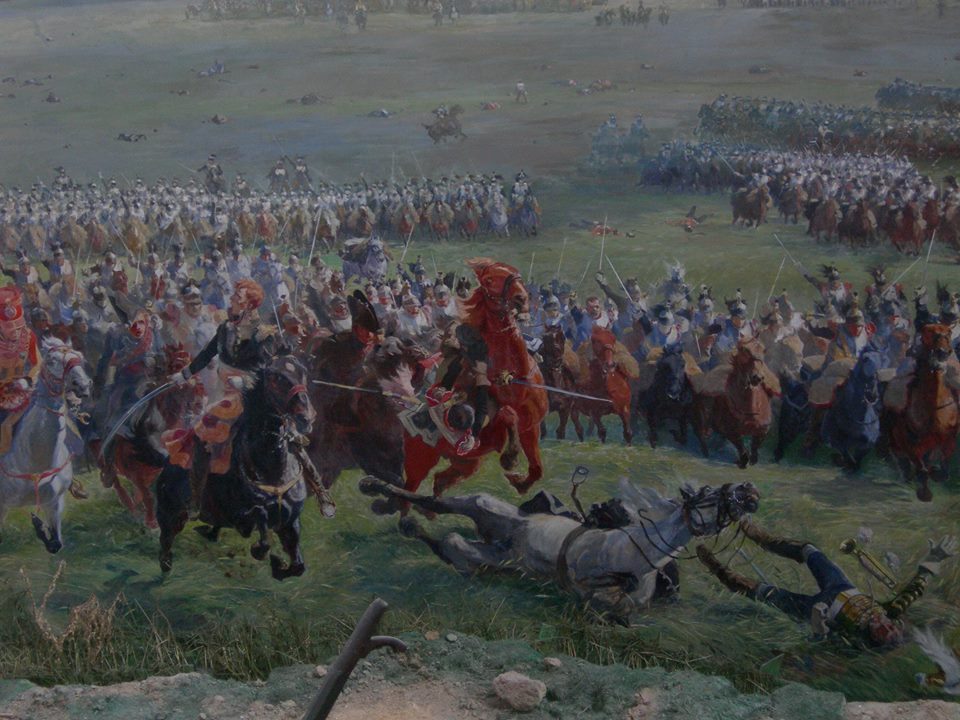
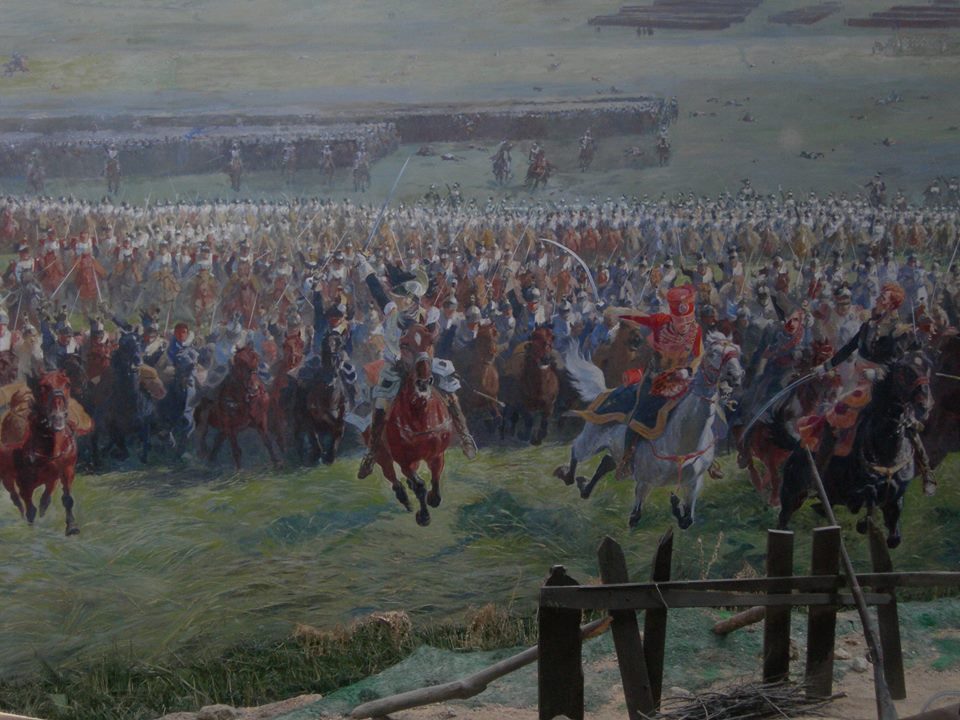
Two more pictures of sections of the Mural
It’s the best conceived display I’ve seen regarding a battle, the figures of men and horses below the viewing platform are life size, with perspective used cleverly to make distant troops smaller as they gather to press their advantage.
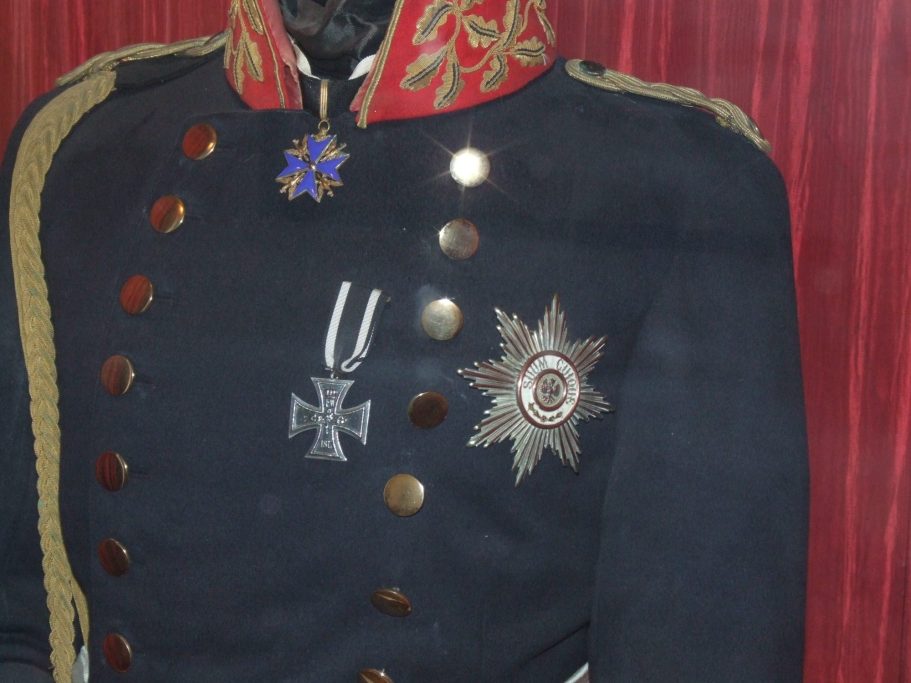
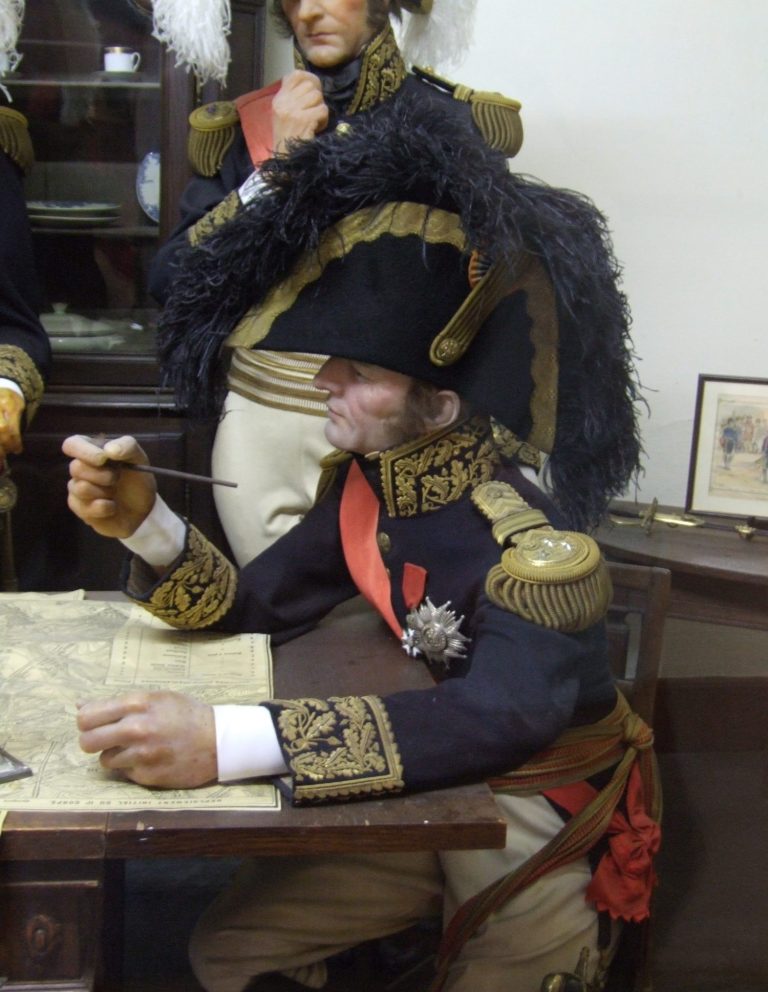
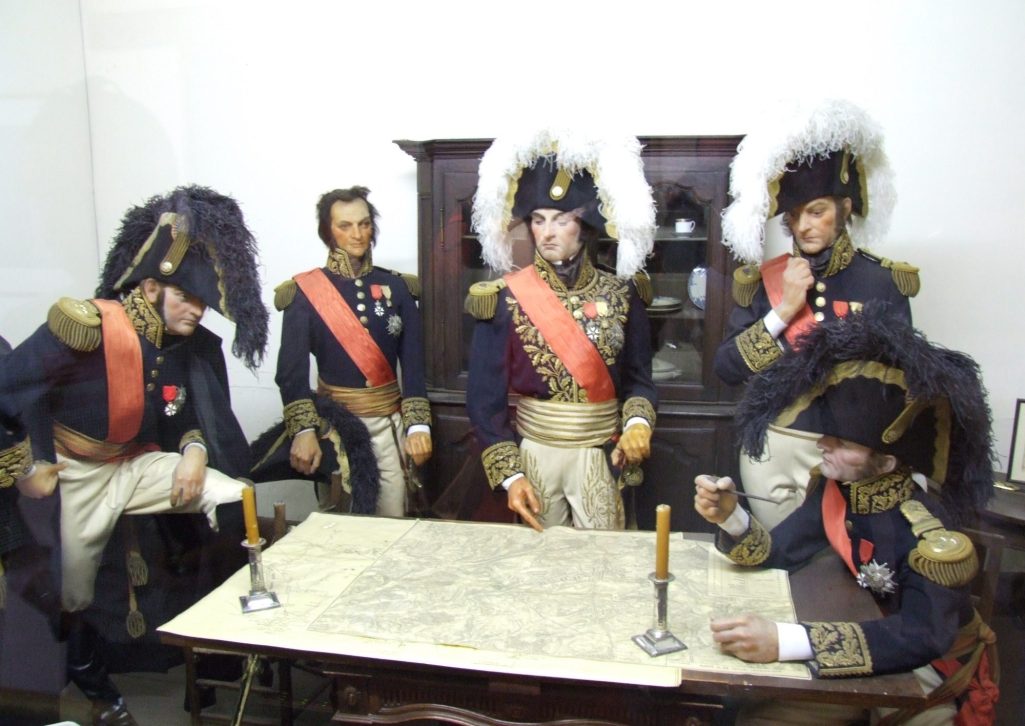
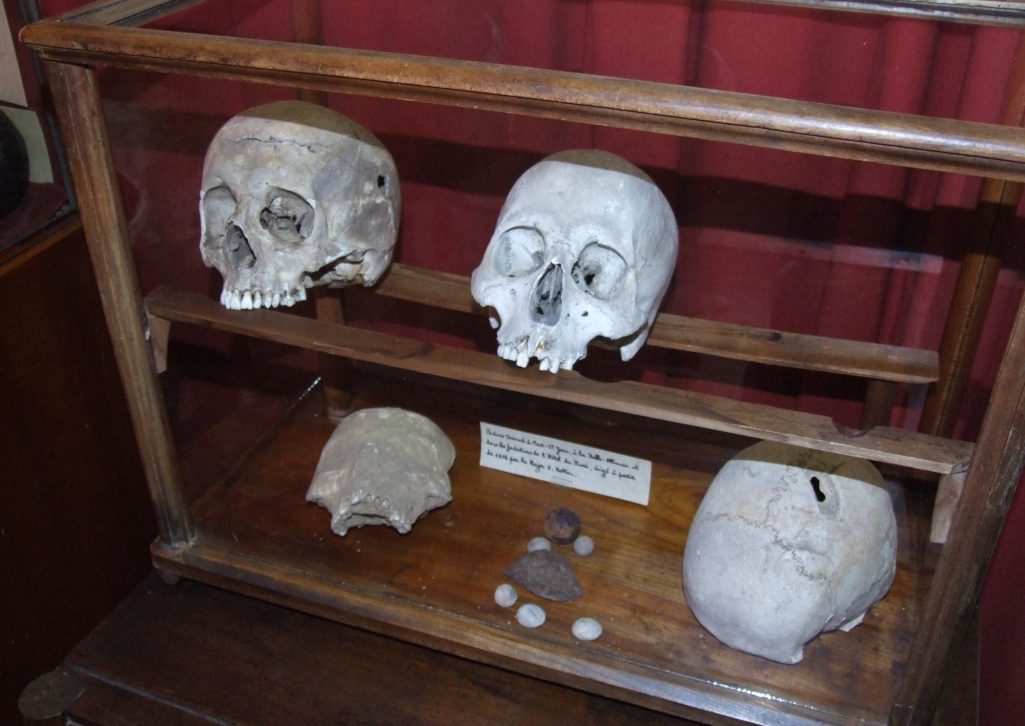
Finally the museum. This is where I’ve taken most pictures, from the now tired looking manikins with their officers uniforms, Napoleon’s wax casting taken from his death mask, and the grisly remains of skulls from fallen troops. It’s worth a look around, and again, I’d advise attempting to get there slightly out of season.
General Gebhard Leberecht Von Blucher's Medals
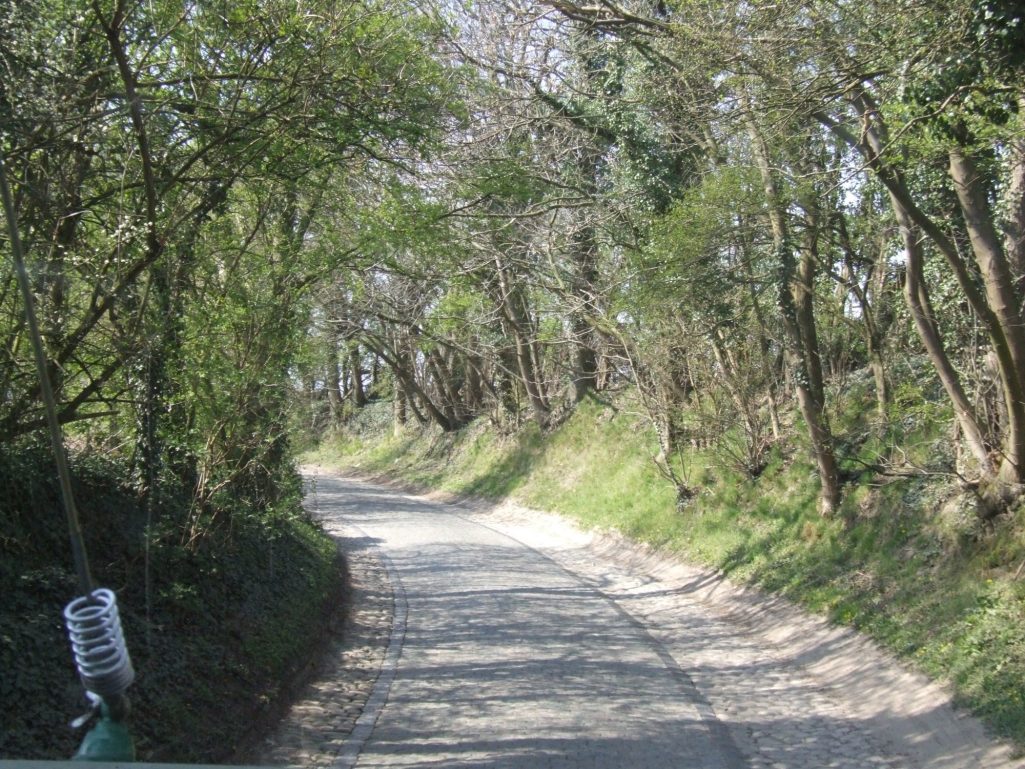
There is a tour of the battlefield – the audio lacked clarity, but it took us down the sunken roads, and from this perspective it’s more obvious that the land can be used to hide troop movements and ambush an enemies formations more easily than is evident from high up on that mound.
A section of one of the "sunken roads" that allowed troops to move unseen until they charged up the side verge and into battle
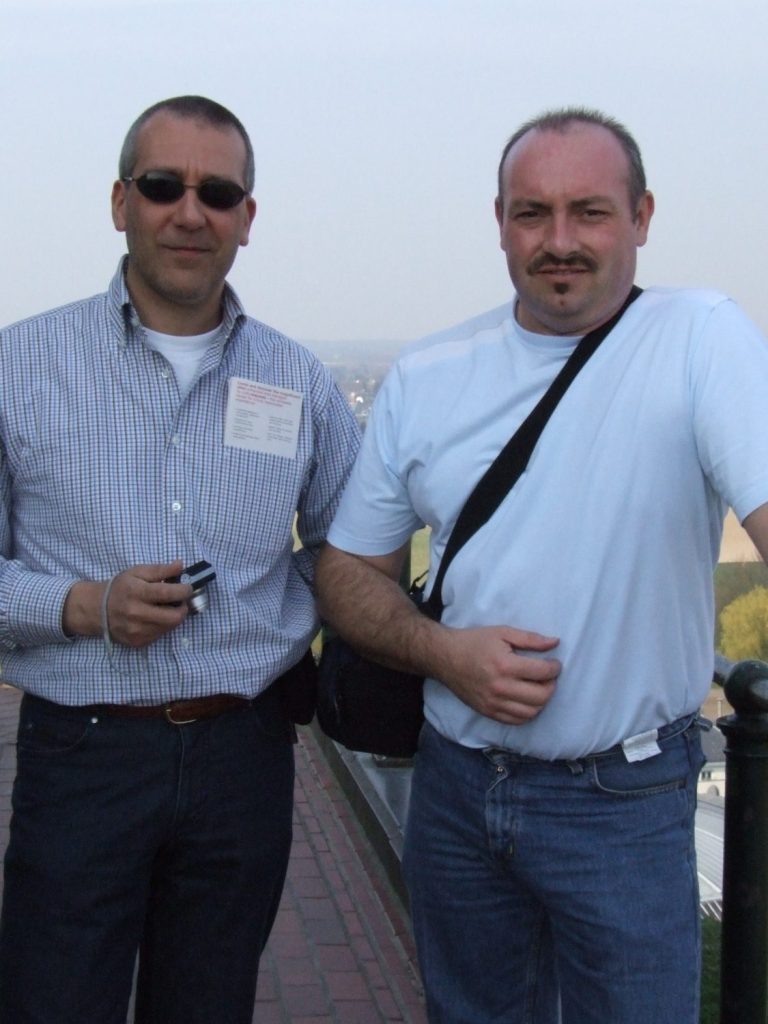
All in all, it’s a day well spent, and I’d like to thank Johan Kees for taking me there in 2007 which enabled me to refresh my memories from twenty years before,
Johan Kees and the author ( oh how young I look ! )
Johan doesn't seem to have aged a day though.
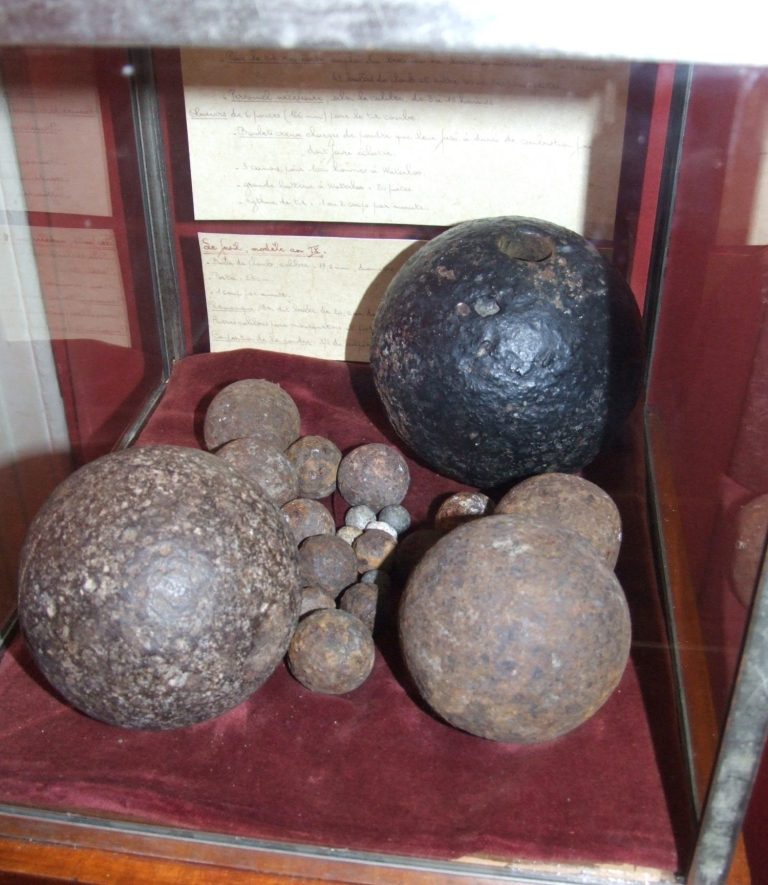
I’ll leave you with the photos that hopefully will provide some interest and give a flavour of the battlefield and some of what you can see there today.
I plan to revisit Waterloo this year ( 2025 ) in October on my way to attend the SMC show in Veldhoven and will take a lot more photos to fill out a larger article for in the future.
A selection of cannon balls and shot.
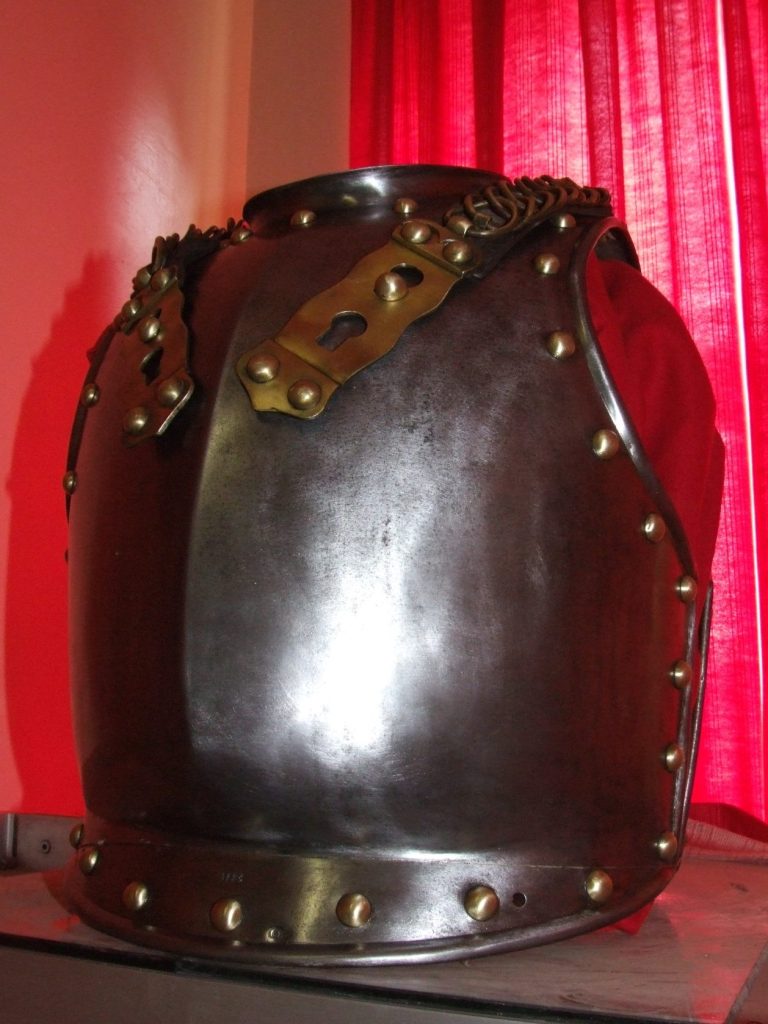
Steel Cuirassier Breastplate
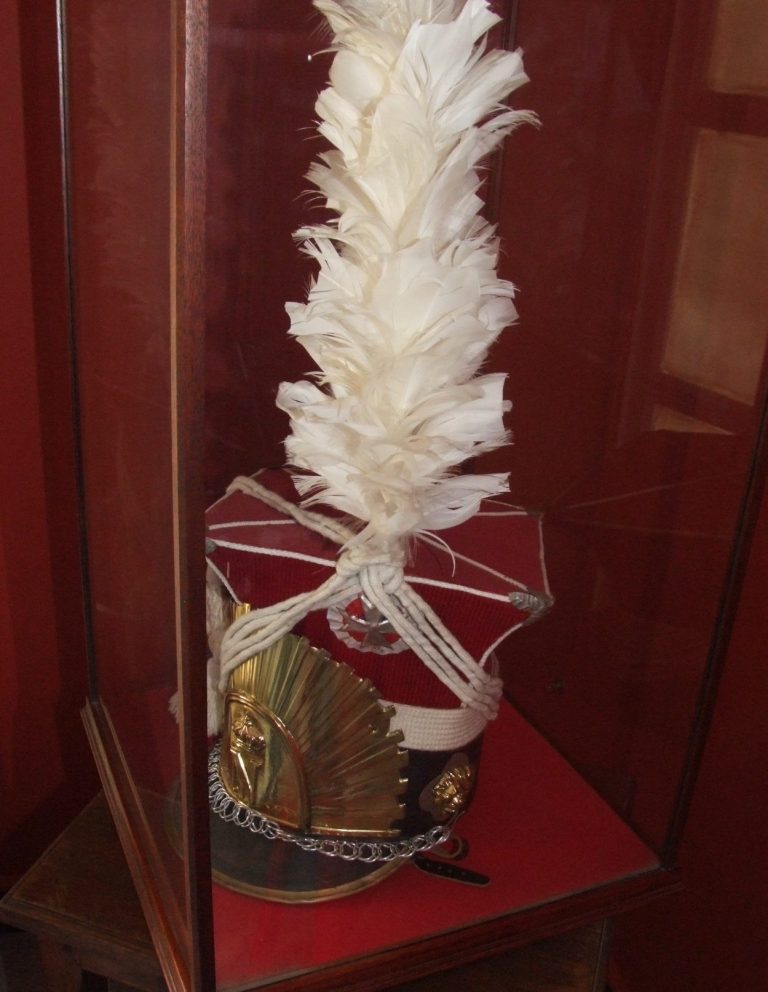
Polish Lancer Shako
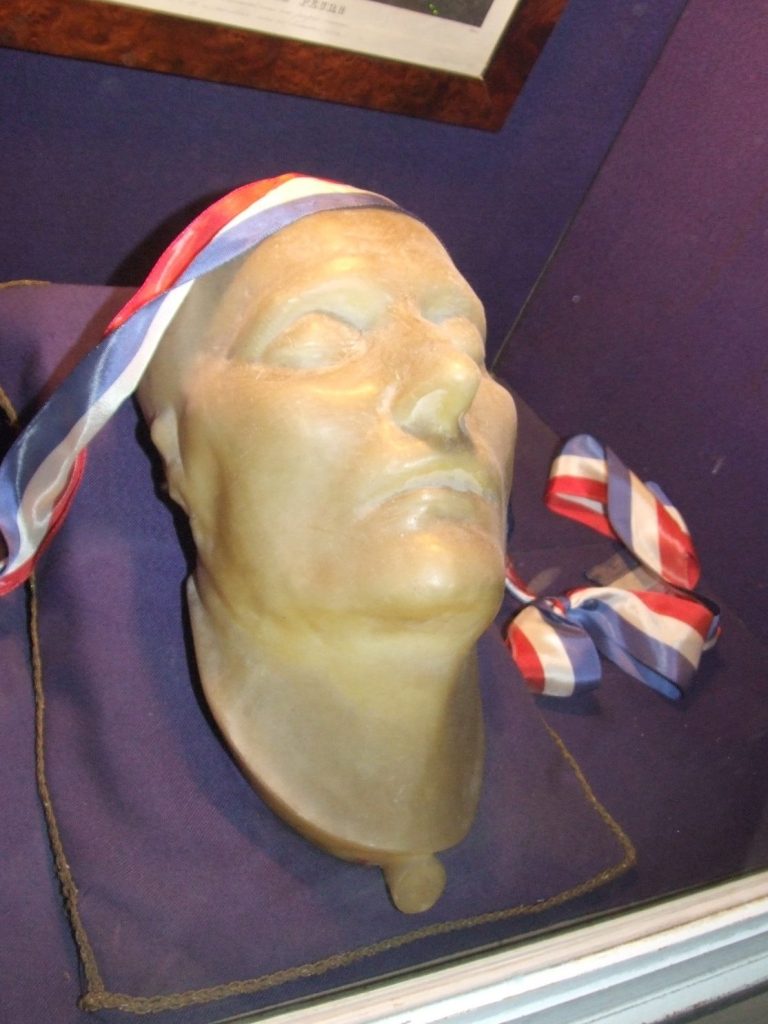
Wax casting from Napoleon Bonaparte's Deathmask
General Drouot
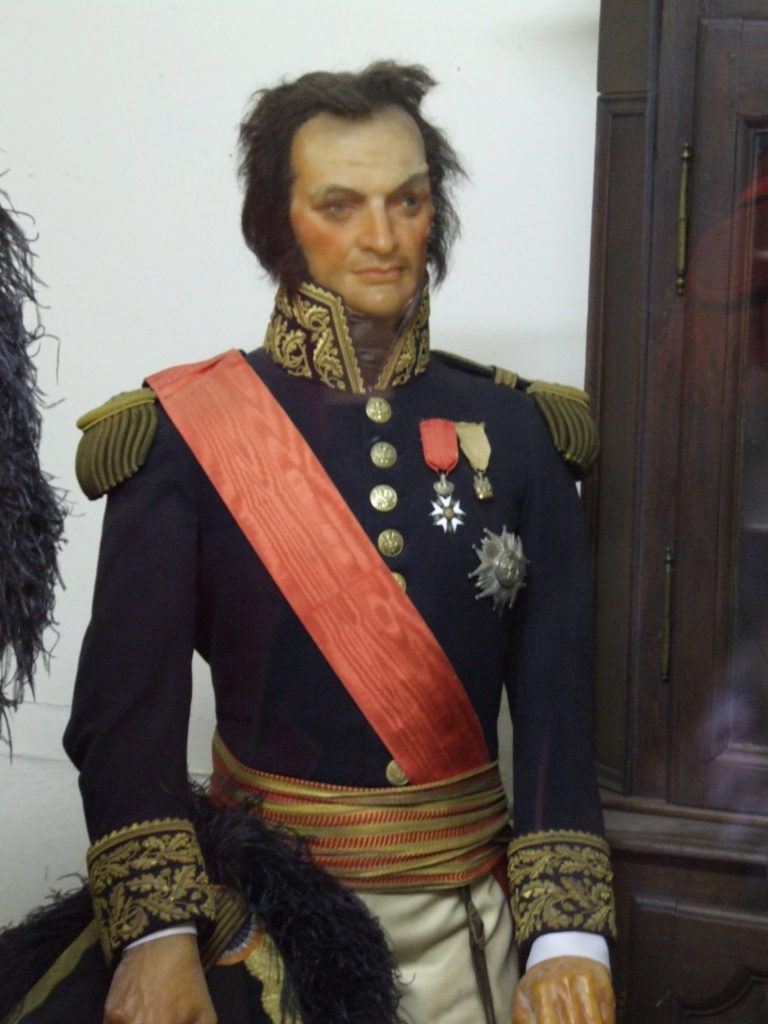
General Cambronne
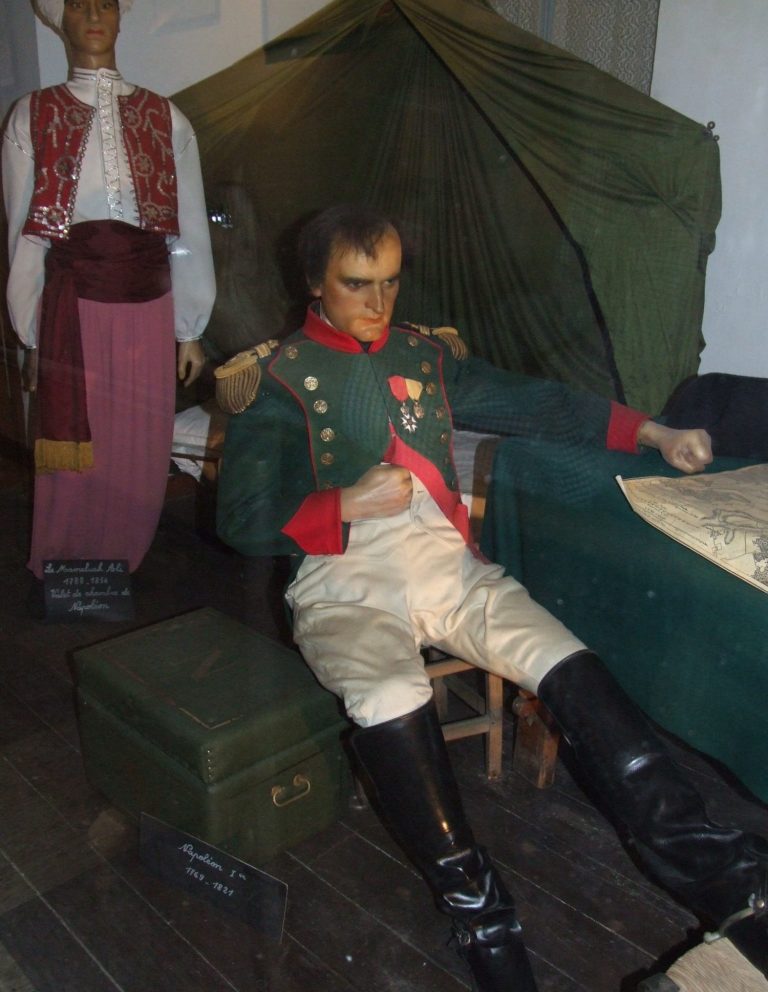
Napoleon Bonaparte
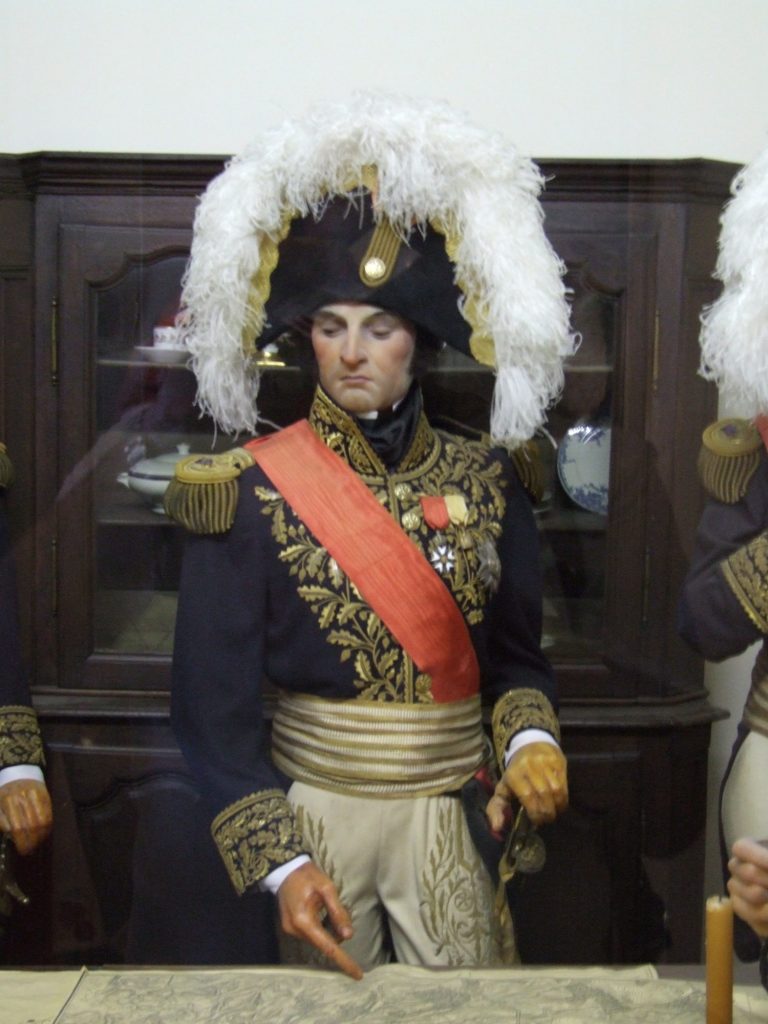
Marshal Soult
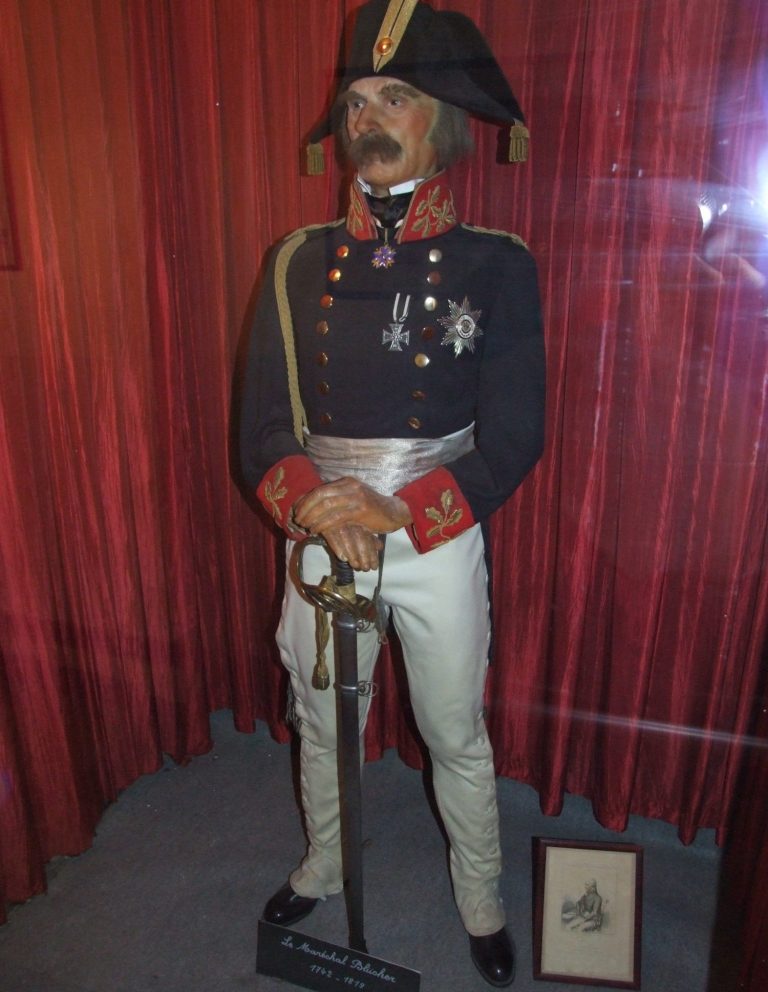
General Gebhard Leberecht Von Blucher
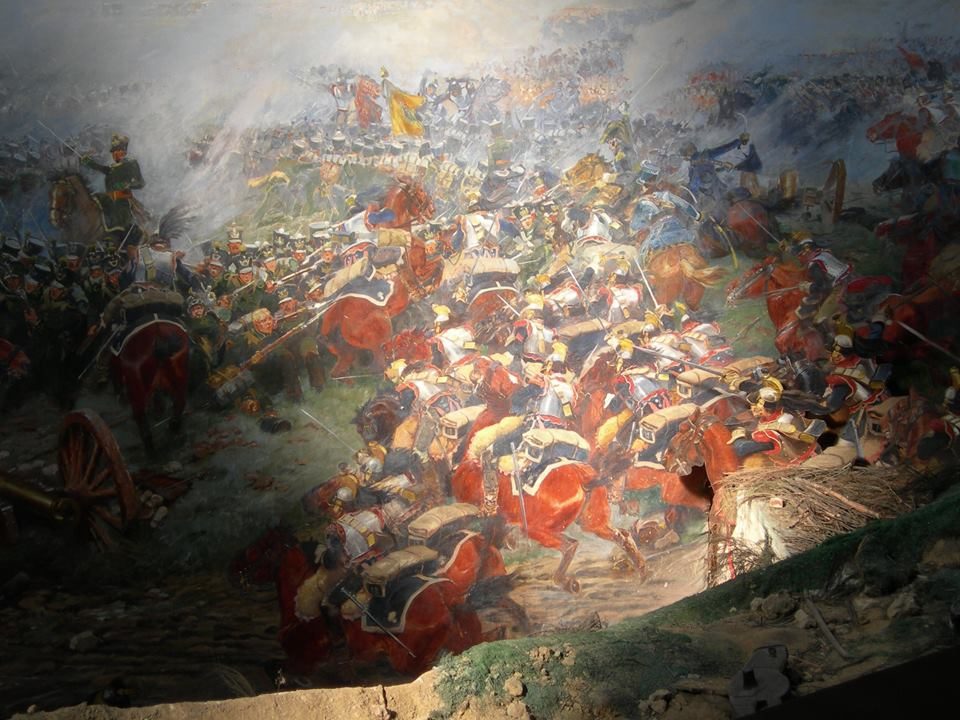
Another part of the Mural on the inner walls of the converted cinema.
The French Generals planning the battle.
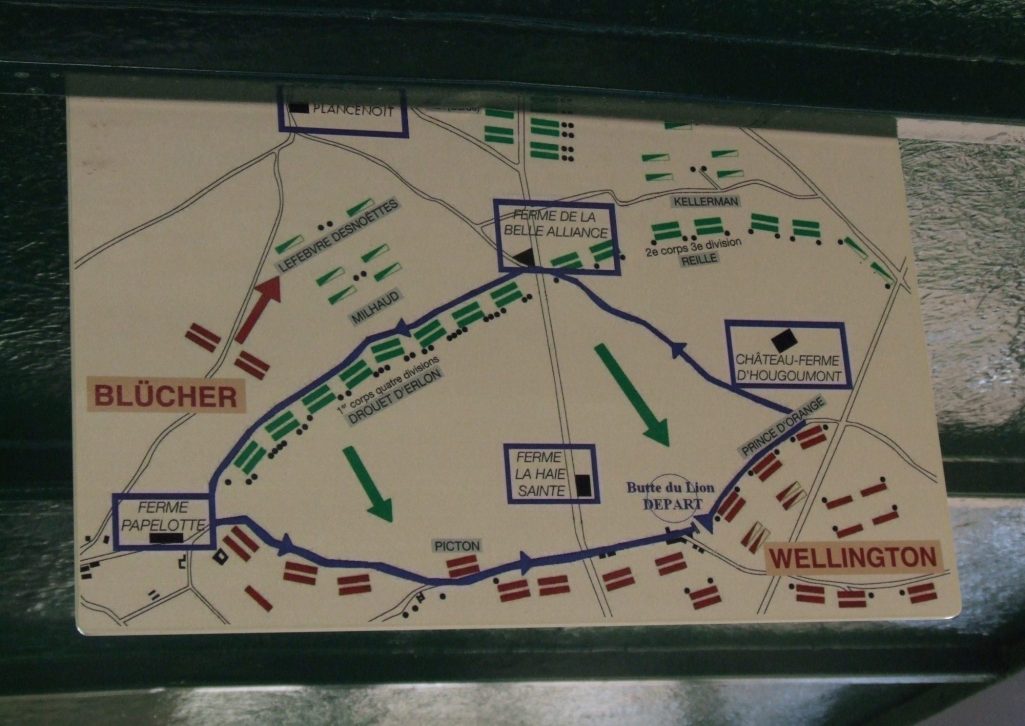
Map of the battle lines
Grisly remains from the battle