Hougoumont Farm. A revisit.
Chem. Du Goumont1, 1420 Braine-l’Alleud, Belgium
Visited October 2025
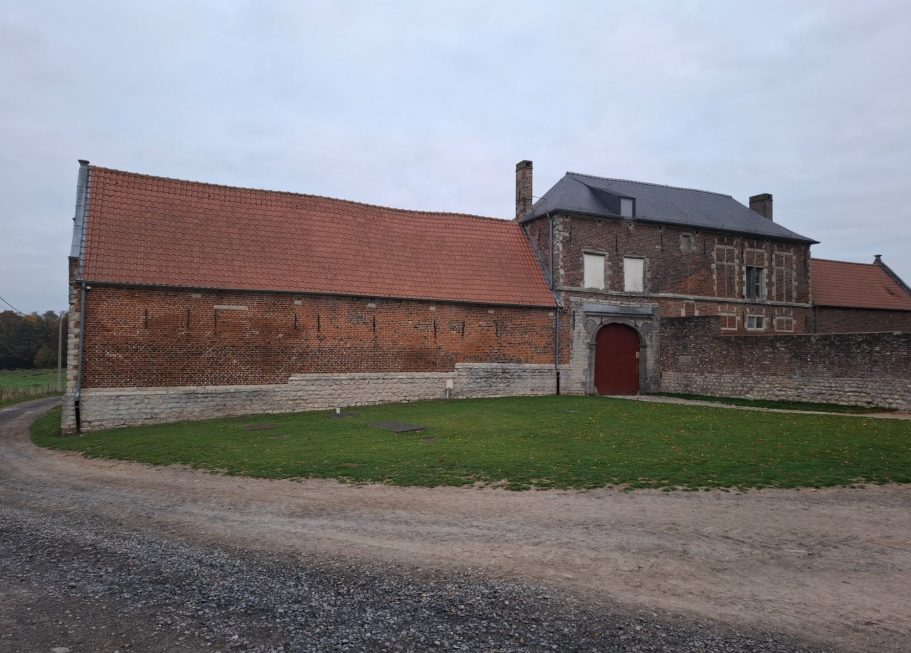
So my last visit to this important area of the Battle of Waterloo was in 2007 – Oh my, eighteen years ago !
Back then it was still a working farm and very little of it could actually be seen except from a brief walk around it’s outside walls.
Now however there has been so much change.
The farm is open to the public, with a lucky few being able to actually stay overnight in the Gitte housed on the first floor of the main building.
However, as usual, I’m getting ahead of myself.
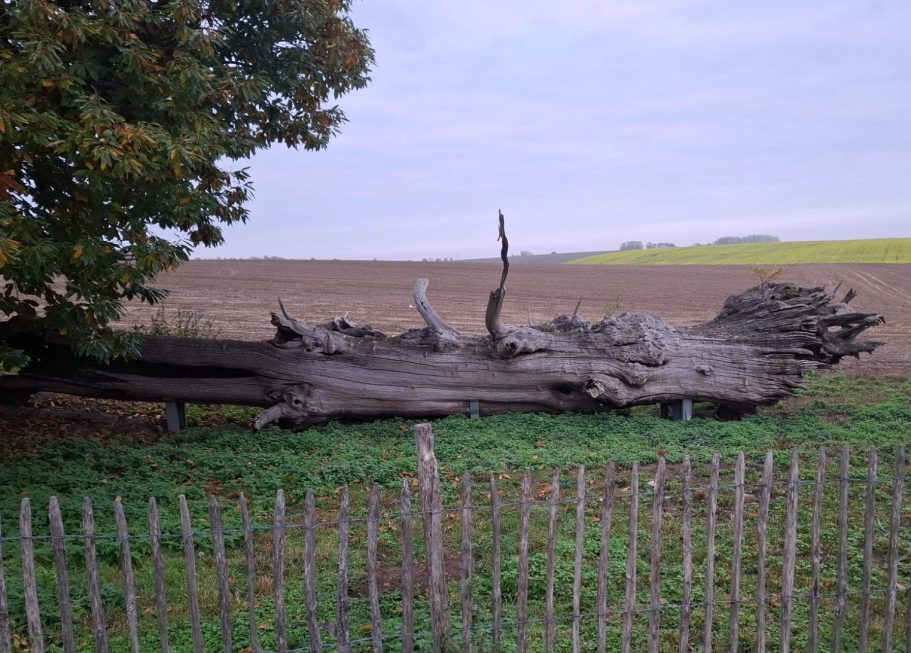
From the outside, little has changed, although the three trees that were skeletal when I last visited had a surprise for give. One unfortunately has rotted through and fallen – Photo #1, although it’s remains are propped up above ground level to prevent further predation,
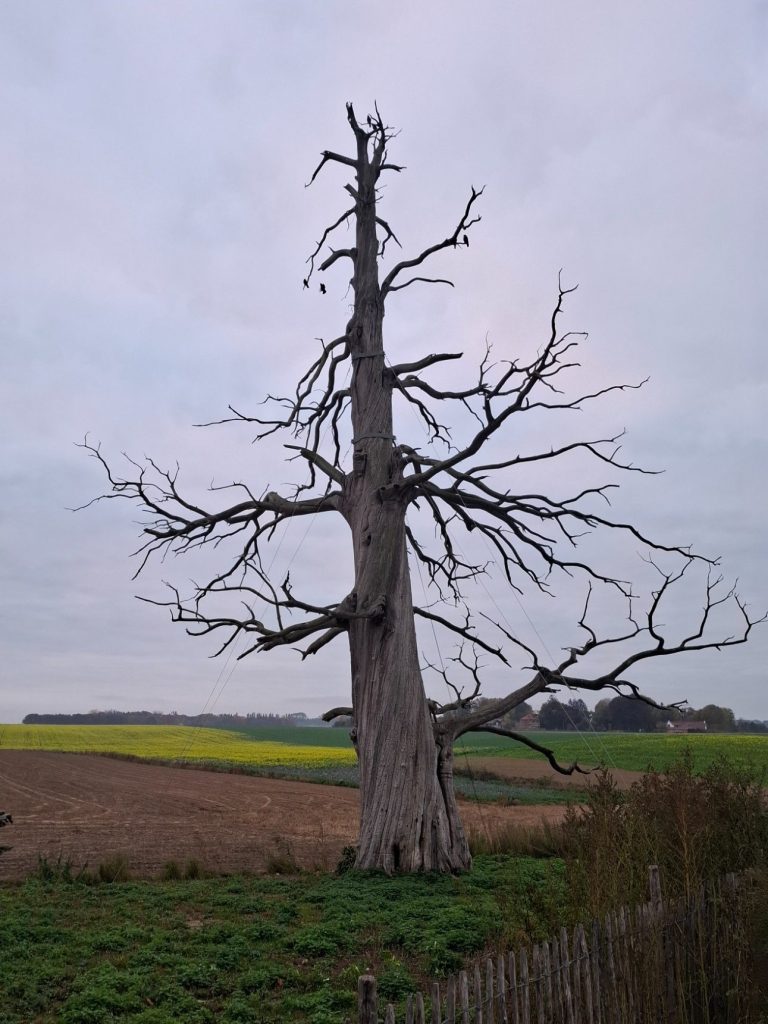
, a second tree ( Photo #2 ) is still skeletal and has been given support to help it remain standing in the form of steel anchor wires secured to the trunk.
The third tree was the most pleasing as it seems to have sprung back to life – Photo #3. Whether this is actually the tree itself sprouting, or is in fact seeds that have rooted in its branches, I’m not too sure, but it appears to have gained life, and that in itself is good to see.
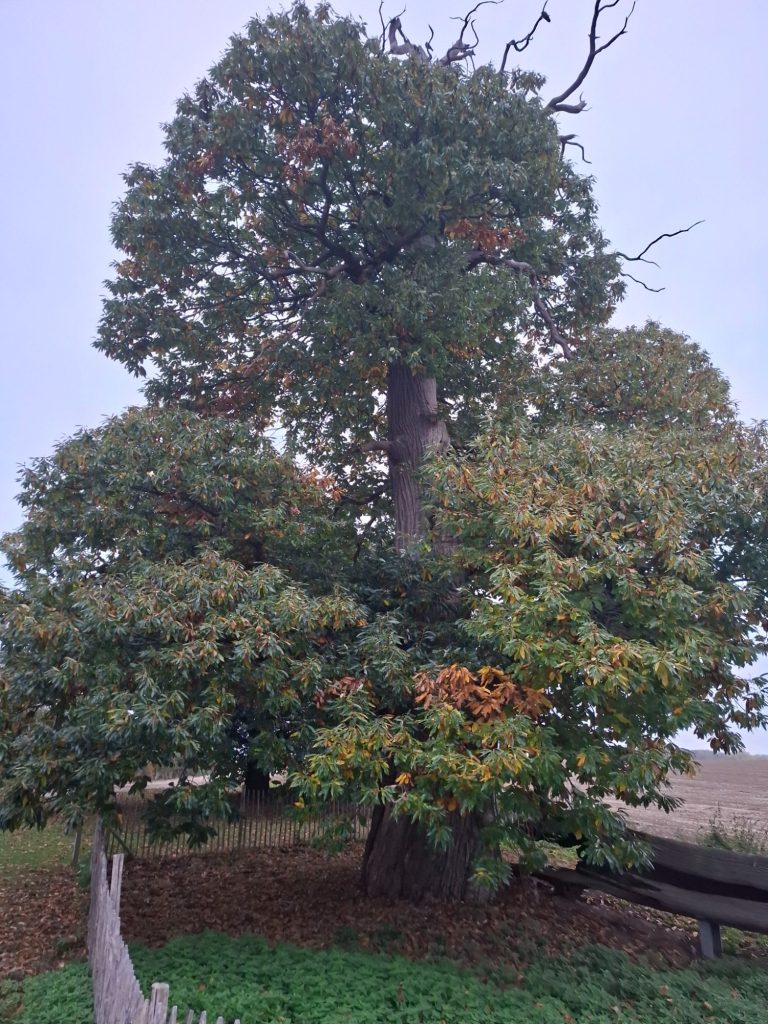
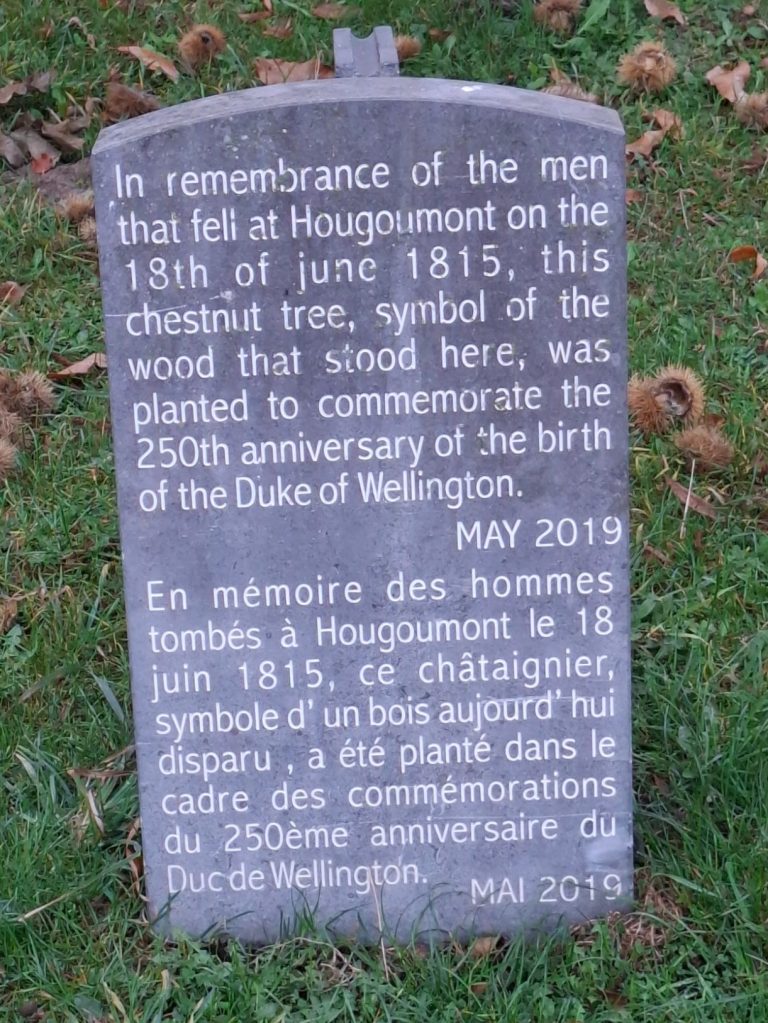
A monument has been added to the left of the three trees, dedicated to all who fell in the nearby area, with a stone marker – Photo #4, and also a Chestnut tree planted in their remembrance ( Photo #5 ).
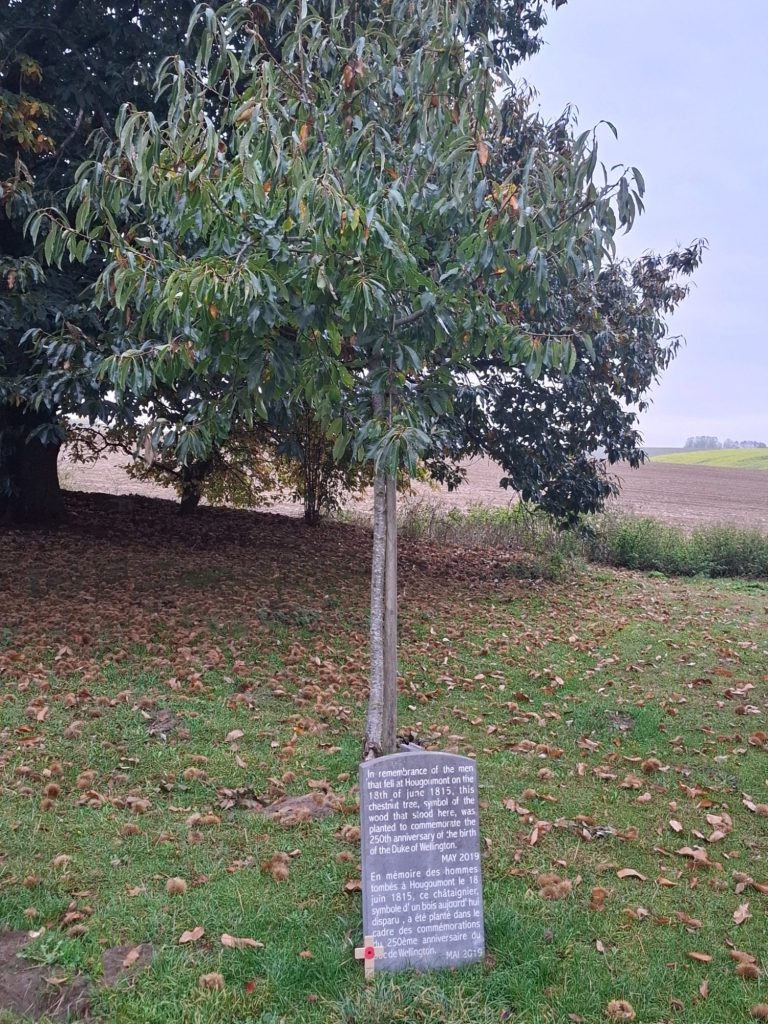
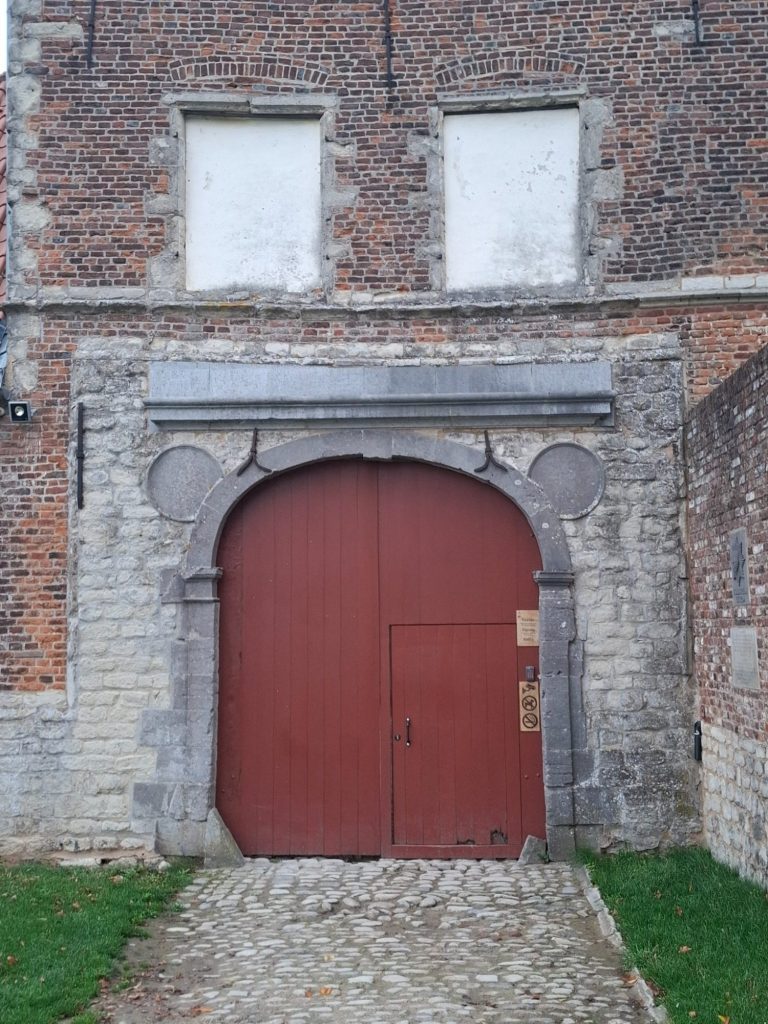
Photo #6 The entrance to the farm is through a large double gate, on the opposite side of the farm from the one that is most famously depicted as being defended by the British forces.
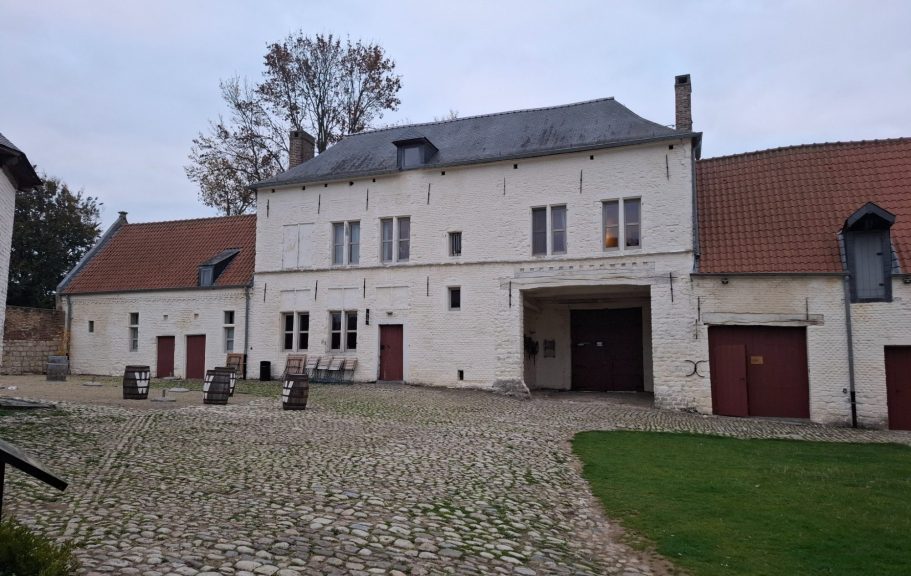
This leads to a large courtyard with the remains of the chapel to your right.
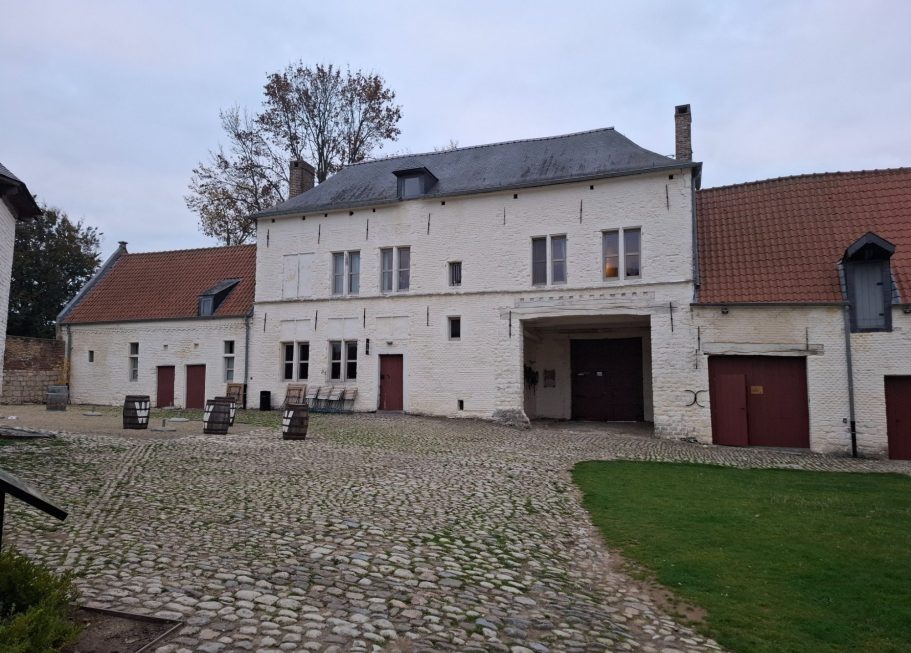
Visiting in October, the tourist season is over so the small coffee shop was closed, and this shot – photo #7 shows the view looking back at the doorway I’d just walked through and in it can be seen the coffee shop mentioned – ground level to the left of the entrance, and the windows of the Gitte we’d be staying in overnight above both the entrance and coffee shop.
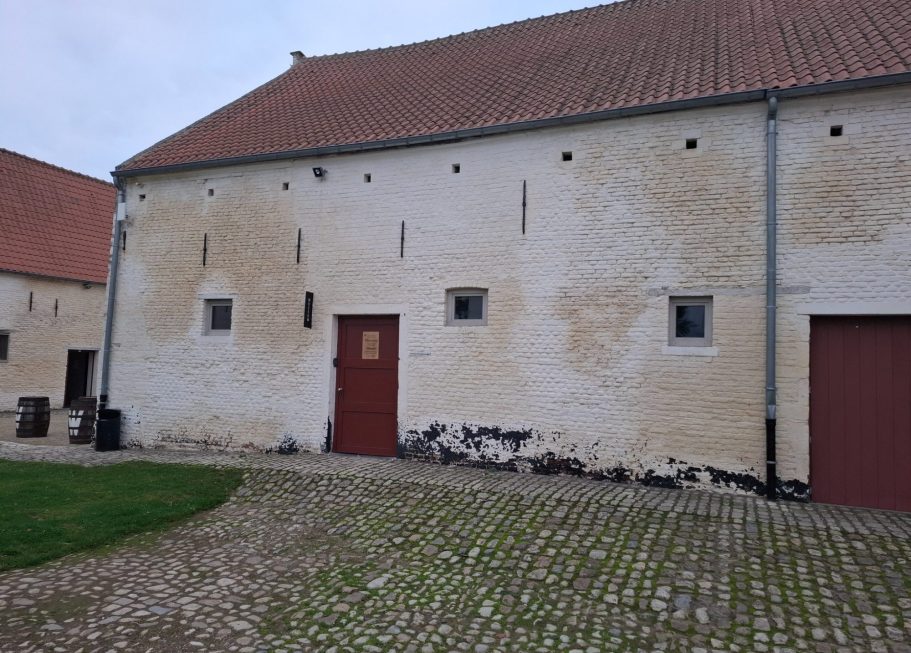
Photo #8 shows another of the buildings within the farm complex, and this one was all locked up when we got there at about 6pm.
Around 10pm the next morning a very kind chap came and opened the left hand door and welcomed us to look around the museum that is housed within this section of the farm…… but more of that later, let’s just look at the buildings that form the courtyard for now.
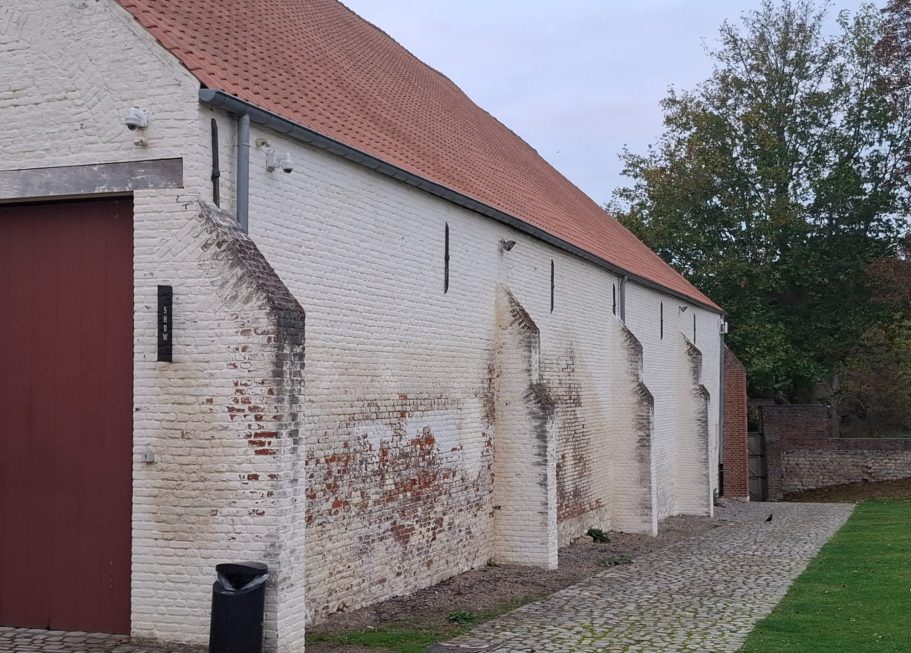
Photo #9 is a barn-like structure which leads down to the gates that were so hotly fought over in 1815, the cobbled pathway leading us down there and to a small open space on the left which can’t be seen in this picture.
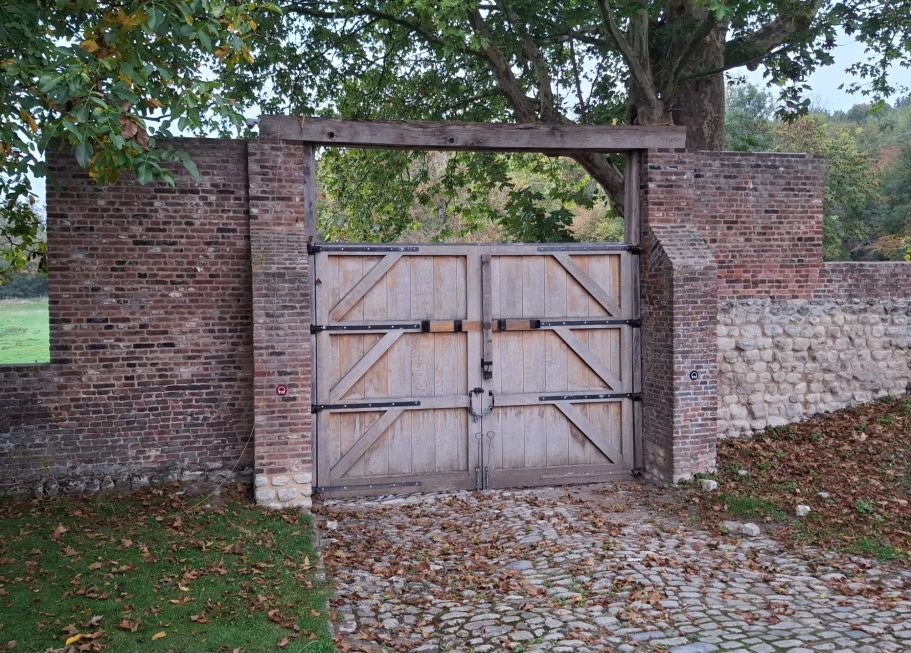
Photo #10, the gates.
Now here is where a few of us gathered and where speculation set in.
The wall to the left of the gate isn’t all that high, and initially my thoughts were that maybe there’s quite a drop on the other side.
Wrong, the ground level is lower, but if one fellow gave a decent “boost” to another, he’d be over there in no time at all….. So why bother standing outside truing to get through a doorway ?
This needed further investigation, and I’ll admit to having a shady memory of the original farm layout from viewing a model of it nigh on 20 years ago, and my interest really isn’t focussed on this period of history either.
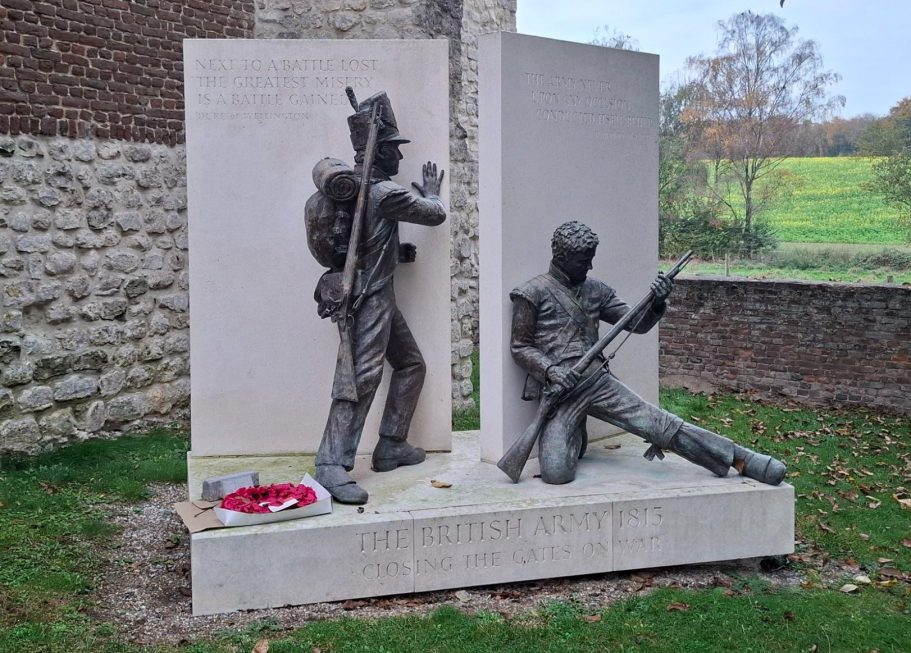
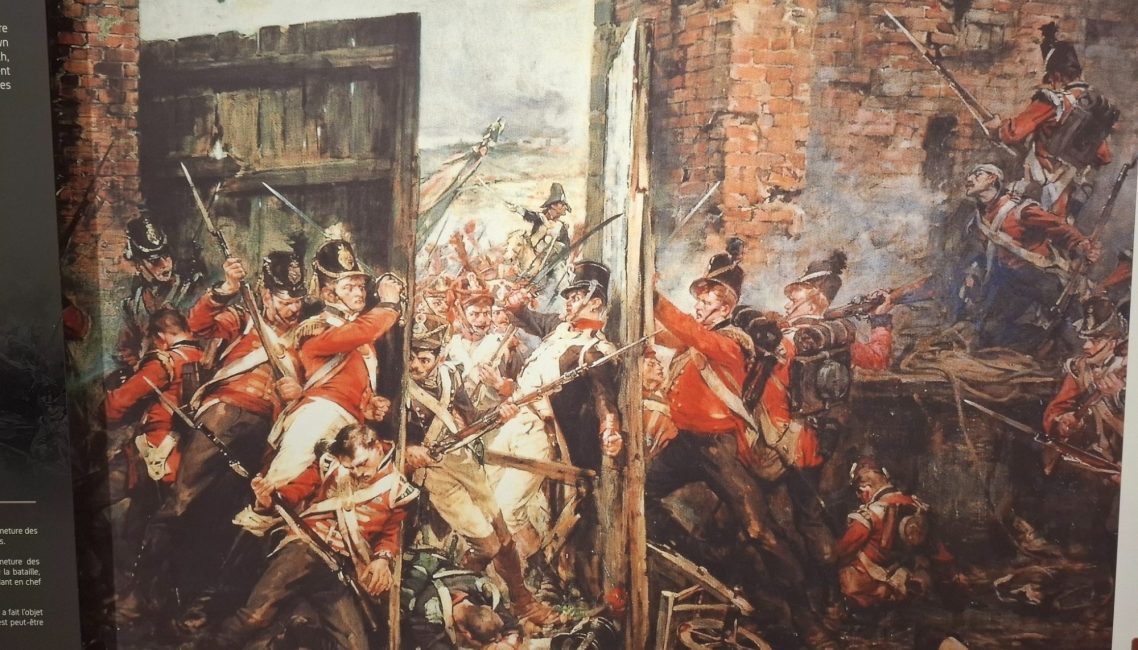
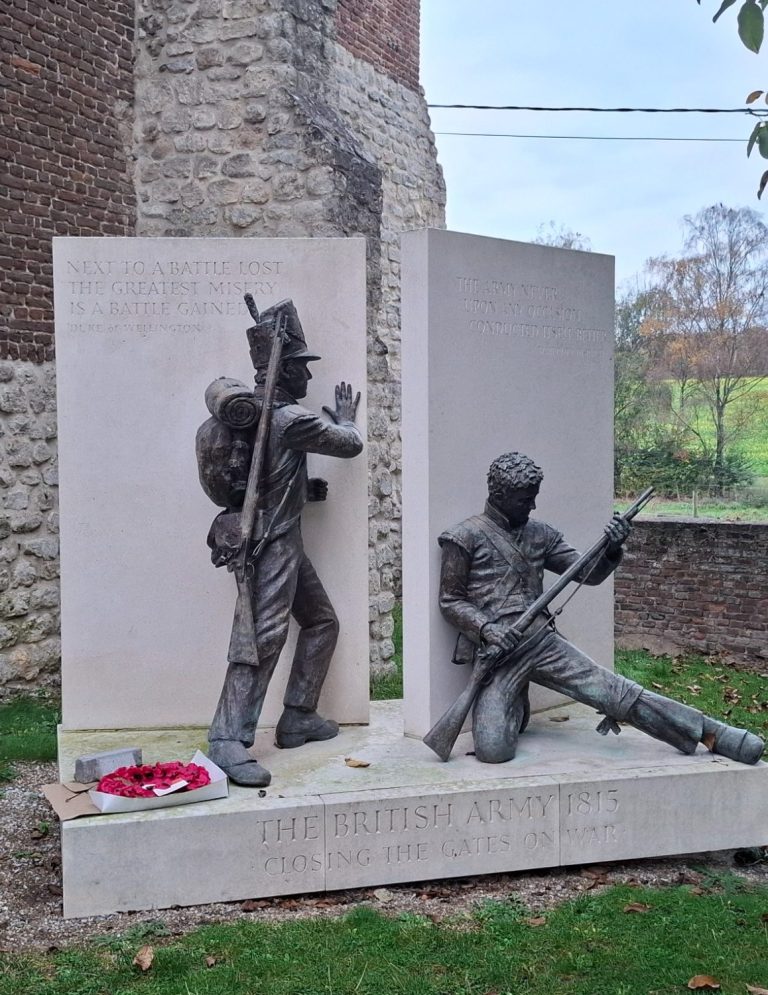
Photo #11 was a lovely surprise, a monument to the brave men that defended the gate here, the upright slabs of stone representing the gates themselves, with two soldiers putting their weight against them to try and close the breach.
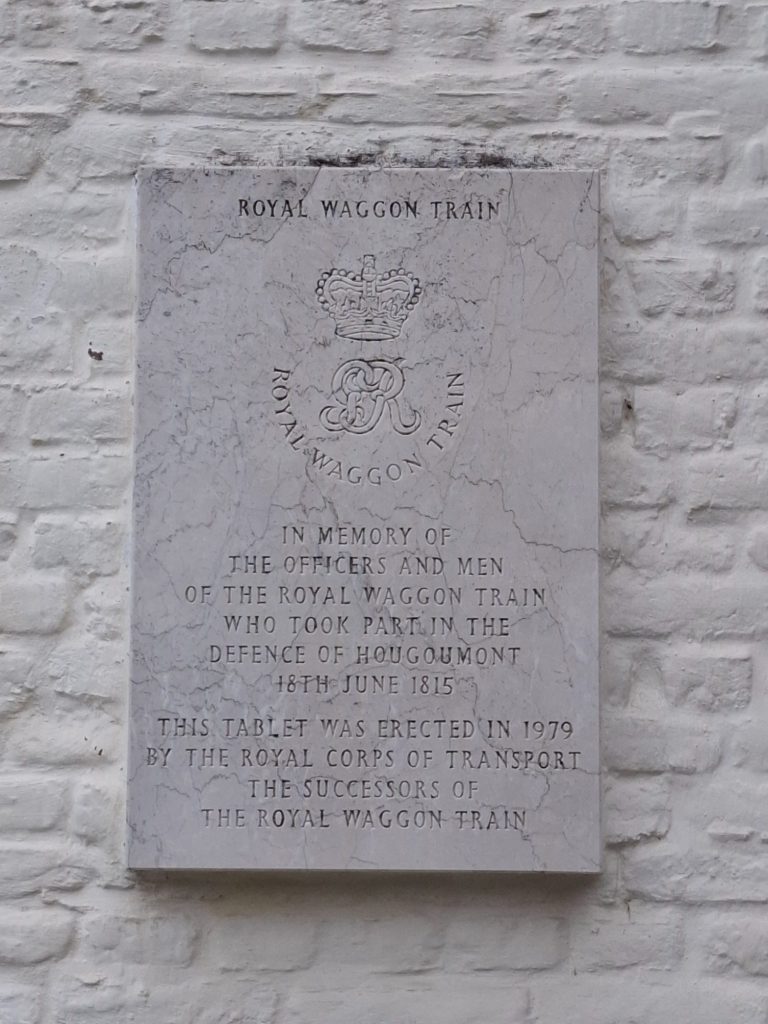
A very clever design, and one that depicts the struggle that took place very close to that spot, and a plaque – photo #12 – for the Officers and Men of the Royal Wagon Train who took part in the farm’s defence.
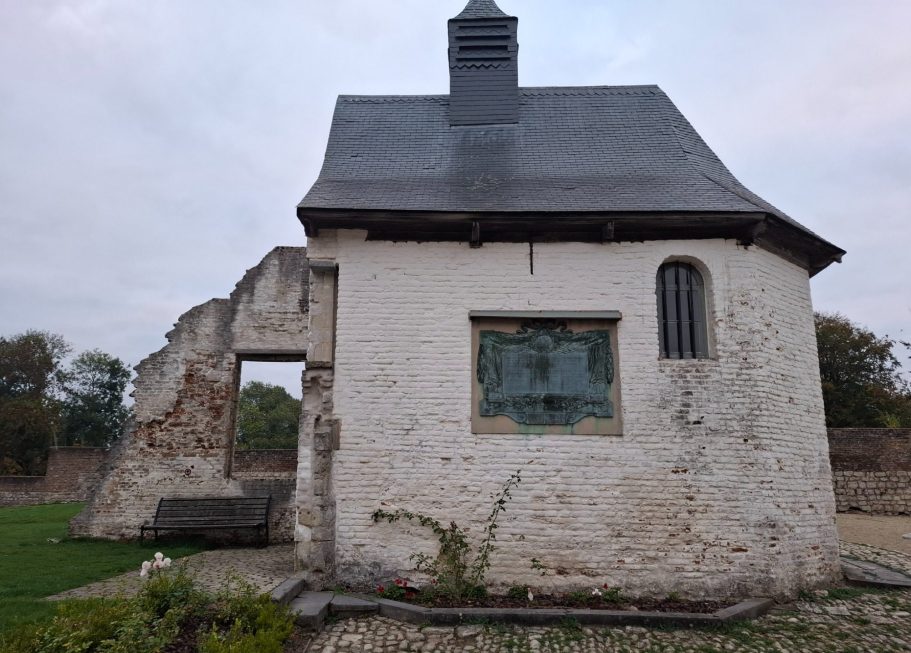
Photo #13 shows what is left of the small chapel that was within the farm grounds.
Although it is always termed as “Hougoumont Farm” I think it’s more like what we in the UK might have categorised it as a small Stately Home, there’s no farms I can think of that have their own chapel of worship within their courtyard.
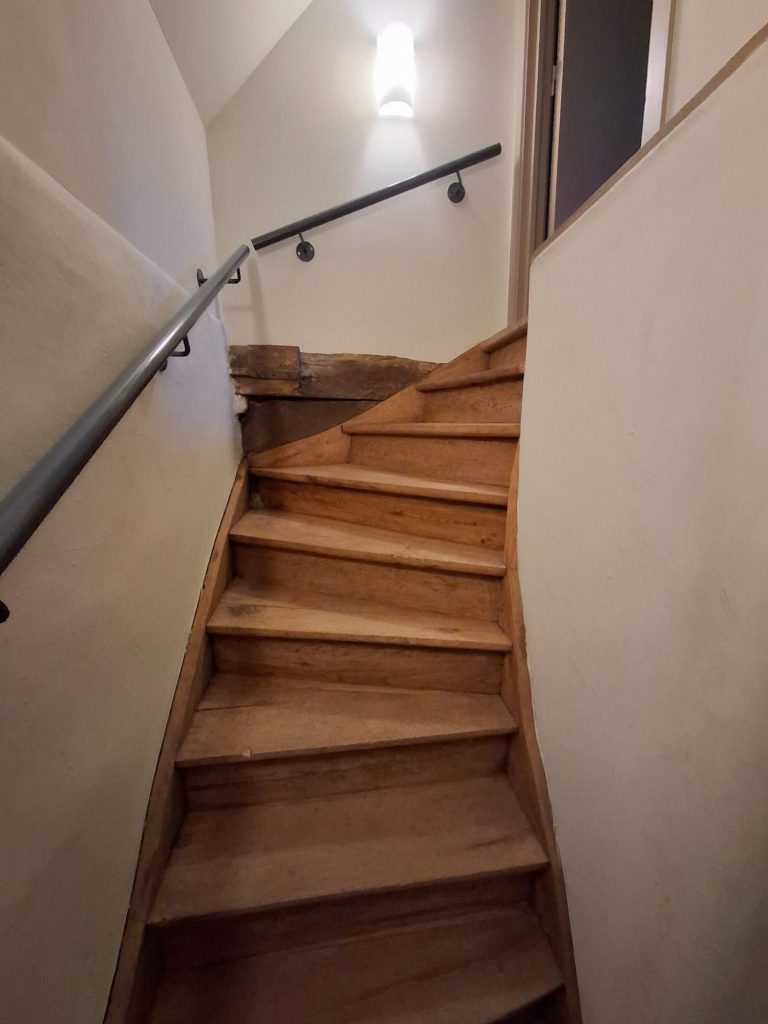
Photo #14, so I did mention that the farm is now adapted to accommodate guests, and this is the stairway that leads up from the ground floor of the courtyard entrance to the gitte that sleeps a maximum of five people.
It looks pretty modern, well kept, and doesn’t really give the visitor any idea of what the accommodation is going to look like.
Photo #15 Bypassing the sitting room and moving into the kitchen – well, I do like a well appointed kitchen, and although the farm doesn’t offer a breakfast service, the kitchen allows for the visitor to rustle up a decent meal.
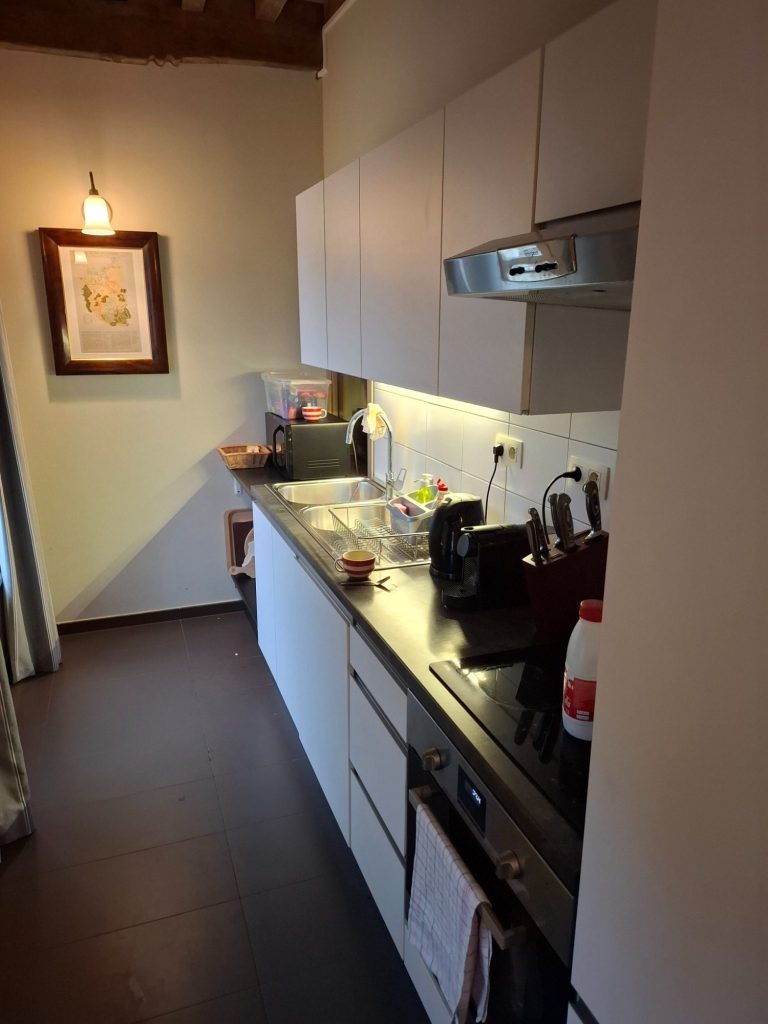
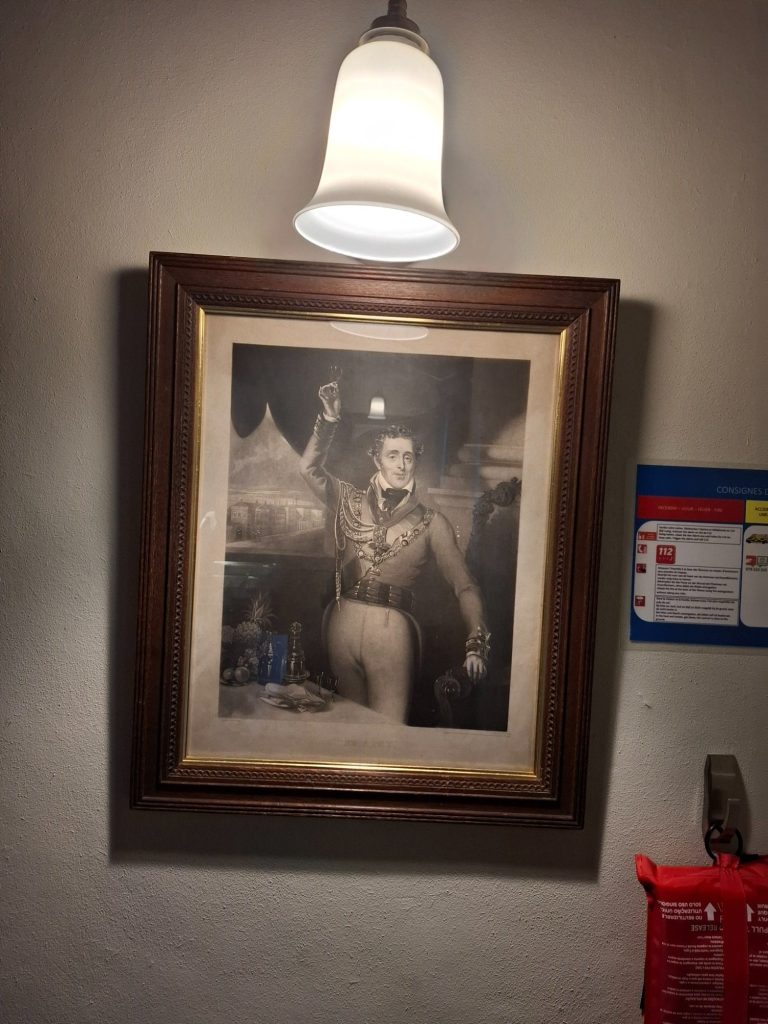
Photo #16, whilst hotels and guesthouses have to adhere to certain rules – see the corner of the fire-proof blanket in this shot at the lower right, the gitte is decorated to reflect Napoleonic times, with framed pictures showing the combatants, and furniture that could well have been used by the people occupying the farm in the early 1800’s
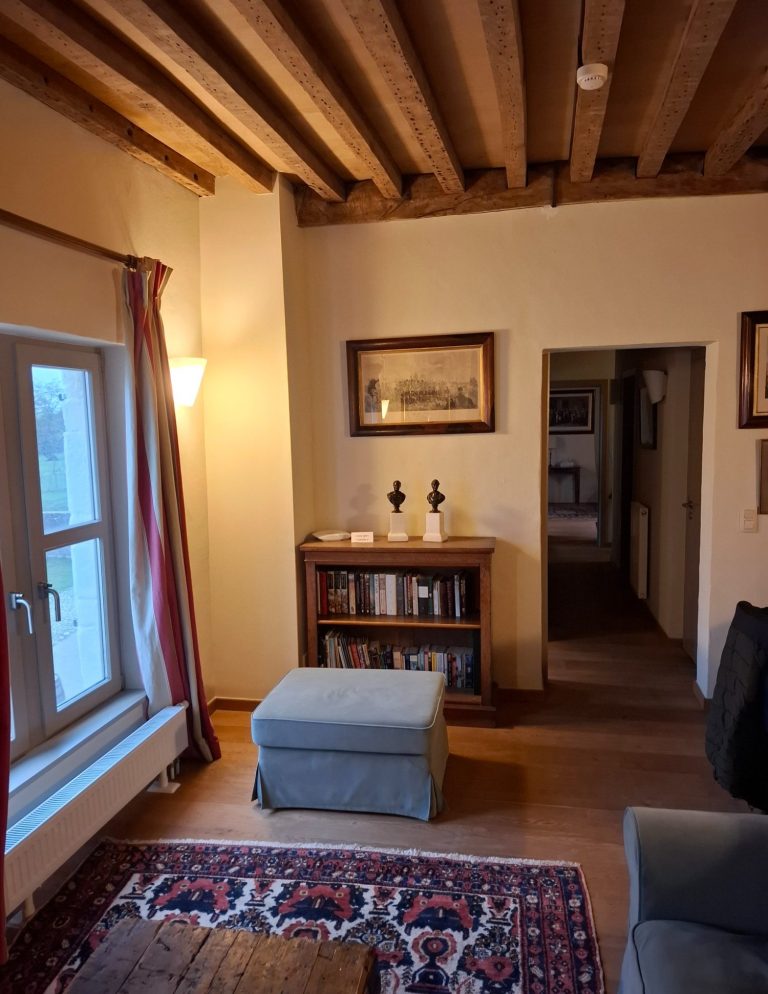
Photo #17 shows part of the first floor bedroom, exposed beams and the antique dresser, and a look down the corridor to the sitting room at the far end of the hallway.
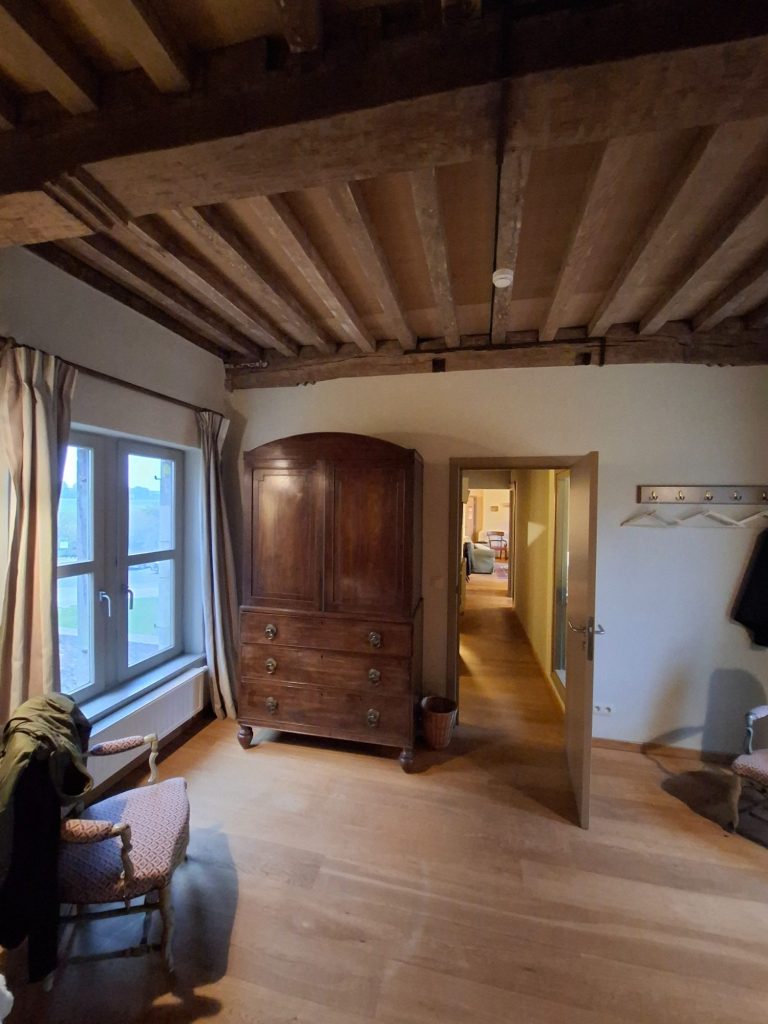
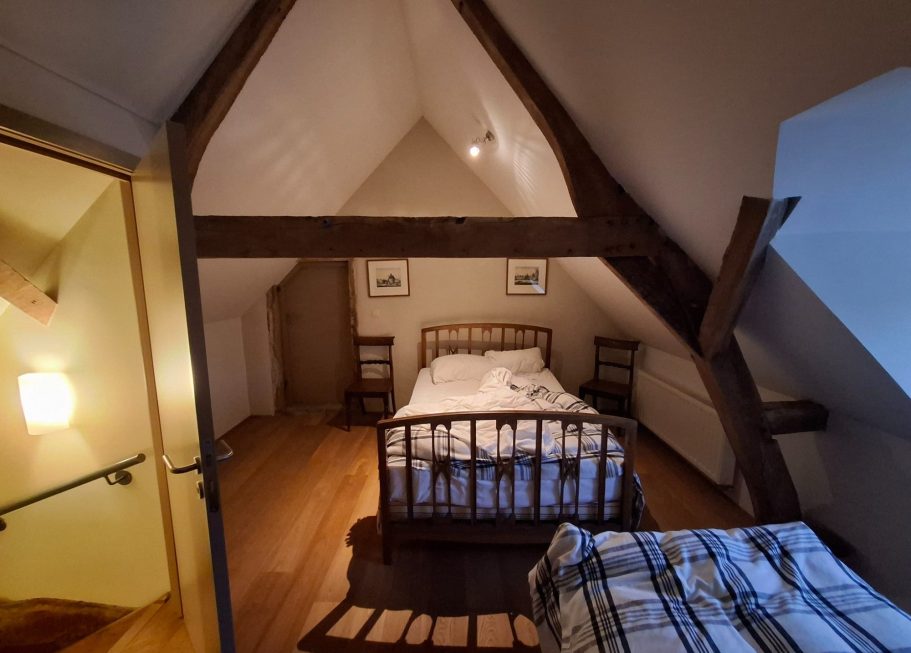
Photo #18 shows the second floor bedroom – duck if you’re tall and want to avoid that beam - but again, decorated to reflect the times over two hundred years ago, and very clean and well maintained.
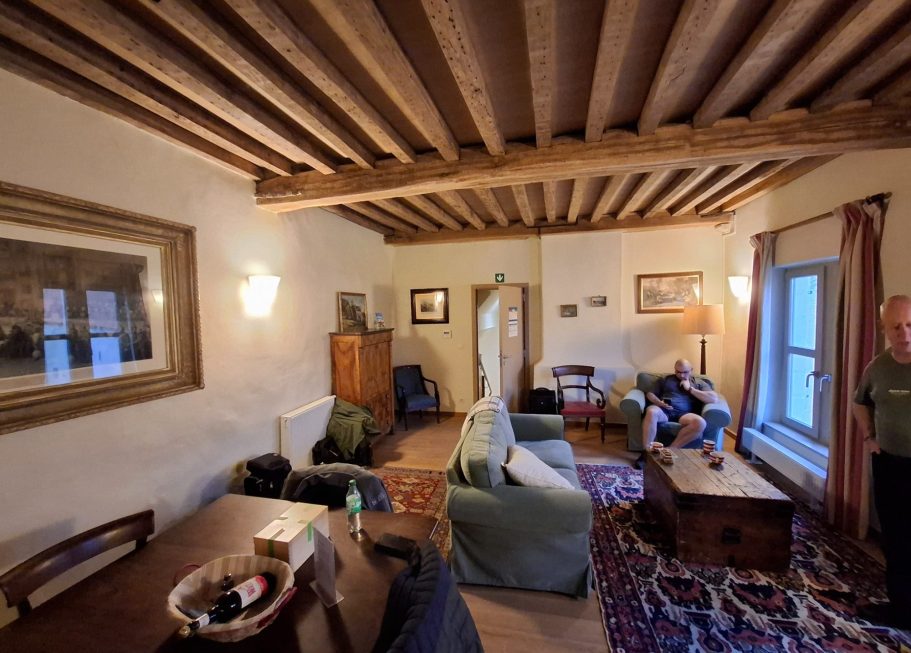
Photo #19 and this is the sitting room itself. Plenty of seating, and this picture includes a genuine thirty-year-old Hopwood. Real and capable of movement, although caught in it’s natural pose of studying his mobile phone.
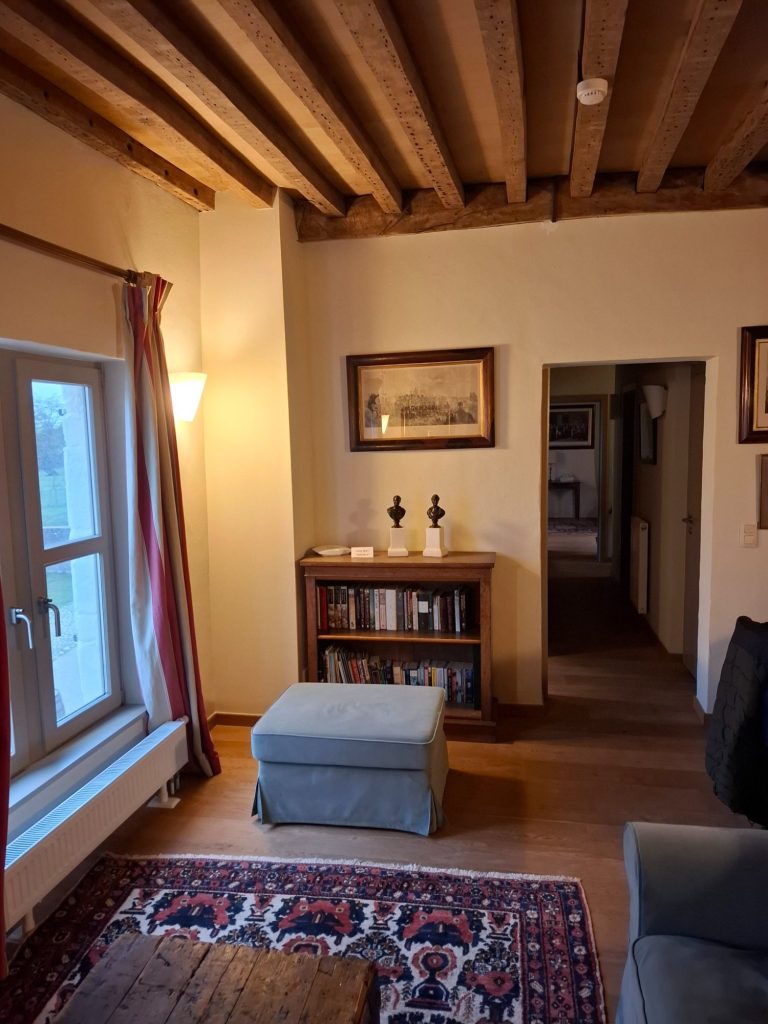
Photo #20 and this is the opposite end of the sitting room.
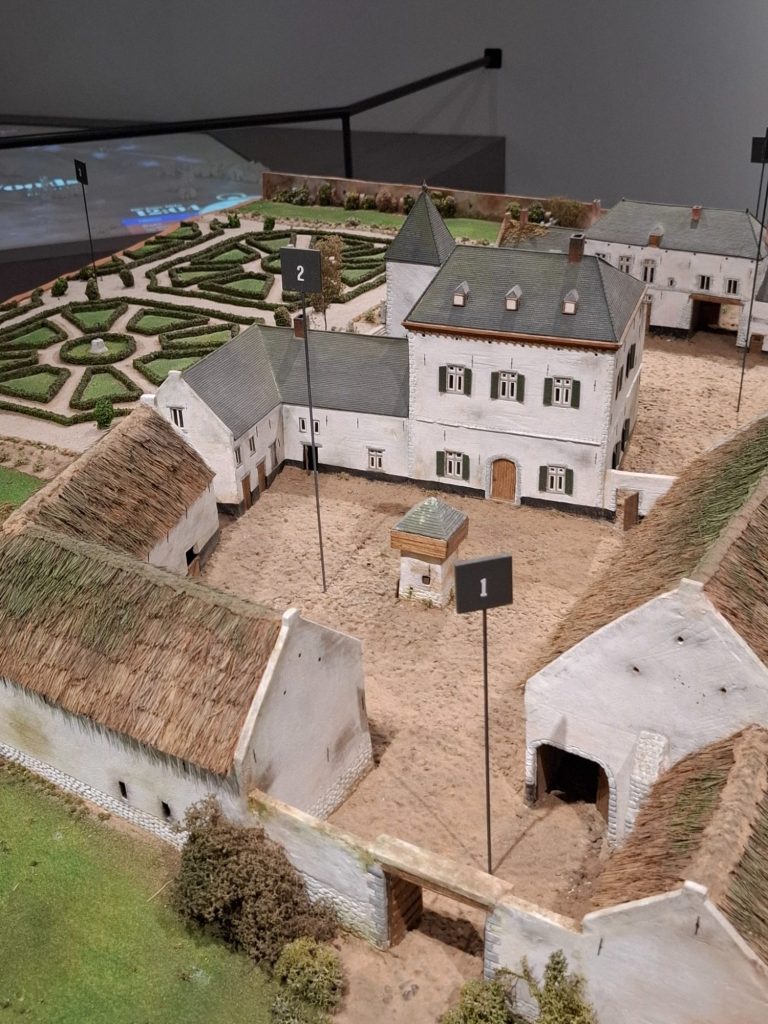
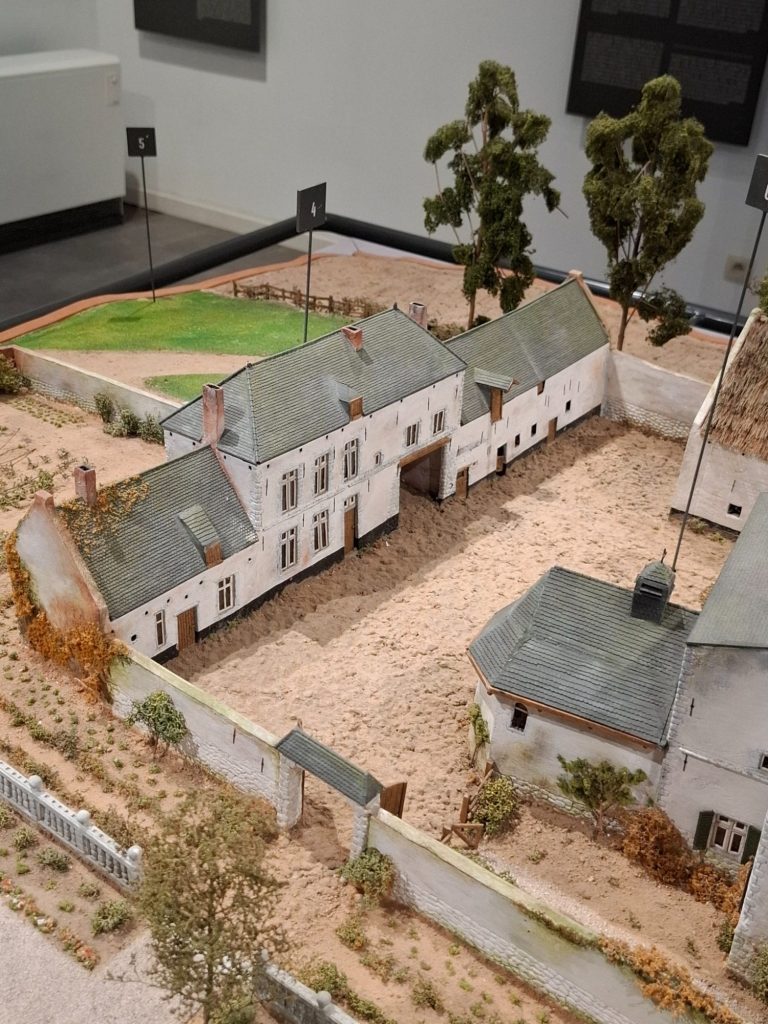
Photo #21 is a model of the farm as it would have been in 1815 at the time of the battle of Waterloo.
I mentioned the gate that was heavily defended against the French forces, and my not understanding why it was so difficult to breach the top of it.
The gate in question is at the top left of this shot and now the answer to my confusion is obvious. There was a barn to the left of the gate and a lintel over the top of the gate that had a wall built on top of it. Long ladders would have been necessary, and the barn to the left would prevent climbing to the side of the gate.
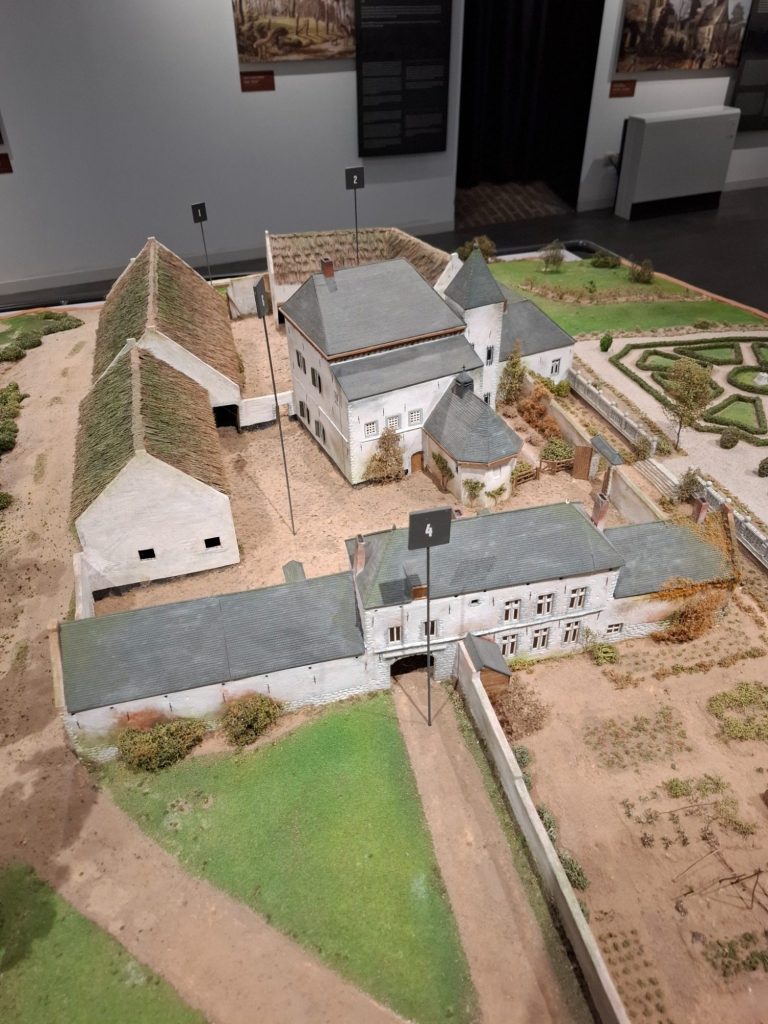
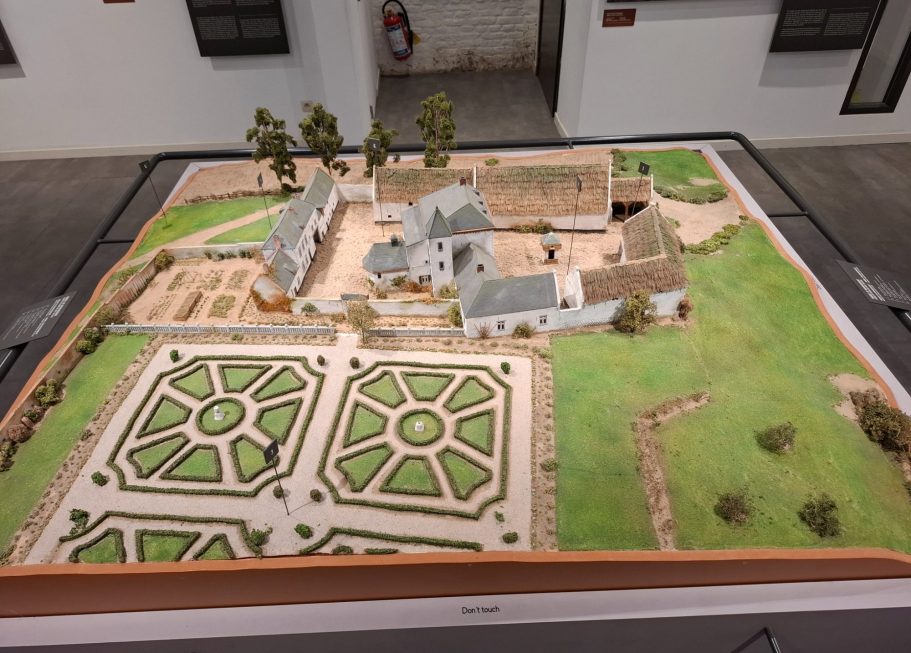
Photo #22 shows another view of the model, and the gate mentioned above is towards the top right of the farm with the barn, which has an open front, to the side of it.
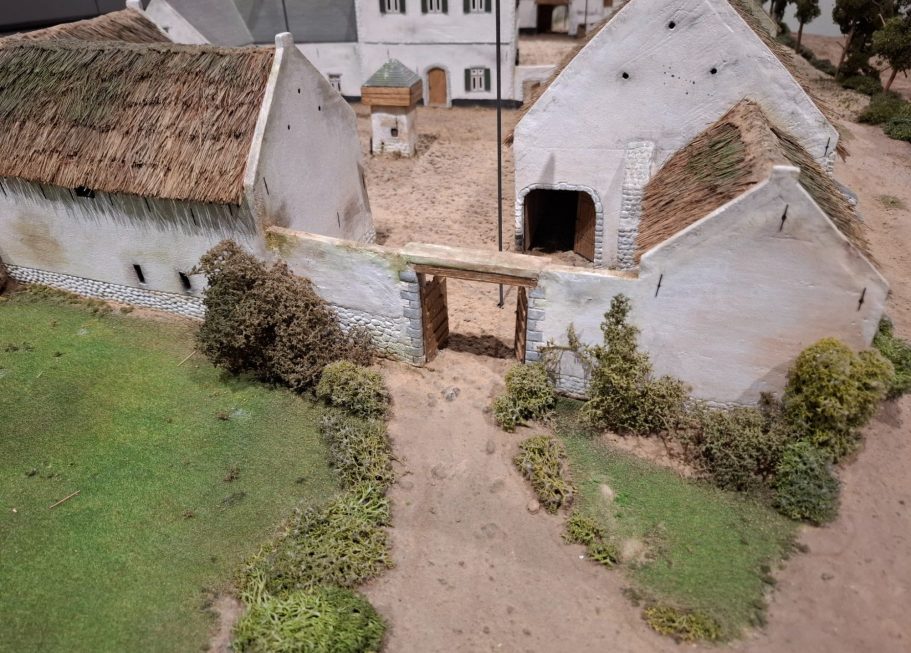
Photo #23, and perhaps this view of the model showing the gate from the outside of the farm explains it better.
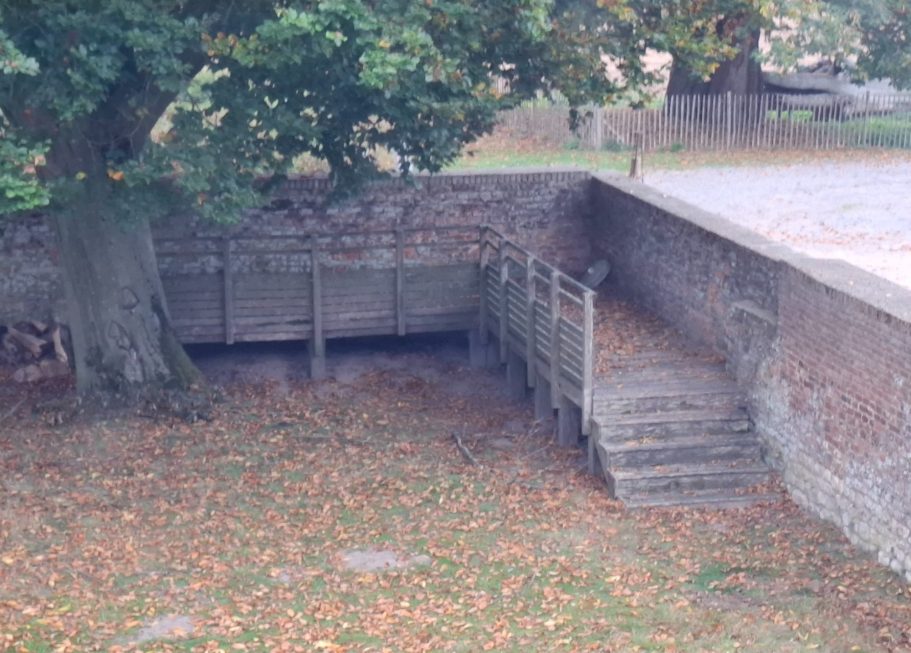
Photo #24 of the many features of the farm that could easily be missed, this is possibly one that many visitors pass by, almost unnoticed. An arming step section – recreated against one of the inner walls of the garden.
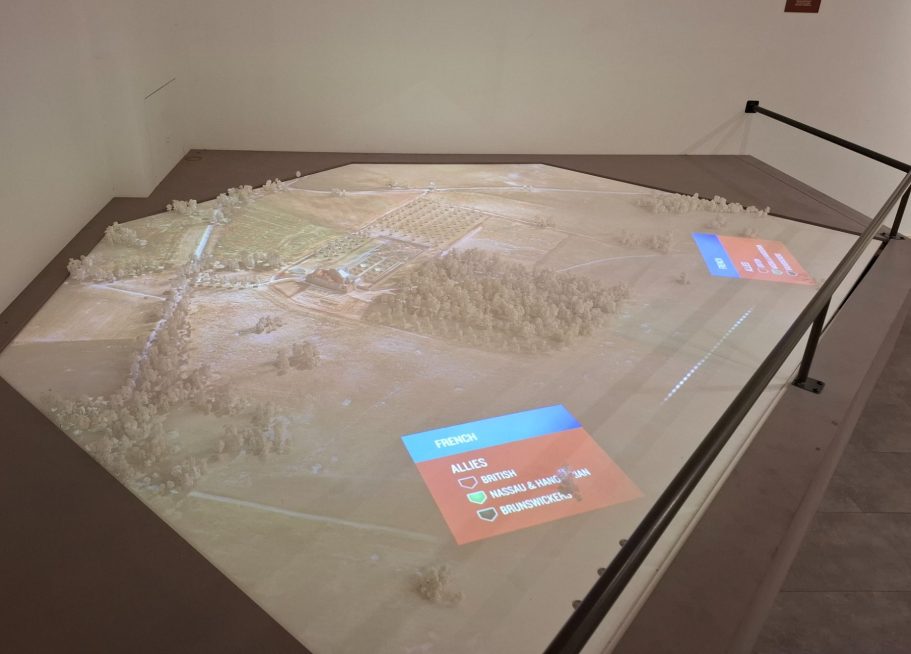
Photo #25, and this shows another model in the farm museum.
When you walk in and see this large, low level table with a completely white representation of the farm and surrounding area at the time of the battle…. Hold on, yes, I said WHITE.
It is all constructed of white material and appears somewhat strange…. Until you press one of the buttons – either English, German or French.
That’s when it comes to life, as in this shot, and it takes you through the day of the battle in reference to the farm itself.
Lights under the diorama show the buildings, the orchards and troop movements, there’s even little “puffs” of smoke that represent cannon and musket fire lighting up here and there.
Very, very clever indeed.
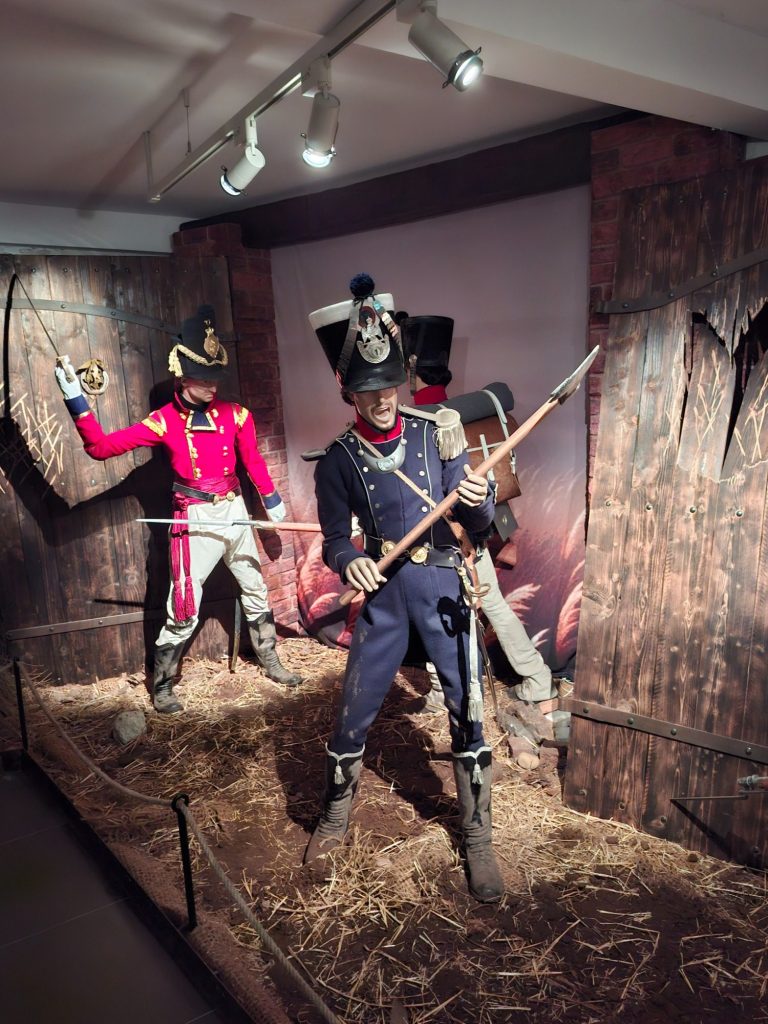
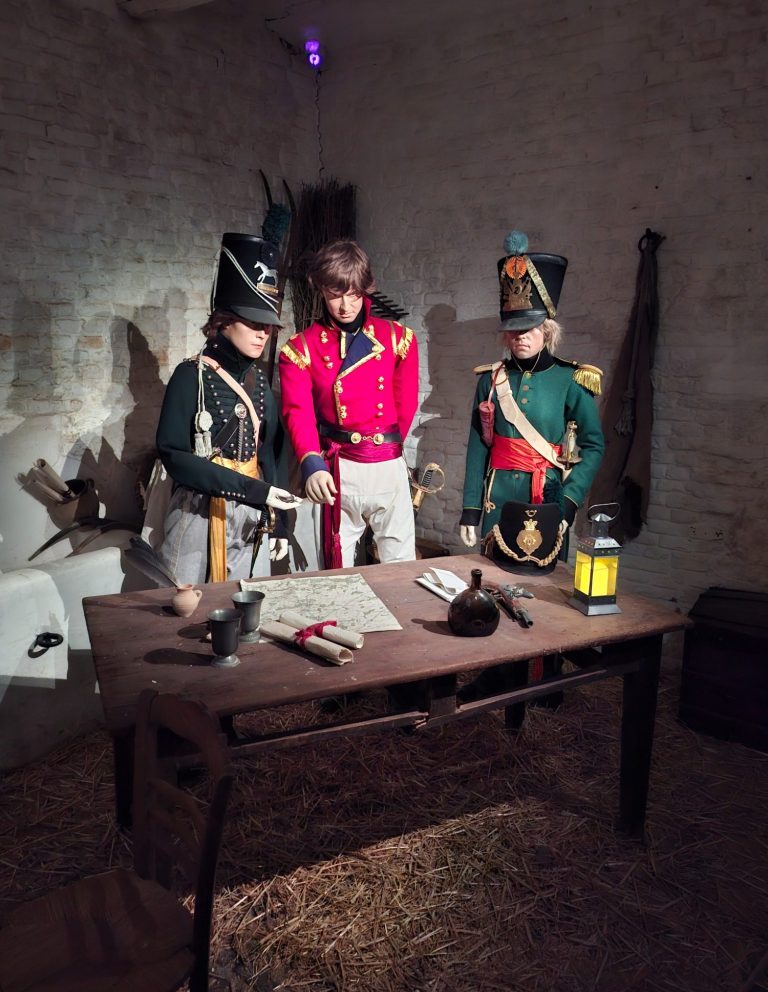
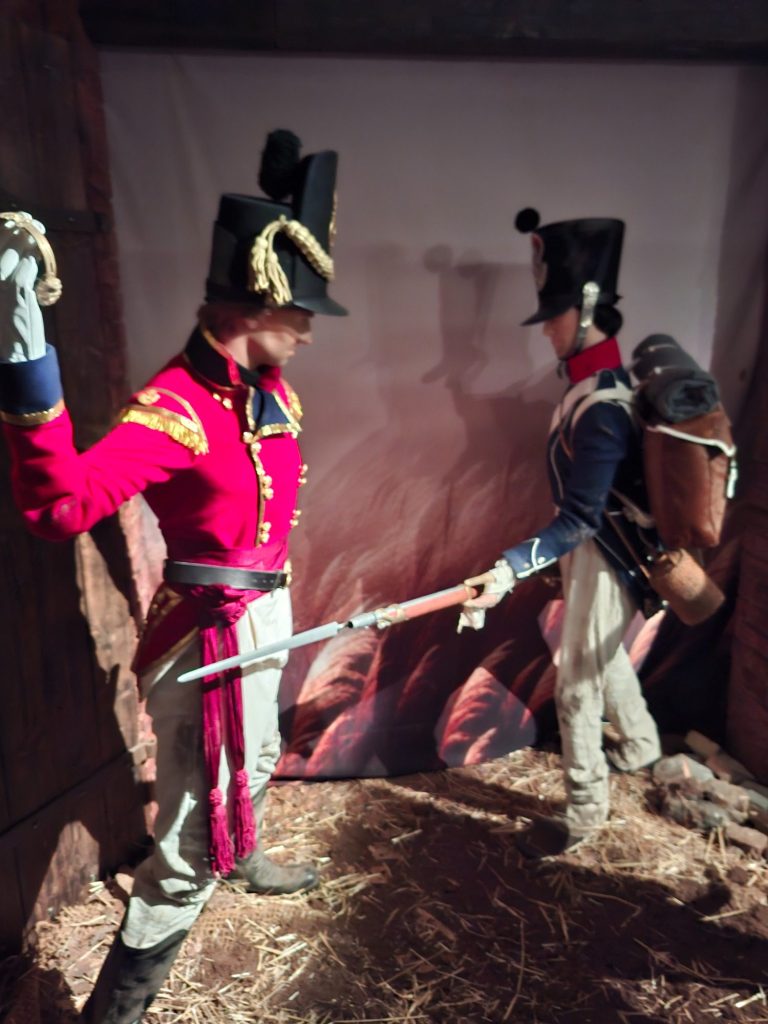
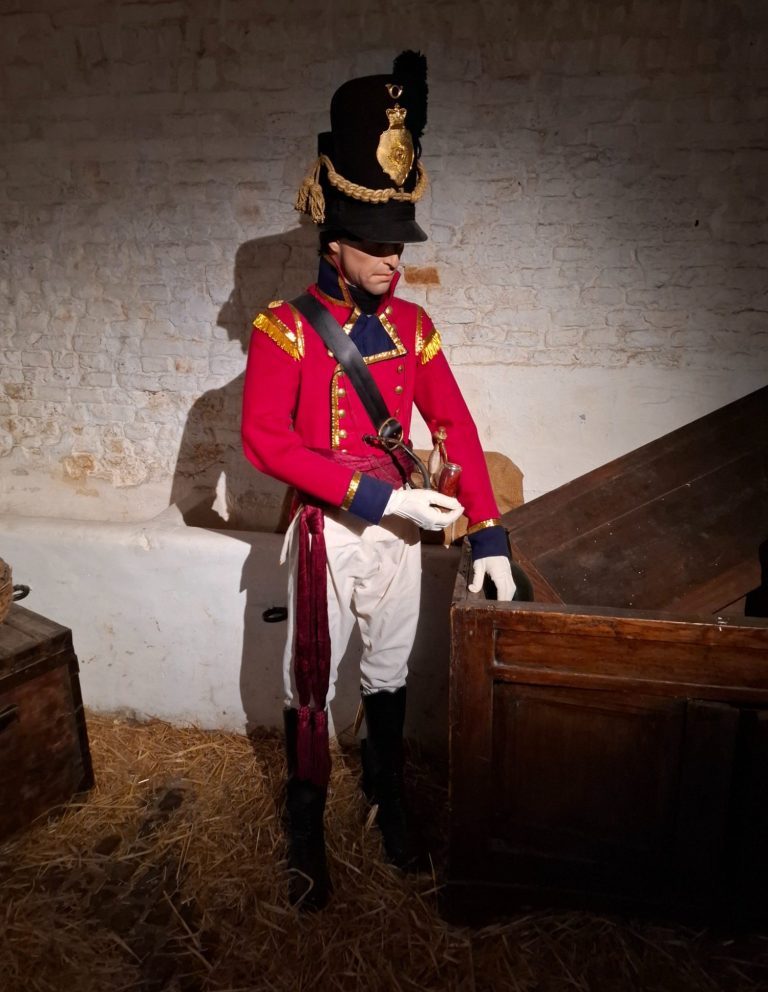
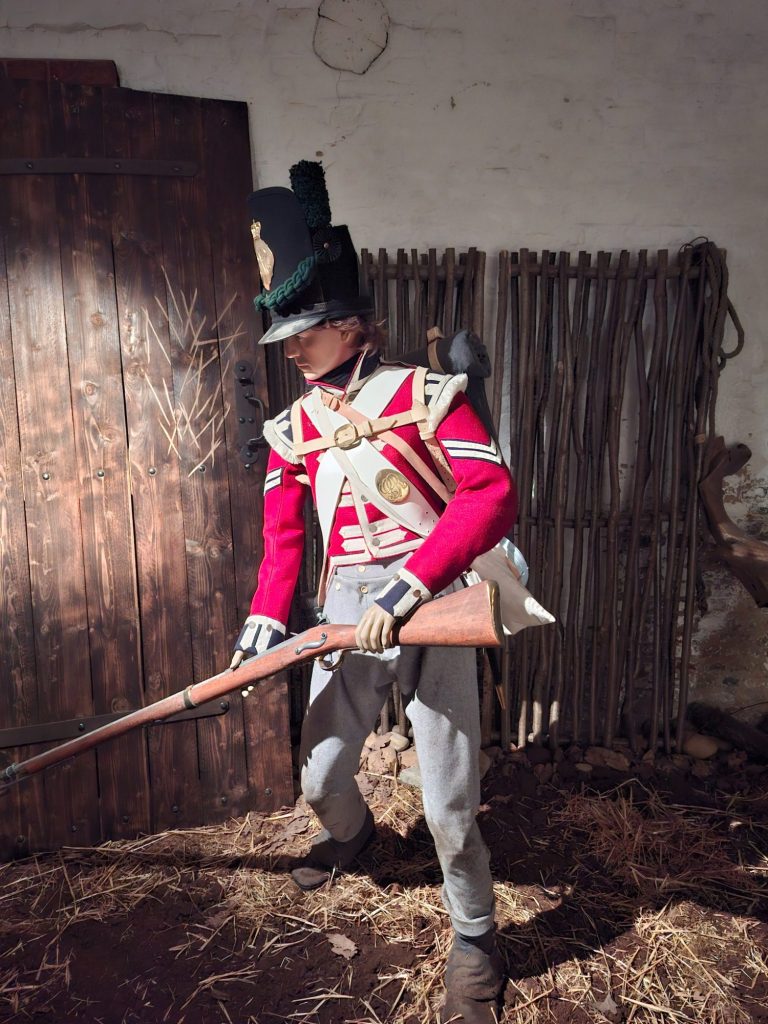
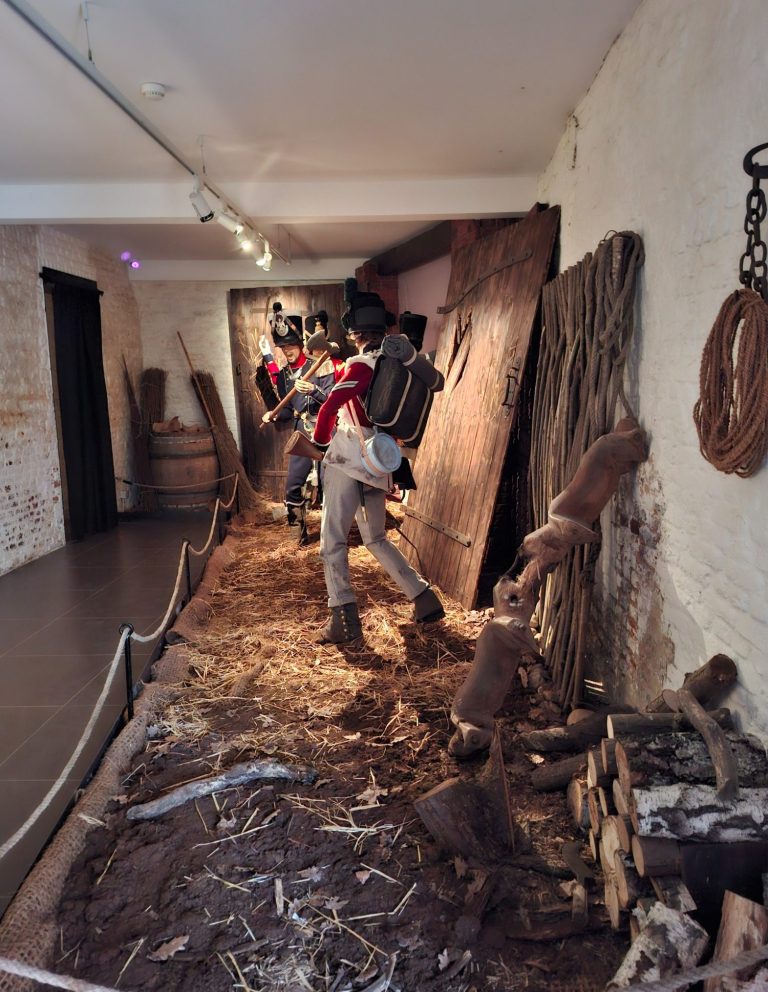
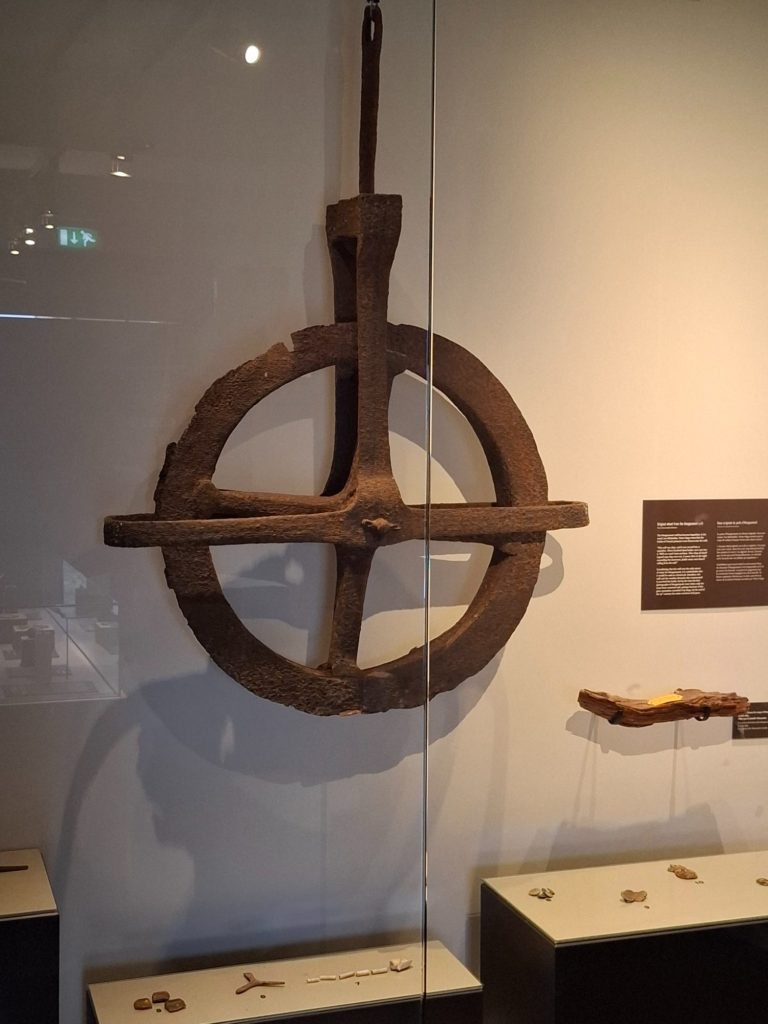
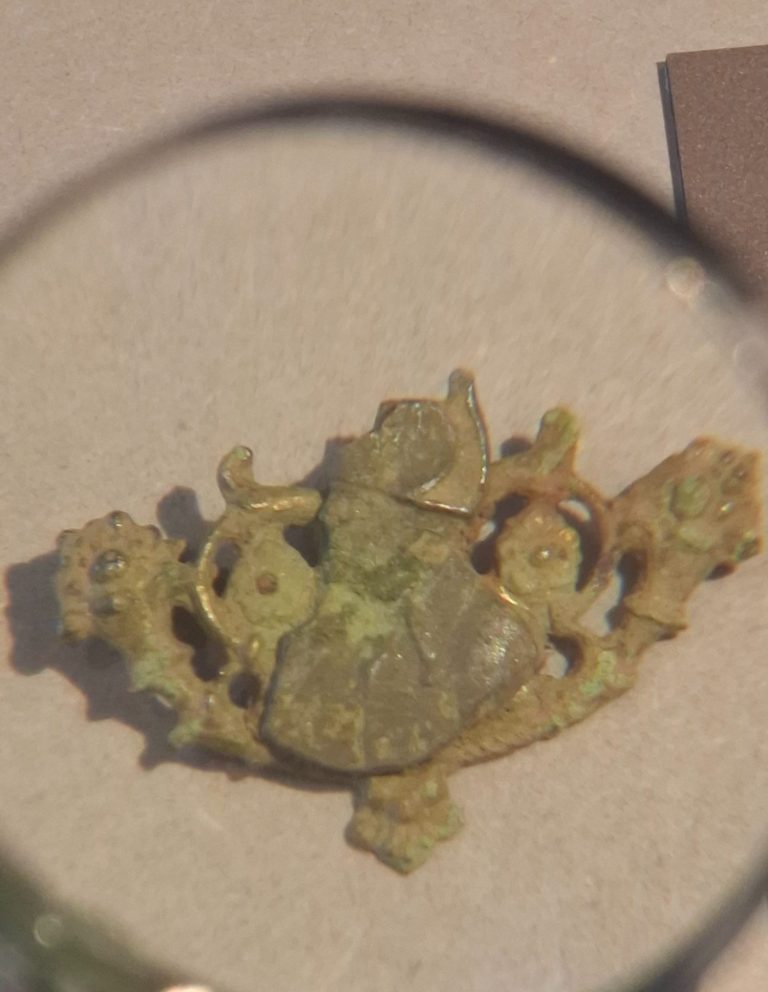
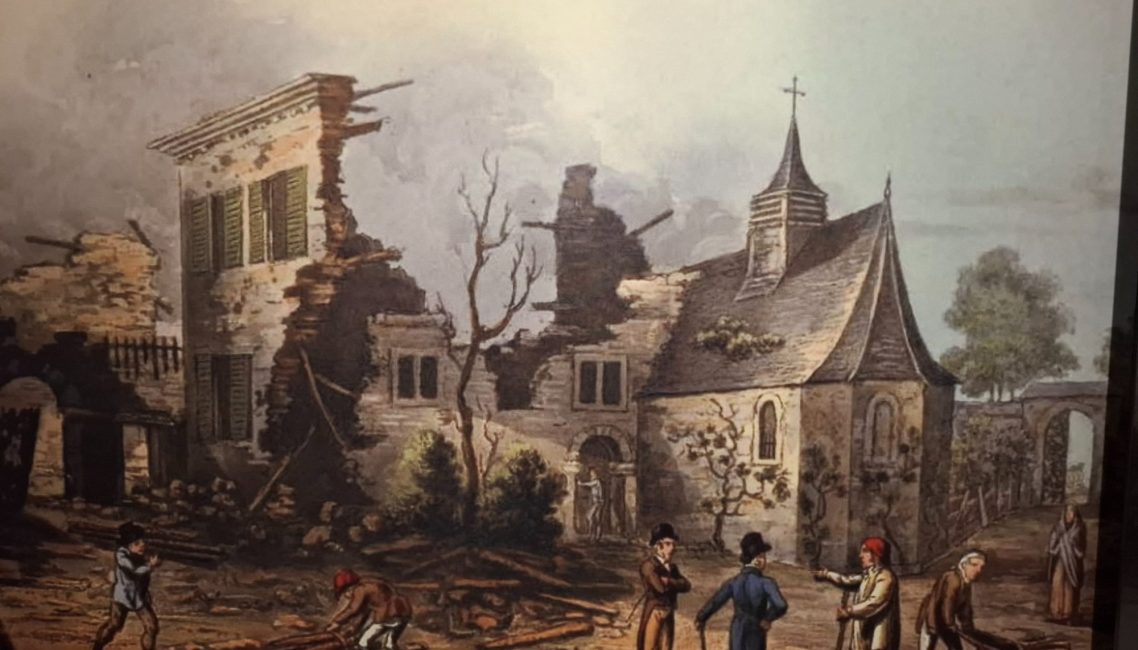
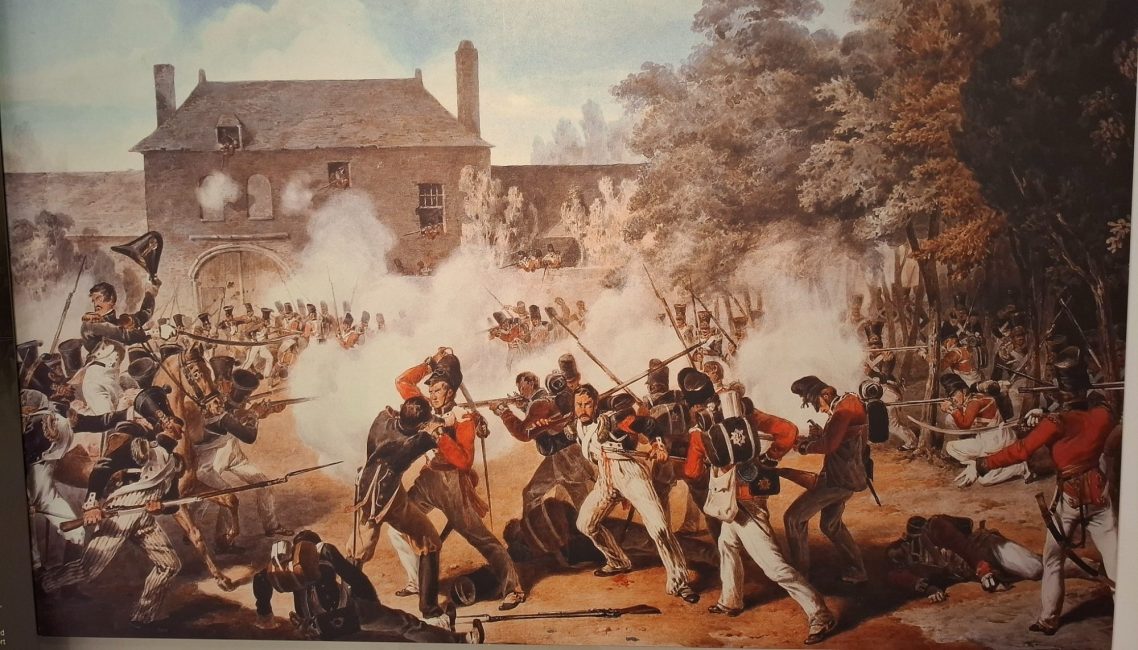
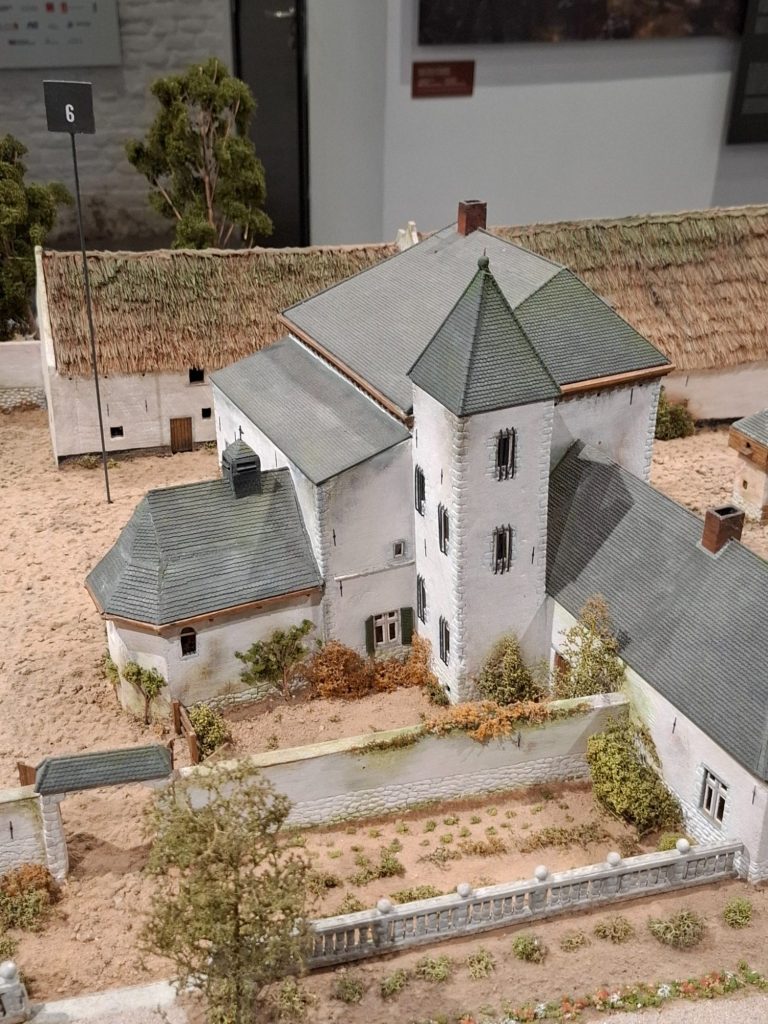
A second model, more in keeping with the style you’d expect, is in the museum, and I’ve shown a few pictures of that already. There’s a few more in the following shots, along with photos of the other museum displays, a selection with other views of the farm courtyard etc.
Final thoughts.
Well, fantastic is I think a little shy of how good this visit was. Unfortunately there were six of us, so I stayed at a local Ibis hotel, which was thoroughly disappointing in comparison – I didn’t even have a kettle to make a brew.
Although we hardly saw any of the staff at Hougoumont Farm, they keep a spotless place, and one that I feel you visit, and if possible stay the night at.
One of our guys is a thorough expert, he has an encyclopaedic knowledge of Napoleonic history and uniforms, and he commented that the museum was as close to perfect for it’s displays as is possible to get – high praise indeed as he found a number of faults with similar displays at Waterloo itself.
I take it that the farm courtyard is open during the summer, along with the coffee shop, and I suspect, based on the experience I have of museum catering that this too will be very good too.
The rest of the pictures show various views of the museum displays and the farm itself.
All in all, highly recommended